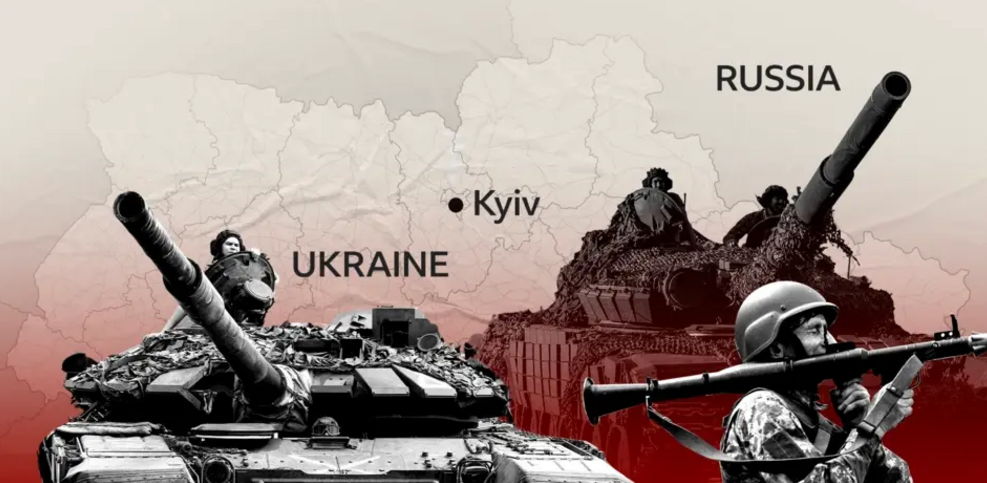
As of mid-March 2026, the relationship between European Union member states regarding Ukraine is defined by a sharp “25 vs. 2” split. While the vast majority of the bloc is moving toward long-term, self-reliant security guarantees, a localized energy dispute has triggered a significant legislative deadlock. | Photo by Nicolas J Leclercq on Unsplash
1. The Financial Deadlock: The €90 Billion Loan
In December 2025, the EU agreed in principle to a €90 billion ($98B) support package for 2026–2027. However, as of the March 19, 2026, summit in Brussels, this funding is currently vetoed by Hungary and Slovakia.
- The Split: 25 nations have endorsed the loan, which is structured as €60 billion for military defense and €30 billion for general budget support.
- The Motive: Hungary and Slovakia are using the veto as leverage in a dispute over the Druzhba oil pipeline, which was damaged by a Russian drone strike in January 2026. They accuse Ukraine of intentionally delaying repairs and have labeled the situation “energy blackmail.”
2. Emerging Tensions and Retaliation
The relationship between Ukraine and its immediate Central European neighbors (excluding Poland) has reached a low point:
- Energy Cuts: Slovakia has suspended diesel fuel exports and emergency electricity supplies to Ukraine during the tail end of winter, citing its own energy security.
- Accession Roadblocks: Slovak Prime Minister Robert Fico has explicitly threatened to withdraw support for Ukraine’s EU membership if oil flows are not restored, joining Viktor Orbán’s long-standing opposition.
- Internal Friction: Leaders from Finland and Belgium have openly criticized the blockade, with some describing the veto as a “betrayal” of EU principles.
3. The “Trump-Proofing” Strategy
Broadly, the EU is undergoing a massive strategic shift to reduce reliance on the United States. With the U.S. scaling back military aid and pushing for a “peace at any price” settlement, European nations are taking the lead:
- Coalition of the Willing: A core group—led by France, Poland, and the UK (a key non-EU ally)—is discussing robust security guarantees that could include European troop deployments to monitor a future ceasefire.
- Defense Industrial Base: The EU has launched the Security Action for Europe (SAFE) fund, a €150 billion loan mechanism to integrate Ukraine into the European defense industry and scale up domestic arms production.
4. Summary of Current Support
| Category | Status as of March 2026 |
| Military Missions | EUMAM (Training) and EUAM (Advisory) continue with 25-nation backing. |
| Financial Aid | Total EU/Member State commitments have exceeded $216 billion since 2022. |
| Political Alignment | High friction between the “Brussels core” and the “Bratislava-Budapest” axis. |
| Security Guarantees | Moving from “as long as it takes” to “whatever it takes to deter future aggression.” |
The EU is effectively at a crossroads: it is more united than ever in its industrial and military planning, yet remains vulnerable to the “unanimity rule” that allows two member states to stall massive aid packages over bilateral grievances.