
To understand why the U.S. is so deeply embedded in this conflict, we have to look past the headlines of 2026 and back to the mid-20th century. The involvement wasn’t a single decision but a layering of strategic, moral, and political motives that evolved over decades.
Here is a breakdown of why the U.S. began this involvement and how the world currently views the recent escalations.
Why the U.S. Involved Itself: The Historical “Why”
The U.S. didn’t initially intend to be Israel’s primary patron. In the late 1940s, the State Department actually worried that supporting a Jewish state would alienate oil-rich Arab nations. However, three main factors changed that:
- The Post-WWII Moral Context: Following the Holocaust, there was significant international and domestic pressure to support a Jewish homeland. President Harry Truman’s 11-minute recognition of Israel in 1948 was largely driven by a mix of personal humanitarian concern and domestic political interests.
- The Cold War “Cold Logic”: By the 1960s and 70s, the Middle East became a chessbox for the U.S. and the Soviet Union. As the Soviets backed nations like Egypt and Syria, the U.S. viewed Israel as a democratic bulwark that could prevent Soviet dominance in a region vital for global energy.
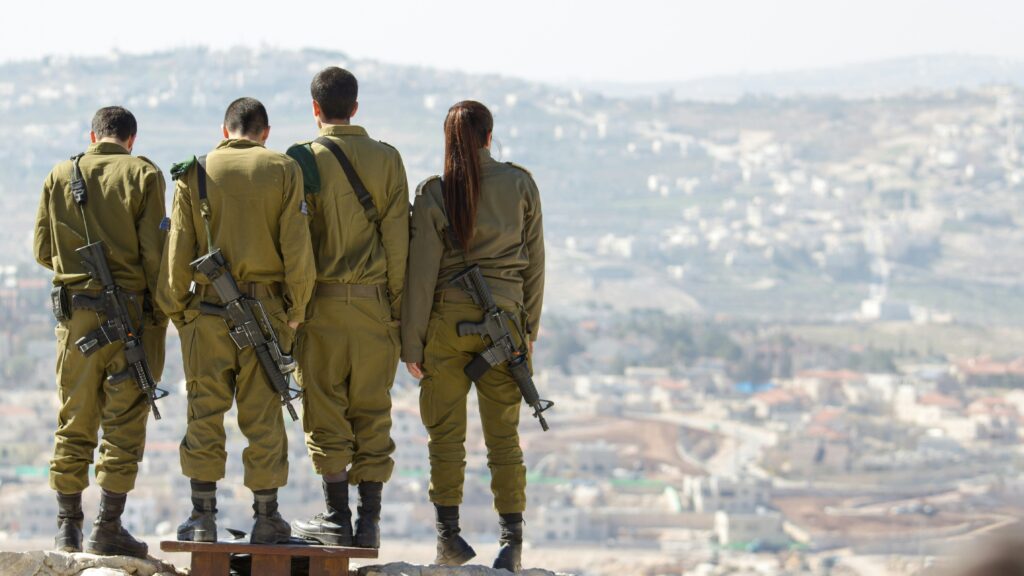
- The “Unsinkable Aircraft Carrier”: Over time, the relationship shifted from charity to a strategic partnership. Israel became a “security producer”—providing the U.S. with world-class intelligence, testing advanced military tech in real-world scenarios, and acting as a local check on regional rivals without requiring permanent U.S. boots on the ground (until very recently).
World Views on the 2026 Escalation
As of early 2026, the U.S.-Israeli military actions against Iran (specifically the February strikes) have polarized global opinion. The “world view” isn’t a monolith; it’s a spectrum of strategic and ethical disagreements.
1. The “Stability & Deterrence” View
- Perspective: This view, largely held by the current U.S. administration and some regional allies, argues that Iran’s nuclear progress and its “Ring of Fire” (proxies like Hezbollah and the Houthis) reached a point where only a “maximalist” military response could prevent a larger catastrophe.
- Logic: By removing top leadership and degrading Iranian infrastructure, the U.S. believes it is “resetting” the regional balance of power to prevent a nuclear-armed Iran.
2. The “Legalistic & Diplomatic” View
- Perspective: Many European allies (notably the UK and EU) and the UN have expressed deep skepticism. They see the abandonment of the 2025 Gaza truce framework in favor of direct war with Iran as a “premature” move.
- Logic: Critics argue that these strikes lack a clear legal basis under international law (Article 2(4) of the UN Charter) and that the U.S. is pursuing “regime change” without a viable plan for what happens the day after the bombs stop falling.
3. The “Humanitarian & Double Standard” View
- Perspective: Much of the “Global South” and a growing segment of the U.S. public (currently 41% sympathize more with Palestinians) view the involvement through a lens of inconsistency.
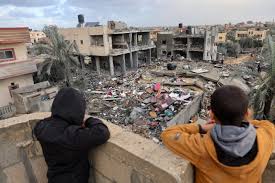
- Logic: They point to the ongoing suffering in Gaza—where reconstruction has stalled despite the October 2025 ceasefire—and argue that the U.S. prioritizes military dominance over the “rules-based order” it claims to defend elsewhere.
4. The “Regional Anxiety” View
- Perspective: Neighbors like Jordan, Egypt, and the Gulf States are in a “tight spot.” While they may quietly benefit from a weakened Iran, they fear the “spillover” effect—refugee crises, disrupted trade in the Persian Gulf, and internal domestic unrest from their own populations who see the U.S. as overreaching.
Summary of Perspectives
| Viewpoint | Primary Concern | Stance on U.S. Role |
| Strategic | Regional Hegemony | Necessary to prevent a nuclear Iran and protect allies. |
| Diplomatic | International Law | Alarmed by the bypassing of the UN and lack of “off-ramps.” |
| Humanitarian | Civilian Toll | Critical of the focus on war over Gaza’s recovery. |
| Regional | Economic Stability | Fearful of a “forever war” affecting oil and trade. |