US Iran Agree 60 Day Swiss Peace Roadmap Ukraine Strikes Dubna Satellite Center
WarsWW Daily Brief | June 22, 2026
Intelligence Status: SWISS MOVEMENT ADVANCEMENT / STRAIT DE-CONFLICTION CELLS / REFINERY DAMAGE RECKONING
Global Security Index: 9.92/10 (High Tactical Transition)
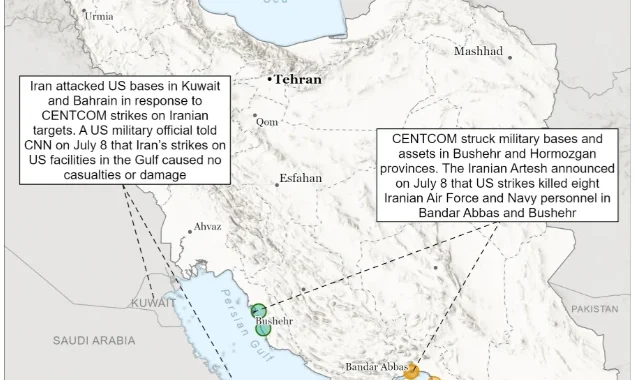
I. Middle East: The Bürgenstock Roadmap and the Tripartite De-Confliction Cell
Marathon diplomatic negotiations in Switzerland have yielded an unexpected procedural breakthrough, signaling the first concrete stabilization framework since hostilities broke out. Despite a highly volatile weekend that threatened to shatter the Versailles accord, Washington and Tehran have formalized a path toward long-term stabilization.
The Bürgenstock Peace Roadmap Parameters
| Operational Vector Node | Strategic Action Mechanism | Direct Theater Impact |
| Bürgenstock Resort, Switzerland | High-Level Committee Execution | 60-day roadmap established to negotiate a comprehensive final settlement |
| Washington-Tehran Asset Loop | OFAC 60-Day Oil Waiver License | Sanctions lifted on select Iranian crude exports to support interim stability |
| Strait of Hormuz Corridor | Quad-Tanker Qatari Convoy Penetration | Restricted LNG shipping resumes via Iranian routes despite official closure |
- The 60-Day Settlement Framework: Wrapping up a grueling round of high-level talks that stretched from Sunday into the early hours of Monday morning, U.S. Vice President J.D. Vance and Iranian parliamentary speaker Mohammad Bagher Qalibaf finalized a structured peace roadmap. In a joint statement brokered by Pakistan and Qatar, negotiators confirmed that both nations have agreed to a 60-day window to secure a permanent treaty. To anchor the truce, the U.S. Treasury issued a 60-day license waiving major sanctions on Iranian oil, while Tehran consented to invite International Atomic Energy Agency (IAEA) inspectors back into its nuclear facilities.
- The Tripartite Lebanon De-Confliction Cell: Addressing the main point of friction regarding border deployments, mediators announced the creation of a specialized “de-confliction cell” including Lebanon to enforce a cessation of military operations between Israel and Hezbollah. Iranian Foreign Minister Abbas Araghchi hailed the development as “major progress” to end the Lebanon war. Concurrently, the Israeli military lifted all wartime civilian and civil activity restrictions across its northern border communities effective Monday morning, signaling localized confidence in the security mechanism.
- The Hormuz Shipping Test: Maritime data revealed immediate movement inside the Persian Gulf chokepoint. Even though Iran publicly stated over the weekend that the waterway was closed, four Qatari-controlled liquefied natural gas (LNG) tankers entered the Strait of Hormuz on Monday, navigating safely through Iranian-controlled lanes. The bold transit serves as a crucial test of the newly established de-confliction lines designed to protect global energy networks.
II. Eastern Europe: The Dubna Satellite Interdiction and the Sumy Family Attrition
Symmetric long-range air strikes continue to devastate both sides of the frontline, with Ukraine targeting the Kremlin’s strategic tracking assets while suffering heavy civilian losses along its border perimeter.
- The Dubna Satellite Tracking Intercept: Exploiting gaps in metropolitan electronic defense nets, a massive wave of Ukrainian long-range strike drones targeted deep-theater intelligence infrastructure. Ukrainian defense officials verified that unmanned platforms successfully struck the Dubna satellite communications center near Moscow, a highly sensitive installation utilized by Russian military commands for orbital asset telemetry. While Moscow claimed its air defenses downed 84 drones heading for the capital over 24 hours, the terminal penetration forced temporary flight cancellations across all major metropolitan airports.
- The Sumy Residential Strike: Russian forces responded with a brutal retaliatory strike on border populations. An overnight Russian drone strike directly hit a residential home in the northeastern city of Sumy, killing three members of the same family. Regional Military Administration chief Oleh Hryhorov confirmed that the attack killed a 36-year-old man, his 13-year-old son, and a 73-year-old grandmother, while wounding two other family members.
III. Indo-Pacific: Valiant Shield Carrier Drills and THAAD Realignment
Allied containment infrastructure has expanded in the western Pacific as the U.S. and its partners reposition advanced defensive systems to adjust to changing global friction points.
- The USS George Washington Philippine Sea Deployment: Commencing a massive display of allied naval power, the USS George Washington Carrier Strike Group joined Japanese warships in the Philippine Sea to open the biennial exercise Valiant Shield. Running through July 1, the drills bring together all six arms of the U.S. military to practice complex maneuvers across Guam, Japan, and the Northern Mariana Islands.
- The THAAD Return to Seongju: Simultaneously, U.S. Forces Korea confirmed that all six Terminal High Altitude Area Defense (THAAD) missile launchers have returned to their base in Seongju. The intercept systems were temporarily relocated to Osan Air Base in March amid peak Middle East tensions. Their return signals a stabilization of regional air defense alignments as Washington pivots back toward Indo-Pacific deterrence.
IV. Indicators to Watch
- [SHIPPING TELEMETRY] Qatari LNG Daily Flow Rates: Monitor maritime transit logs inside the Persian Gulf corridor. Following the successful passage of four Qatari LNG vessels through the Strait of Hormuz, watch whether major commercial insurance syndicates drop risk premiums, allowing hundreds of frozen tankers to resume normal trade routes.
- [AIR DEFENSE VELOCITY] Metropolitan Moscow Countermeasures: Track Russian military movements within the capital region. Following the successful Ukrainian strike on the Dubna communications center, look for the Kremlin to deploy active frontline air defense batteries away from the Ukrainian border to protect vulnerable space tracking assets near Moscow.
WarsWW Intelligence Note [REF: DAILY-2026-0622]
The global matrix has entered a phase of Managed Strategic De-escalation. The 60-day Bürgenstock roadmap proves that both Washington and Tehran recognize the severe economic danger of an unmitigated conflict, leading them to deploy real-time de-confliction cells and sanctions relief to protect vital energy corridors. However, this top-level stabilization remains incredibly fragile. As Ukraine’s successful strike on Moscow’s space tracking networks demonstrates, localized actors have ample leverage to challenge international agreements, ensuring that real, lasting stability can only be achieved if frontline security concerns are addressed directly on the ground.