
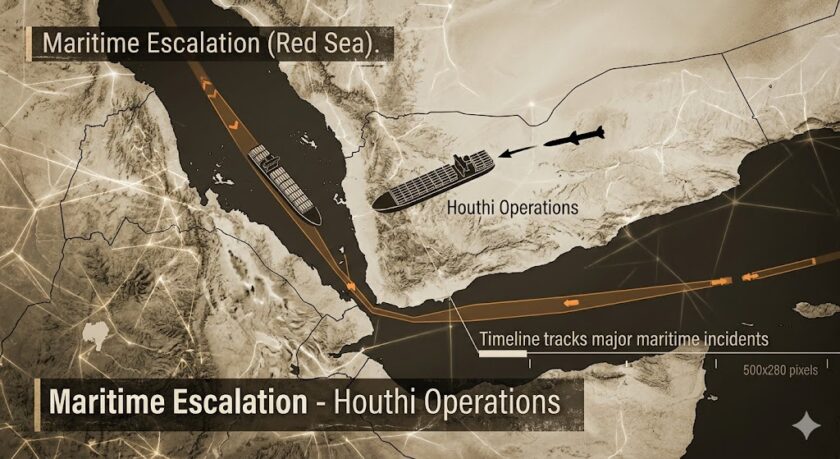
October 2023 pivot – before Oct 2023, the Houthis were a localized threat; after Oct 2023, they became a global maritime disruptor.
November 19, 2023, seizure of the Galaxy Leader. This was the specific event that changed global insurance premiums and forced the first major reroutes around Africa.
Phase 1 (Oct–Dec 2023): “Direct Kinetic Targeting.” Focus on the transition from firing at Israel (e.g., the Oct 19 interception by the USS Carney) to targeting individual merchant ships.
Phase 2 (Jan–May 2024): “The Coalition Response.” This is where you cover the stand-up of Operation Prosperity Guardian (Dec 18, 2023) and the first US/UK strikes on Yemen (Jan 12, 2024).
Phase 3 (June–Dec 2024): “Strategic Expansion.” Highlight the May 2024 declaration that the Houthis would target any ship belonging to a company that visits an Israeli port.
“Breaking Intelligence” (Updates, chronologically after the timeline below.)
April 19, 2026: French UNIFIL Peacekeeper Fatality: Escalation on the Blue Line (April 2026) Read More: French Peacekeeper Killed
Begin Red Sea/Houthi Timeline
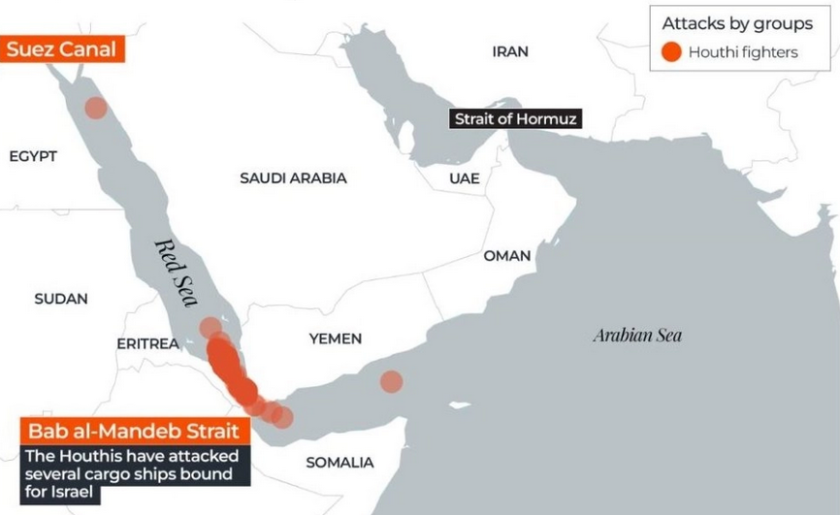
2023–2024 Tactical Summary: The Red Sea Blockade Between October 2023 and December 2024, the Houthi movement (Ansar Allah) successfully executed the most significant disruption to global maritime trade in the 21st century. By leveragingIranian-supplied UAVs and anti-ship ballistic missiles, the group effectively closed the Bab-el-Mandeb strait to “hostile-associated” tonnage. This period was defined by the transition from localized civil war to a regionalAxis of Resistancestrategy, forcing the diversion of approximately30% of global container traffic around the Cape of Good Hope.

October 1, 2023: The Axis of Resistance Mobilization
Following the expiration of the UN-mediated truce in Yemen, Houthi military leadership shifted their focus toward regional ‘Axis of Resistance’ objectives. This initial phase involved the high-readiness mobilization of long-range UAVs and ballistic missile batteries, specifically targeting the Israeli port of Eilat. These early maneuvers served as a strategic declaration of intent, signaling that the Houthis would no longer remain a localized Yemeni actor but would instead act as the ‘Southern Front’ in the broader regional campaign against Israel. #Houthi-Axis-of-Resistance-Strategy
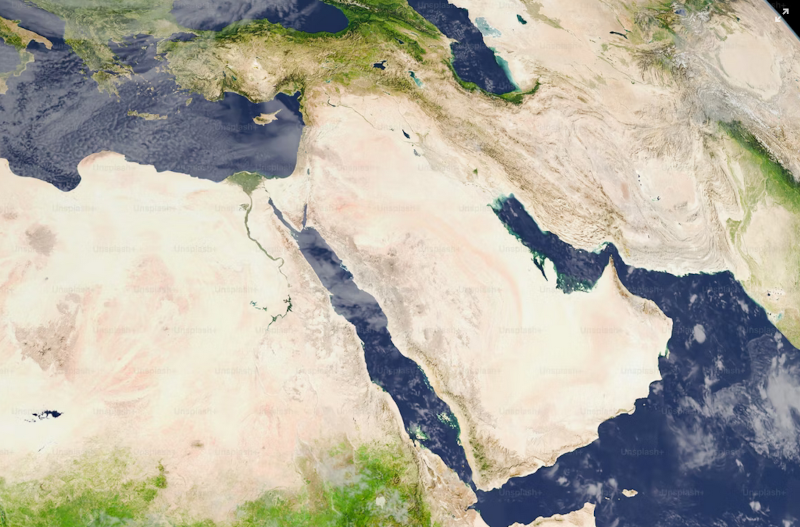
October 19, 2023, The Opening Salvo (Interception by USS Carney). This date marked the first direct kinetic involvement of the U.S. Navy in the current conflict. The USS Carney, an Arleigh Burke-class destroyer, intercepted four land-attack cruise missiles and 15 drones launched by Houthi forces over a nine-hour period. While the missiles were tracking toward targets in southern Israel, the engagement established the Red Sea as a primary theater of the broader regional war.
The Houthis initially claimed that they were targeting commercial ships on their way to or linked to Israel to show solidarity with Palestinians in Gaza.
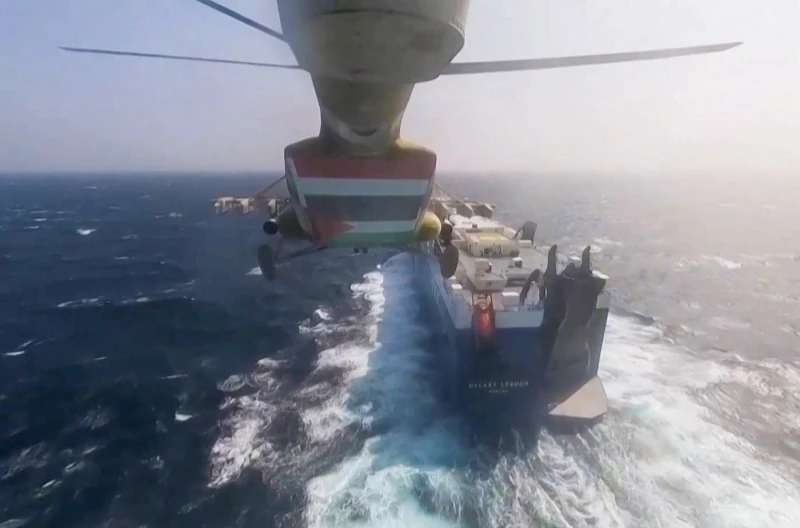
Maritime Escalation (November 2023)
The conflict expanded into a direct threat to global trade with the seizure of the Galaxy Leader.
Yemen’s Houthi rebels seized the commercial cargo ship.
Galaxy Leader in the Red Sea on November 19, 2023, boarding it via helicopter. The vessel, operated by a Japanese firm but owned by a British company with Israeli ties, was taken to Hodeidah, Yemen. The 25 crew members were held hostage for over a year before being released in January 2025
International Response (December 2023 – January 2024)
In response to attacks on commercial vessels, the United States formed a coalition under Operation Prosperity Guardian in December 2023, followed by military strikes against Houthi targets in January 2024.
On January 11, 2024, the United States mobilized Operation Poseidon Archer, a separate coalition willing to conduct offensive operations to degrade Houthi military capabilities.
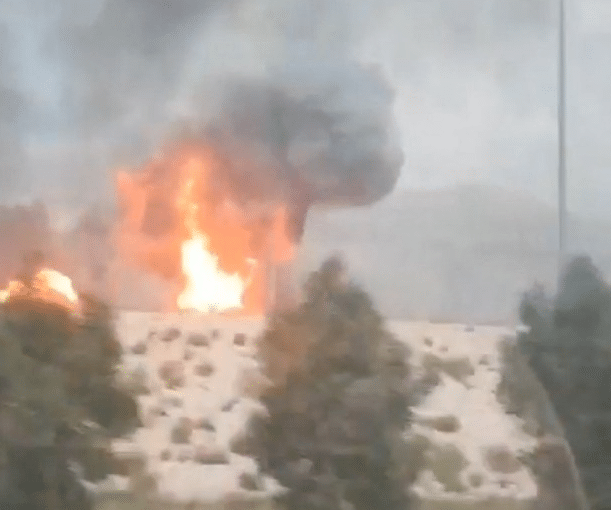
April 1, 2024: Escalation Against Western Coalitions
“Following the initiation of Operation Prosperity Guardian, Houthi leadership formally expanded their ‘Target Bank’ to include all U.S. and UK-affiliated commercial and naval assets. This pivot followed a series of joint airstrikes on Houthi command-and-control centers in Yemen, signaling a transition from a selective shipping blockade to a direct war of attrition against Western naval forces.”
tags: Houthi Expanded Target Bank
May 28, 2024 Uncrewed Aerial Systems Destroyed
U.S. forces destroyed five uncrewed aerial systems launched over the Red Sea from Houthi territory. Separately, Houthis launched five anti-ship ballistic missiles into the Red Sea. Three hit the M/V Laax, a Marshall Island flagged, Greek-owned and operated bulk carrier, but it was able to continue its voyage.
Also, U.S. forces destroyed two missile launchers in Houthi-controlled territory. Separately, Houthis launched two anti-ship ballistic missiles into the Red Sea.
July 8, 2024 Islamic Resistance in Iraq
July 8: The Houthis claimed to have launched a successful drone attack on Eilat in coordination with the Islamic Resistance in Iraq. The IDF said that its jets had intercepted a suspicious target approaching from the south before it crossed into Israeli territory.
Additionally, Houthis launched multiple attacks against MT Bentley I, a Panama-flagged, Israel-owned, Monaco-operated tanker vessel in the Red Sea carrying vegetable oil from Russia to China. Houthis used three surface vessels in the attack, one USV and two small boats.
June 18, 2024: The Sinking of the MV Tutor
This is a critical milestone because it was the first time an Explosive Sea Drone (USV) successfully sank a commercial ship.
- The Event: The Liberian-flagged, Greek-owned coal carrier MV Tutor was struck by a Houthi sea drone and an aerial missile in the southern Red Sea.
- The Significance: It proved that Western naval coalitions (Prosperity Guardian) could not protect ships against “low-profile” waterborne threats. The sinking caused a second massive surge in insurance premiums (jumping from 0.4% to 0.6% of vessel value), making a single transit cost upwards of $300,000 for a $50M ship.
July 19–20, 2024: The “Yafa” Drone & Israel’s Direct Response
This event marks the transition from a “shipping blockade” to a “direct regional war.”
- The Event: On July 19, a Houthi “Yafa” drone bypassed Israeli air defenses to strike Tel Aviv, killing one civilian. The next day, Israel launched Operation Outstretched Arm, striking the Houthi-controlled Port of Hodeidah for the first time.
- The Significance: This destroyed the Houthi’s primary fuel depots and cranes used for unloading Iranian weapons. It set the precedent for the direct “Israel vs. Yemen” kinetic exchanges we are seeing in 2026.
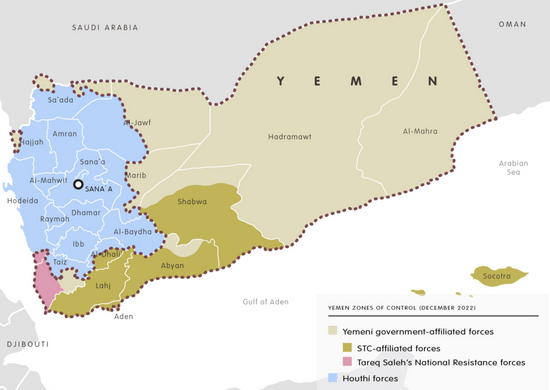
The Houthis (Ansar Allah) control most of northwest Yemen, including the capital, Sana’a, the vital port city of Hodeidah, and the northern highlands surrounding Sa’dah. Since seizing power in 2014, they have held major populated areas, the Red Sea coastline, and border regions with Saudi Arabia.
2023–2024 Tactical Summary
2023–2024: The Transformation of the Bab-el-Mandeb
Between October 2023 and December 2024, the Houthi movement (Ansar Allah) transitioned from a regional insurgent force into a global maritime disruptor. Triggered by the October 7 conflict, the group initiated a sophisticated A2/AD (Anti-Access/Area Denial) campaign using Iranian-supplied anti-ship ballistic missiles and one-way attack drones.
By January 2024, the crisis prompted the stand-up of Operation Prosperity Guardian, a U.S.-led naval coalition designed to protect the $1 trillion in merchandise that transits the Red Sea annually. Despite international intervention, the 2024 period saw the first sinking of a commercial vessel (the Rubymar) and the first civilian fatalities on the True Confidence, fundamentally altering global shipping routes and insurance premiums for the foreseeable future.
Key Houthi-Controlled Areas and Impact:
- Territory: Core control spans the provinces of Sana’a, Sa’dah, Amran, Al Jawf, Hajjah, and Hodeidah.
- Urban Centers: Major cities under their control include Sana’a, Hodeidah, and Ibb.
- Strategic Assets: They control the main Red Sea port of Hodeidah and have occupied areas along the border with Saudi Arabia.
- Frontlines: Active conflict zones and contested areas often include the outskirts of Marib (a government stronghold) and areas in Taiz, which they have largely blockaded.
- Red Sea Attacks: From these territories, the group has launched drones and missiles towards international shipping lanes in the Red Sea and targeted areas in Israel.
- Governance: The Houthis operate their own administration in these areas and maintain a strong security apparatus.