Conflict Spotlight: The Hormuz 20,000 — A Humanitarian Standoff
Intelligence Status: UNPRECEDENTED MARITIME CAPTIVITY
Location: Persian Gulf Basin / North of Strait of Hormuz
Date: May 1, 2026
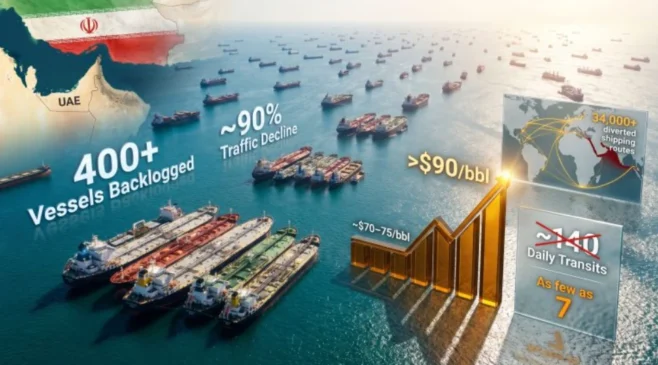
As of May 1, 2026, an estimated 20,000 civilian seafarers remain effectively landlocked within the Persian Gulf, trapped behind a de facto Iranian blockade of the Strait of Hormuz. What began as a strategic military maneuver has devolved into the largest humanitarian standoff in maritime history, with crew members from over 1,600 vessels—including oil tankers, bulk carriers, and six commercial cruise liners—facing indefinite detention in a high-risk war zone.
I. The Logistics of Captivity: “Collateral Victims”
The trapped fleet consists of a diverse array of global commerce, now reduced to “sitting ducks” in the northern Gulf waters.
- The Crew Profile: The majority of the 20,000 seafarers are of Indian, Filipino, and Eastern European descent, caught in a conflict between states that are not their own.
- Life at Anchor: Seafarers describe a “harsh monotony” punctuated by panic. “At nighttime, we can see the missiles getting intercepted. It was total chaos,” one mariner reported to the International Maritime Organization (IMO).
- The “Supplies” Lifeline: While vessels are currently being resupplied with fresh water and food by logistics companies operating out of Saudi Arabia and Oman, the IMO warns that fuel for onboard generators is reaching critical lows. If generator fuel fails, climate control and desalination systems will shut down, turning the ships into “floating furnaces” as regional temperatures rise in May.
II. The Kinetic Threat: 29 Attacks and Counting
The Strait is not merely closed; it is lethally contested.
- Verified Casualties: Since the conflict escalated in February 2026, the IMO has verified 29 direct attacks on merchant vessels, resulting in the deaths of at least 10 seafarers.
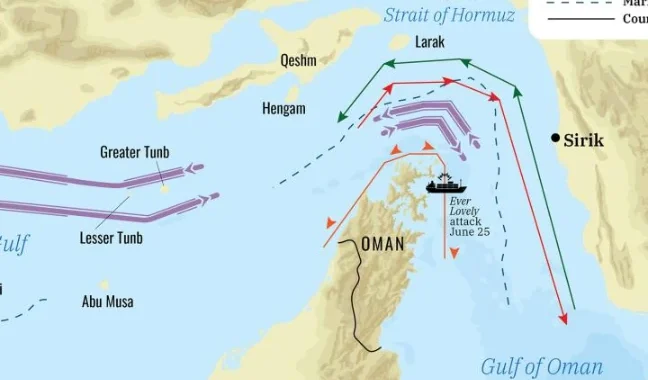
- The Minefield Threat: The IRGC has reportedly deployed naval mines throughout the narrowest points of the Strait. “There is no safe transit anywhere in the Strait of Hormuz,” stated IMO Secretary-General Arsenio Dominguez on April 24.
- GPS Jamming: Over 1,600 ships in the region have reported severe GPS spoofing and jamming, making navigation nearly impossible without high-risk naval escorts.
III. The Strategic Toll: $2 Million “Exit Fees”
Reports have emerged of a “politically enforced filtering mechanism” where the IRGC reportedly demands tolls of up to $2 million per vessel for “safe” passage.
- Selective Passage: Iran has signaled it may allow passage to vessels it deems “non-hostile,” but US-flagged ships and those with Israeli affiliations are strictly excluded, regardless of payment.
- The “Shadow Fleet” Exception: Only vessels linked to the Iranian “shadow fleet” or specific Chinese-flagged tankers appear to be transiting with any regularity, further bifurcating the global shipping market.
WarsWW Intelligence Note [REF: HORMUZ-20K-2026]
The “Hormuz 20,000” represent a fundamental failure of international maritime law. For the first time since the “Tanker War” of the 1980s, the principle of Freedom of Navigation has been entirely superseded by land-based kinetic leverage. As the U.S. and its allies weigh a massive naval “breakout” operation (expected before the May 17 ceasefire expiration), the seafarers are being used as human shields against Western airstrikes. If a diplomatic solution for a “Humanitarian Corridor” is not reached by May 15, we anticipate the first mass-abandonment of ships, which would leave the Persian Gulf littered with thousands of uncrewed, hazardous “ghost tankers.