Houthi Fourth Phase Indian Ocean Shipping Risk 2026
Conflict Spotlight: Phase Four — The Houthi Indian Ocean Expansion
Intelligence Status: STRATEGIC BREAKOUT / LONG-RANGE INTERDICTION
Date: April 29, 2026
The Houthi movement (Ansar Allah) has officially initiated its “fourth phase” of maritime operations, shifting its focus from the confined waters of the Red Sea to the vast expanse of the Indian Ocean. This escalation follows through on threats made earlier this month to target any vessels associated with Israel, the U.S., or the UK that attempt to bypass the Red Sea blockade by sailing around the Cape of Good Hope.
. The Proof of Concept: The MSC Orion Strike
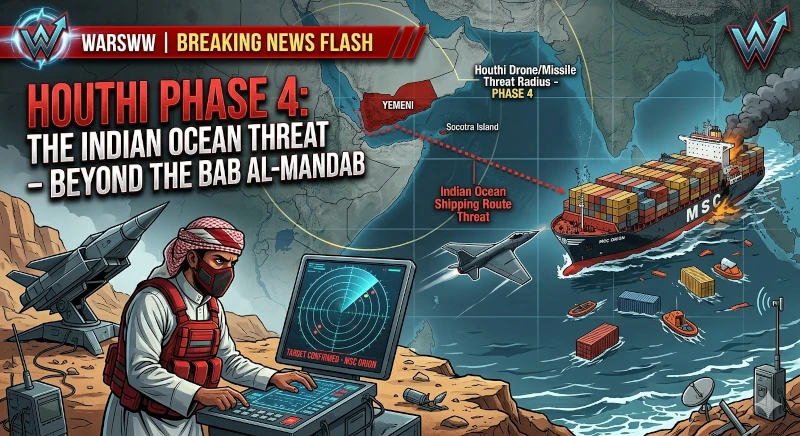
To signal this new capability, Houthi military spokesperson Yahya Sarea confirmed a targeted drone strike on the MSC Orion in the Indian Ocean yesterday, April 28, 2026.
- The Radius: The attack reportedly took place southeast of Socotra Island, confirming a Houthi strike range of at least 800 nautical miles (1,480 km) from Yemeni shores.
- Technical Reach: The Houthis are now utilizing advanced Iranian-designed systems, such as the Waid-2 kamikaze drone, which boasts an estimated range of up to 2,500 km. This allows the group to threaten shipping lanes that were previously considered “safe zones” for vessels avoiding the Bab al-Mandab strait.
II. Global Impact: The “Dual Blockade” and Oil Spikes
The Houthi expansion coincides with the ongoing 2026 Strait of Hormuz crisis, where Iranian forces have largely blocked energy trade since February 28.
- Shipping Rerouting: EU Naval Force Operation ATALANTA has issued urgent advisories for all commercial shipping to sail at least 150 nautical miles further east of existing traffic routes to avoid the extended UAV threat.
- Market Volatility: The combined pressure of the Houthi “fourth phase” and the Iranian blockade has driven Brent crude oil prices to peaks of $126 per barrel, the largest disruption to world energy supply since the 1970s.
- Economic Surcharges: Shippers are now facing unprecedented “war risk” surcharges, fundamentally altering the 2026 global supply and demand balance as route deviations around Africa become the new standard.
III. Counter-Measures: The Limits of Deterrence
Despite the U.S.-led Operation Prosperity Guardian conducting repeated airstrikes on launch sites, Houthi forces have retained a high level of operational autonomy.
- Asymmetric Persistence: Analysts note that the Houthis operate in a fragmented, resilient system with high tolerance for risk, where the symbolic and economic value of striking global shipping often outweighs the costs of retaliatory airstrikes.
- Multi-Front Pressure: Intelligence suggests that the Houthi timing is intended to provide leverage during regional crises in Gaza and Sudan, converting a local insurgency into a global strategic card.
WarsWW Intelligence Note [REF: HOUTHI-OCEAN-2026]
The Houthi move into the Indian Ocean represents the death of the “Cape of Good Hope” safety valve. If the Indian Ocean is no longer a viable bypass for Red Sea traffic, the maritime insurance market may effectively collapse for vessels with any Western or Israeli ties. This is not just a military expansion; it is a direct attack on the logistical architecture of the global economy.