Us Iran War Strait of Hormuz Ship Interdictions Tyumen Refinery Strike
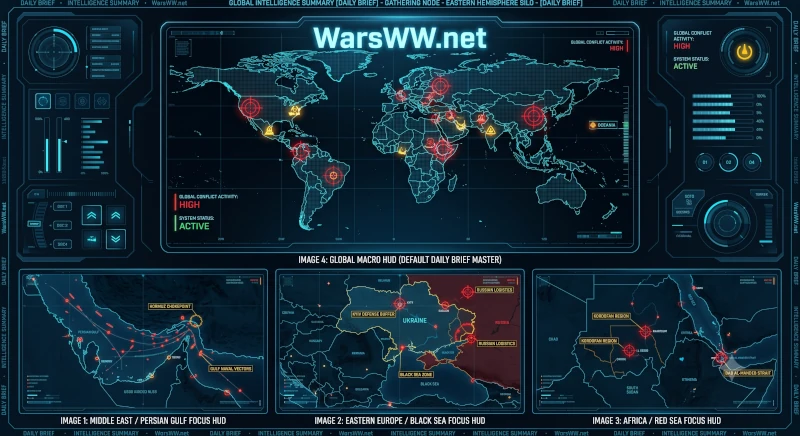
WarsWW Daily Brief | July 25, 2026
Intelligence Status: STRAIT INTERDICTION PAUSE / SIBERIAN REFINERY STRIKES / KORDOFAN REBEL ULTIMATUM
Global Security Index: 9.98/10 (High Macro-Systemic Volatility)
I. Middle East: The IRGC Vessel Interdictions and the US Bombardment Lull
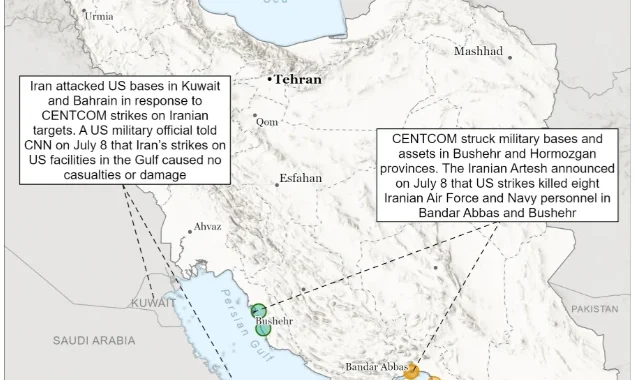
A tense operational pause has settled over the Persian Gulf following 13 consecutive nights of heavy U.S. Central Command (CENTCOM) air and naval strikes against Iranian coastal defenses. While U.S. forces did not conduct overnight bombing runs into Saturday morning, Iranian naval forces executed fresh interdiction maneuvers in the Strait of Hormuz, maintaining a high state of friction.
I. Middle East: The IRGC Vessel Interdictions and the US Bombardment Lull
A tense operational pause has settled over the Persian Gulf following 13 consecutive nights of heavy U.S. Central Command (CENTCOM) air and naval strikes against Iranian coastal defenses. While U.S. forces did not conduct overnight bombing runs into Saturday morning, Iranian naval forces executed fresh interdiction maneuvers in the Strait of Hormuz, maintaining a high state of friction.
The Gulf Theater Kinetic Engagement Profile
| Operational Vector Node | Strategic Action Mechanism | Documented Strategic Fallout |
| Southern Strait of Hormuz | IRGC Navy Warning Shots & Interdictions | Four merchant vessels stopped for attempting transit via “unlawful routes” |
| Red Sea Sector (Jizan & Yanbu) | Houthi Long-Range Missile / Drone Volleys | Saudi oil facilities targeted; sirens sounded across Red Sea ports |
| Bürgentock / Geneva Track | U.S.-Iranian MoU Protocol Disagreements | Tehran accuses Washington of breaching transit MoU terms |
- The IRGC Interdictions: The Islamic Revolutionary Guard Corps (IRGC) Navy confirmed that its units fired warning shots to intercept four commercial vessels attempting to navigate the southern perimeter of the Strait of Hormuz. Iranian authorities stated the ships were forced to alter course after ignoring maritime traffic directives, reinforcing Tehran’s push to exercise complete navigational oversight over regional transit lanes.
- The Houthi Red Sea Counter-Offensive: Operating in coordination with Gulf developments, Yemen’s Houthi movement executed a multi-drone and missile strike against Saudi Aramco facilities in Jizan and Yanbu along the Red Sea coast. Saudi civil defense forces activated emergency alert networks as government air units launched counter-strikes on Houthi launch sites in Marib and al-Jawf.
- Diplomatic MoU Rupture: Iranian Foreign Minister Abbas Araghchi publicly accused Washington of violating the bilateral Memorandum of Understanding governing maritime transit. Tehran asserts that under Article 5 of the MoU, it holds exclusive mandate over transit protocols, rejecting U.S. attempts to unilaterally establish alternative shipping channels.
II. Eastern Europe: The Tyumen Deep-Siberian Strike and Tokayev’s Freeze Proposal
Ukrainian strategic unmanned forces have pushed their deep-theater campaign deeper into the Russian interior, striking vital refining capacity in Western Siberia while diplomatic signaling intensifies at regional forums.
Eastern European Attrition Metrics
| Target Coordinate Node | Kinetic Weapon System | Documented Operational Attrition |
| Tyumen, Western Siberia | Long-Range Jet-UAV Swarms | Tyumen Oil Refinery complex ignited following direct drone strikes |
| Yekaterinburg Logistics Hub | High-Altitude Precision Munitions | Secondary supply facilities and military distribution depots degraded |
| Rostov-on-Don Fuel Depot | Low-Altitude Loitering Munitions | Fuel and lubricant storage blocks hit by localized payload detonations |
- Deep-Siberian Infrastructure Interdiction: Ukrainian President Volodymyr Zelenskyy confirmed successful long-range drone strikes hitting the Tyumen Oil Refinery in Western Siberia, alongside logistics hubs in Yekaterinburg and fuel reserves in Rostov-on-Don. The Tyumen strike marks an expansion of Ukraine’s 40-day compulsion campaign targeting energy infrastructure thousands of kilometers behind active frontlines.
- Tokayev’s “Freeze” Proposal in Omsk: Speaking alongside Russian President Vladimir Putin at a bilateral forum in Omsk, Kazakh President Kassym-Jomart Tokayev publicly called for a freezing of the Ukraine conflict and a return to “Istanbul Formula 2.0” negotiations backed by international security guarantees.
III. Sub-Saharan Africa: General Burhan Rules Out Truce in Sudan
In North East Africa, hopes for an immediate diplomatic settlement to the Sudanese civil war hit an absolute impasse. Speaking in Khartoum North, Sudanese Armed Forces (SAF) Chief General Abdel Fattah al-Burhan explicitly ruled out any truce with the Rapid Support Forces (RSF), vowing to fully eradicate the paramilitary group as heavy fighting continues around the encircled city of El-Obeid in North Kordofan.
WarsWW Intelligence Note [REF: INTEL-DEBRIEF-2026-0725]
The global defense network remains caught in a state of Persistent Asymmetric Expansion. The brief lull in overnight U.S. strikes over Tehran does not signal diplomatic stabilization; rather, the IRGC’s immediate interdiction of four merchant vessels proves that regional forces continue to leverage physical control over maritime chokepoints to enforce their own navigational parameters.
Simultaneously, Ukraine’s successful strike on the Tyumen Oil Refinery deep in Western Siberia illustrates that asymmetric long-range technologies can continually disrupt state energy grids regardless of traditional frontlines. As combatants across all major theaters reject premature diplomatic freeze proposals in favor of concrete kinetic leverage, the broader international order faces severe tests across its primary trade and energy corridors.