Warsww Daily Brief Digest July 16 19 2026 Iran Blockade Kyiv Missiles
WarsWW Daily Brief Digest | July 16–19, 2026
Intelligence Status: BLOCKADE RE-ENFORCEMENT / BALLISTIC SATURATION IN KYIV / HORMUZ EIGHTH-NIGHT STRIKES
Global Security Index: 9.99/10 (Critical Multi-Theater Escalation)
Executive Summary: Four-Day Theater Assessment
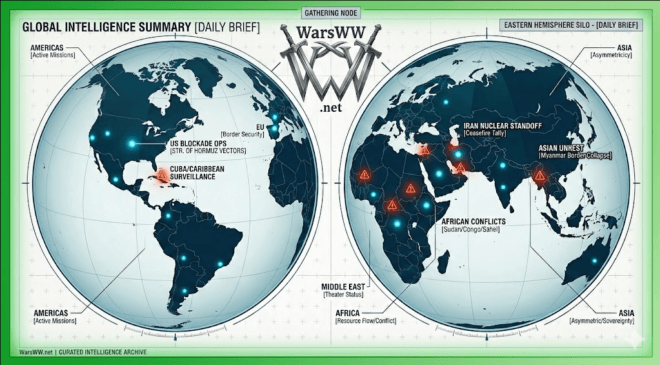
Over the past 96 hours, the fragile diplomatic frameworks governing both the Middle East and Eastern Europe have suffered catastrophic friction. The War of Hormuz escalated into open naval and aerial warfare following the U.S. re-imposition of a total naval blockade on Iranian ports, matched by direct Iranian ballistic attacks against American bases in Jordan and Iraq. In Eastern Europe, the Kremlin executed one of its largest mass ballistic missile waves of 2026 against metropolitan Kyiv. Meanwhile, in Sub-Saharan Africa, paramilitary forces near El-Obeid have drawn international human rights mandates amid an impending humanitarian collapse.
I. Middle East: Eighth Straight Night of U.S. Air Strikes and the Blockade Enforcement
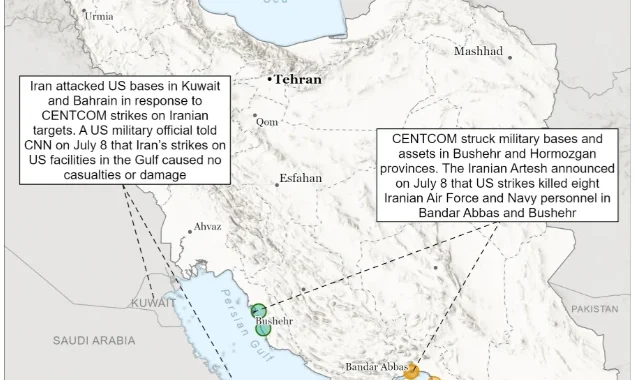
The Persian Gulf theater has entered an unmitigated phase of state-on-state kinetic attrition following the complete collapse of the June 17 preliminary memorandum.
The Persian Gulf & Levant 96-Hour Engagement Matrix
| Operational Vector Node | Primary Kinetic Mechanism | Documented Strategic Fallout |
| Gulf of Oman / Iranian Coast | U.S. Naval Boarding Teams & Air Assets | U.S. Marines boarded M/T Wen Yao to enforce the naval blockade; an unladen tanker was disabled by air fire. |
| Sirik & Qeshm Island, Iran | CENTCOM Precision Bombardment Waves | Eighth consecutive night of U.S. strikes targeting coastal radar, air defense, and missile sites. |
| Jordan-Iraq Border Sector | IRGC One-Way Attack Drones & Ballistic Salvos | Iranian drone strike on a U.S. base in Jordan killed two American service members; a 17th U.S. death was recorded in Iraq. |
| Washington, D.C. (Diplomatic Sector) | High-Level Bilateral Talks | U.S. Secretary of State Marco Rubio met Lebanese President Joseph Aoun to praise Hezbollah disarmament efforts. |
- The Naval Blockade and Boarding Actions: U.S. Central Command (CENTCOM) formally re-established a total naval blockade on Iranian ports. On July 16, U.S. Marines boarded the M/T Wen Yao in the Gulf of Oman to enforce compliance, following an incident 24 hours prior where a U.S. aircraft disabled an unladen oil tanker attempting to break the naval perimeter.
- Centcom Strike Waves and U.S. Casualties: U.S. forces completed an eighth consecutive night of targeted strikes hitting Iranian facilities in Sirik, Qeshm Island, and Khuzestan province. The strikes were launched in direct retaliation after an Iranian drone strike on a U.S. base in Jordan killed two U.S. service members and wounded several others. On July 18, a 17th U.S. service member died in Iraq from unexploded ordnance, marking a sharp rise in military fatalities.
- Nuclear Site Concerns and Lebanese Diplomacy: The UN International Atomic Energy Agency (IAEA) urged maximum restraint after Iranian authorities reported a U.S. strike near the under-construction Darkhovin nuclear site. Concurrently, U.S. Secretary of State Marco Rubio hosted Lebanese President Joseph Aoun in Washington, commending Beirut’s push to disarm Hezbollah while UN peacekeepers reported ongoing daily violations along the Blue Line.
II. Eastern Europe: Kyiv Ballistic Blitz and Ukraine’s Long-Range Response
Symmetric strategic pressure reached a boiling point over the weekend as the Kremlin deployed stockpiled missile reserves to overwhelm Ukrainian air defenses.
The Russo-Ukrainian Frontline & Energy Attrition Metrics
| Target Node Sector | Primary Kinetic Mechanism | Documented Operational Impact |
| Kyiv Metropolitan Area | Heavy Mass Ballistic Volleys & Jet-Drones | Over 100 sites damaged in Kyiv and surrounding regions; 18 missiles and 100+ drones shot down. |
| Kharkiv, Sumy & Donetsk Fronts | Combined Artillery & Loitering Munitions | Multi-province strikes hit civilian infrastructure and transport hubs. |
| Russian Domestic Refining Grid | Ukrainian Deep-Strike Jet-UAV Swarms | Sustained long-range sanctions campaign targets oil processing facilities supplying Russian forces. |
- The Mass Ballistic Attack on Kyiv: On July 19, Russian forces launched one of their largest ballistic missile offensives of the year. Ukrainian President Volodymyr Zelenskyy confirmed that Russian troops stockpiled missiles for days to execute the strike. Ukrainian air defenses successfully intercepted 18 ballistic missiles and neutralized over 100 attack drones, though the onslaught damaged over a hundred sites across Kyiv, Kharkiv, Sumy, and Kherson.
- Accelerating Western Delivery Logistics: Following the attack, Zelenskyy called on Western allies to immediately accelerate agreed-upon air defense packages. Kyiv emphasized that its long-range strike operations against Russian oil facilities and occupation supply lines remain active to systematically degrade Moscow’s war economy.
III. Sub-Saharan Africa: The Siege of El-Obeid Intensifies
- The Siege of North Kordofan: The conflict in Sudan reached a pivotal moment as the Rapid Support Forces (RSF) tightened their encirclement around El-Obeid. The UN Human Rights Council convened an urgent session as 500,000 civilians faced imminent risk of atrocities. In response, the Sudanese Armed Forces reported destroying 205 RSF combat vehicles and downing four drones in an attempt to break the blockade.
IV. WarsWW Media Production Placeholder
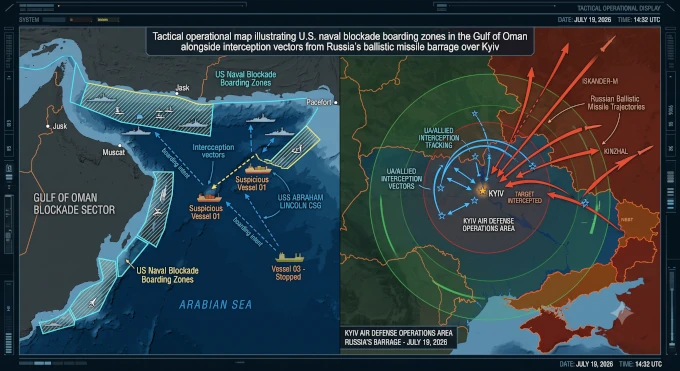
Figure 1: Spatial Overview of Multi-Theater Operations (July 16–19, 2026)
Integrated tactical map profiling U.S. naval blockade boarding points in the Gulf of Oman alongside damage nodes from Russia’s ballistic missile bombardment across Kyiv.
WarsWW Intelligence Note [REF: INTEL-DIGEST-2026-0719]
The developments of the past four days confirm a state of Unmitigated Systemic Attrition. By re-enforcing a strict naval blockade on Iran’s ports while executing consecutive nights of airstrikes, Washington has signaled that it will not tolerate proxy attacks on its regional garrisons. Concurrently, Moscow’s heavy reliance on stockpiled ballistic missiles against Kyiv highlights its intent to force concessions through civil infrastructure exhaustion. As localized forces across the Middle East, Eastern Europe, and Africa double down on kinetic leverage, traditional diplomatic mechanisms remain secondary to facts established directly on the battlefield.