Daily Brief Apr 19, 2026
BLUF
The Strait of Hormuz remains closed to commercial traffic as Iran enforces a naval blockade with active gunfire on vessels, representing the single most consequential disruption to global energy markets in years. Simultaneously, North Korea launched multiple ballistic missiles overnight, adding a second major flashpoint in the Indo-Pacific. Markets rallied sharply — likely a relief rally from prior session losses — but crude oil’s 12.8% single-session plunge signals deeply distorted energy price discovery amid extraordinary geopolitical risk.
KEY DEVELOPMENTS
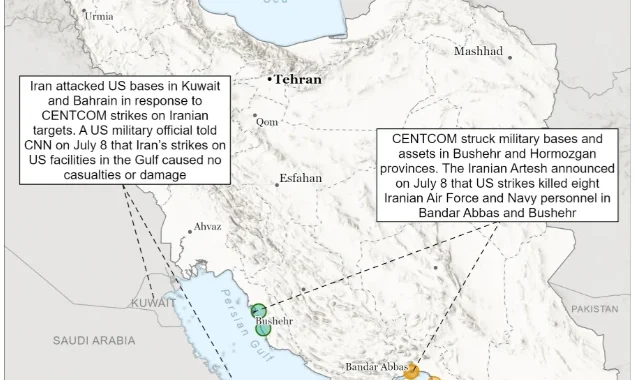
- ▸ Strait of Hormuz — Active Closure (HIGH CONFIDENCE): Iran has physically closed the Strait of Hormuz, with Iranian naval vessels firing on merchant ships and ordering Indian-flagged vessels to abort transit. Iran’s Civil Aviation Authority announced airspace will reopen in four phases, suggesting a controlled, phased de-escalation may be underway — but the maritime blockade remains in force. Iran states no date has been set for U.S. talks, and Tehran claims the closure is legally justified under coastal-state maritime rights.
- ▸ North Korea Ballistic Missile Launch (HIGH CONFIDENCE): Pyongyang launched multiple ballistic missiles toward the sea off its east coast overnight. Japan’s Defense Minister confirmed the impact point fell outside Japan’s Exclusive Economic Zone. Timing — amid peak U.S. Middle East engagement — is consistent with North Korea’s pattern of exploiting adversary distraction.
- ▸ Iran Military Posture — Residual Capability (MODERATE CONFIDENCE): U.S. intelligence estimates Iran retains approximately 40% of its pre-war long-range attack drone arsenal and 60% of ballistic/cruise missile launchers, with 100+ systems buried in hardened cave and bunker complexes. This significantly constrains the effectiveness of Operation Epic Fury strikes and sustains Iran’s retaliatory threat posture.
- ▸ Kyiv Missile Strike: A Russian missile strike on Kyiv killed four and wounded at least 10. A separate mass shooting incident in Kyiv (hostage situation, suspect killed) compounded domestic security stress.
- ▸ Lebanon — U.S.-Israel Friction: The Jerusalem Post reports Israel was “shocked” by a reported Trump administration order prohibiting IDF strikes on Hezbollah in Lebanon. Trump publicly stated he disagreed with Netanyahu on “certain things” but maintained the partnership. Polymarket prices the Israel-Hezbollah ceasefire at 100% probability — indicating a formal ceasefire is considered fully in effect.
- ▸ Germany AEGIS/SPY-6 Approval: The U.S. approved sale of the AEGIS/SPY-6 air defense suite for Germany’s F127 frigates — eight complete sets. A significant NATO capability enhancement signal amid elevated European threat perceptions.
- ▸ Australia-Japan Frigate Contract: Australia signed a contract with Japan’s Mitsubishi Heavy Industries for three “Upgraded Mogami” frigates under SEA 3000, deepening the Indo-Pacific security architecture.
- ▸ Crude Oil Collapse (-12.8%): WTI crude fell $12.10 to $82.59 — a counter-intuitive move given Hormuz closure. Likely driven by demand destruction expectations, strategic reserve release speculation, or prior position unwinding. Gold surged +1.97% to $4,879/oz; Silver surged +4.1%.
- ▸ NPT Review Conference: Diplomats convene in New York April 27 for a month-long NPT Review Conference amid record nuclear dangers, with Iran’s enriched uranium disposition a central unresolved issue. Trump publicly floated the U.S. “taking” Iran’s uranium post-strikes.
- ▸ Critical ICS Vulnerabilities (CISA): Active exploitation of industrial control system vulnerabilities continues, with Iranian-affiliated actors previously confirmed targeting U.S. critical infrastructure PLCs. AVEVA Pipeline Simulation and Horner Automation PLC advisories newly issued.
REGIONAL HIGHLIGHTS
Middle East
The dominant story. Iran’s Hormuz closure is now accompanied by active maritime enforcement — gunfire on vessels — elevating the risk of a broader naval incident. Joint Chiefs Chairman Gen. Caine praised U.S. sailors and Marines enforcing the Iran blockade from the Persian Gulf side. USS Gerald R. Ford (CVN-78) remains positioned in the Eastern Mediterranean (moderate confidence). Iran’s Foreign Ministry called EU appeals to international law “the pinnacle of hypocrisy.” Tehran has ruled out transferring enriched uranium to the U.S. No diplomatic channel with a fixed date is currently open. IODA data confirms Lebanon is experiencing connectivity disruptions, consistent with ongoing conflict stress.
Asia-Pacific
North Korea’s missile salvo lands amid a compressed U.S. strategic attention window. USS George Washington (CVN-73) remains in port at Yokosuka. Two U.S. military aircraft — including what appears to be a bomber-designated callsign (RCH2009) — were tracked over Japan at altitude, possibly on monitoring or deterrence missions. Australia’s frigate contract with Japan marks a concrete step in Quad-adjacent maritime burden-sharing.
Europe
Multiple U.S. C-17 Globemasters tracked transiting Central Europe (Hungary/Germany corridor), consistent with continued logistics support for Ukraine or regional posture adjustments. Russia’s missile strike on Kyiv demonstrates continued strategic bombardment intent. Italian Deputy PM Salvini publicly called for resuming Russian energy imports — a fracture signal within EU energy solidarity. Frost and freeze advisories across the U.S. Midwest are operationally minor but relevant for agricultural futures.
Americas
Trinidad and Tobago police uncovered 56 bodies (mostly children) at a cemetery — details remain unclear and could indicate a mass atrocity or criminal discovery. The country carries a Level 3 travel advisory. U.S. domestic weather includes active flood warnings across Wisconsin/Michigan and frost advisories for the Chicago metro.
Africa
Internet outages assessed as critical are ongoing in Côte d’Ivoire, Zimbabwe, Namibia, Burundi, and DRC — multiple simultaneous African connectivity disruptions warrant monitoring for political or infrastructure causation. SATFIRE data shows active fire radiative power detections in Angola.
INDICATORS TO WATCH (Next 24–48 Hours)
- Hormuz Passage Resumption: Monitor for Iranian Civil Aviation’s phased airspace reopening as a leading indicator of maritime de-escalation. Any vessel successfully completing Hormuz transit without interference would be a significant de-escalation marker.
- U.S.-Iran Diplomatic Contact: Tehran’s statement that “no date has been set” for talks leaves open the possibility of rapid scheduling. Watch for Omani or Qatari intermediary communications.
- North Korea Missile Assessment: U.S. Indo-Pacific Command and Japanese Defense Ministry formal assessments of missile type (ICBM vs. IRBM vs. SRBM) will determine escalation level. A repeat launch within 48 hours would suggest a coordinated pressure campaign.
- NPT Conference Pre-Positioning (April 27): Iran’s enriched uranium status and Trump’s “take the uranium” comment will dominate pre-conference positioning. Watch for Iranian delegation announcements.
- Crude Oil Price Action at Asia Open: If WTI begins recovering sharply at the Tokyo/Singapore open (~23:00 UTC), it confirms the prior session’s decline was position-driven, not fundamental — and validates the risk-premium narrative.