Iran’s “Wave 91” Strikes and Origins of Operation True Promise 4 Explained
As of April 3, 2026, the Islamic Revolutionary Guard Corps (IRGC) has escalated its military campaign against Israel and U.S. regional assets with the execution of Wave 91 of Operation True Promise 4. This latest barrage involved heavy ballistic missiles and attack drones targeting major urban centers, including Tel Aviv and Haifa, as well as several airbases and international U.S. installations.
Understanding Wave 91
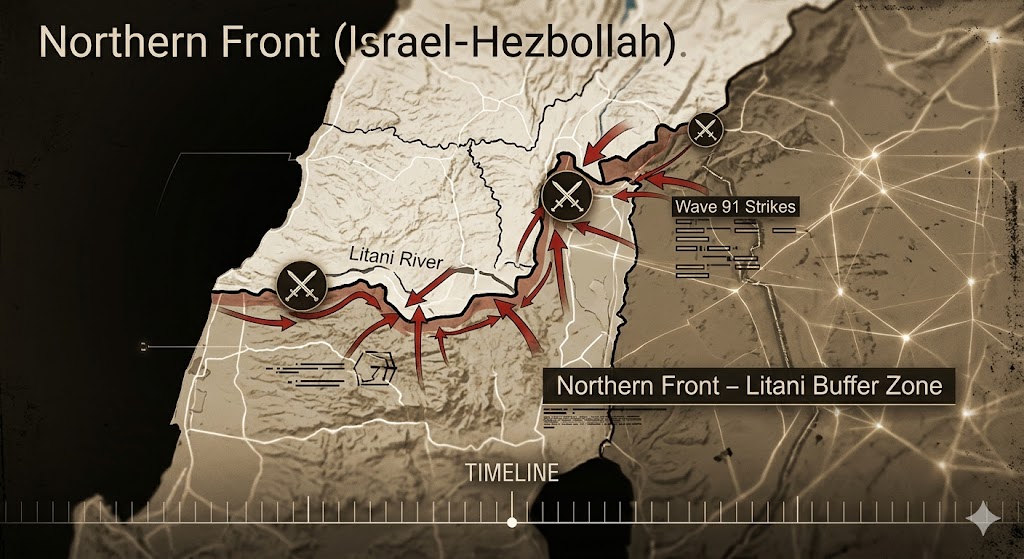
Wave 91 represents the ninety-first distinct phase of strikes within the current “True Promise 4” campaign. Unlike previous intermittent salvos, Wave 91 is characterized by a high degree of coordination with the “Axis of Resistance,” specifically involving the Yemeni Ansarullah (Houthi) forces and Hezbollah.
- Targets: Strikes focused on the “heart” of Tel Aviv and Haifa, with reports from the IRGC claiming that sensitive airbases such as Tel Nof, Palmachim, and Ben Gurion Airport were hit.
- Weaponry: The IRGC Aerospace Force confirmed the use of “super-heavy” ballistic missiles with warheads exceeding one ton, alongside long-range liquid and solid-fuel systems.
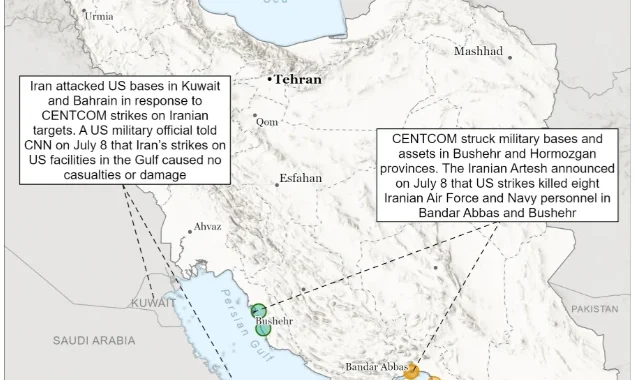
- Regional Impact: Beyond Israel, the IRGC claimed to have struck U.S. bases in Kuwait (Ahmed al-Jaber and Ali al-Salem) and Saudi Arabia (al-Kharj), as well as destroying an early warning radar system at the al-Dhafra base in the UAE.
The Origins of Operation True Promise 4
Operation True Promise 4 was officially launched in early March 2026. It follows the precedent of earlier “True Promise” operations (dating back to April 2024), but this fourth iteration is specifically framed as a defensive response to the joint U.S.-Israeli military campaign known as Operation Epic Fury / Roaring Lion, which began on February 28, 2026.
| Aspect | Details |
| Launch Date | March 9, 2026 |
| Primary Codename | Labbaik Ya Khamenei (“At your service, O Khamenei”) |
| Current Phase | Wave 91 (as of April 3, 2026) |
| Commanding Slogan | O Aba Abdillah al-Hussein |
The Leadership and Architects
The campaign is defined by a significant shift in Iranian leadership following internal political changes and the recent transition of power in Tehran.
- Ayatollah Sayyid Mojtaba Khamenei: The operation was formally dedicated to the new Supreme Leader, Mojtaba Khamenei, following his inauguration in early March 2026. This campaign is widely viewed as his first major military directive to assert authority and “complete obedience” from the IRGC.
- General Majid Mousavi: As the Commander of the IRGC Aerospace Force, Mousavi is the primary architect of the missile strategy. He has publicly stated that the campaign’s doctrine has shifted toward “heavy payloads,” mandating that no missile launched carries a warhead of less than one ton.
- Commemorative Figures: The IRGC statement for Wave 91 noted that the strikes were carried out in honor of “martyred commanders,” including the late General Qassem Soleimani, Brigadier Behnam Rezai (Naval Intelligence), and Brigadier Mohammad Ali Fath Ali Zadeh.
Strategic Context for Readers
For the WarsWW.net audience, it is critical to note that while the IRGC claims these strikes have “overwhelmed” regional defenses, Western and Israeli sources (such as U.S. Central Command and the IDF) report a high interception rate of approximately 92%. However, the sheer volume of Wave 91—reportedly forcing millions into shelters—signals a transition from a war of attrition to a high-intensity, multi-front saturation strategy designed to blind regional radar and deplete interceptor stockpiles.
To provide our readers at WarsWW.net a more technical deep dive into the current escalation, we must look at how the IRGC has structurally altered its missile doctrine to bypass some of the world’s most sophisticated air defenses.
The transition to Wave 91 marks a shift from tactical harassment to “saturation-heavy” bombardment. While earlier waves used a mix of drones and light missiles, Wave 91 is defined by the deployment of massive warheads intended to physically overwhelm interceptor mechanics.
Technical Profile: The “Super-Heavy” Arsenal
The IRGC’s current strategy relies on two primary “heavy” workhorses that have been modified for the Operation True Promise 4 campaign.
To provide our readers at WarsWW.net with a technical deep dive into the current escalation, we must look at how the IRGC has structurally altered its missile doctrine to bypass some of the world’s most sophisticated air defenses.
The transition to Wave 91 marks a shift from tactical harassment to “saturation-heavy” bombardment. While earlier waves used a mix of drones and light missiles, Wave 91 is defined by the deployment of massive warheads intended to physically overwhelm interceptor mechanics.
Technical Profile: The “Super-Heavy” Arsenal
The IRGC’s current strategy relies on two primary “heavy” workhorses that have been modified for the Operation True Promise 4 campaign.
1. The Khorramshahr-4 (Kheibar)
Often cited as the most dangerous in the inventory, the Khorramshahr variant is a liquid-fueled MRBM with a range of 2,000 km.
- Payload Impact: Its primary threat is a 1,500 kg (1.5 ton) high-explosive warhead. In Wave 91, these have reportedly been configured with cluster submunitions.
- Defense Efficacy: The Arrow-3 system is designed for exo-atmospheric interception (hitting the missile in space). However, if the Khorramshahr releases its “bomblets” or performs maneuvers during the mid-course phase, it creates a “cloud” of targets that can exhaust the radar tracking capacity of the defense batteries.
2. The Shahab-3 Variants (Emad & Ghadr)
The Shahab-3 has evolved from a simple “Scud-on-steroids” into the Emad precision-guided missile.
- Maneuverability: These variants now feature Maneuverable Reentry Vehicles (MaRVs). Unlike a standard ballistic arc, these can change direction during the final descent.
- Iron Dome vs. Arrow: While the Iron Dome handles short-range rockets, the Arrow-3 and David’s Sling are tasked with these faster, heavier threats. The “Wave 91” strategy uses these heavy payloads to ensure that even a “near miss” or a partial interception results in significant structural damage to ground targets due to the sheer kinetic energy and explosive mass.
The Origins of Operation True Promise 4
This campaign is not an isolated event but the climax of a month-long conflict that began in late February 2026.
- The Catalyst: The campaign was a direct retaliation to Operation Epic Fury (U.S.) and Operation Roaring Lion (Israel), which launched on February 28, 2026. Those strikes targeted Iranian nuclear sites and resulted in the assassination of top leadership, including the former Supreme Leader.
- The Architects: * Supreme Leader Mojtaba Khamenei: Following the death of his father in the February strikes, Mojtaba was quickly elected and authorized “True Promise 4” as a “War of Vengeance.”
- General Majid Mousavi: The Commander of the IRGC Aerospace Force, who shifted the doctrine from “precision-only” to “precision-plus-mass,” leading to the heavy payloads seen in Wave 91.
Summary for WarsWW.net
| Factor | Strategic Impact |
|---|---|
| Saturation | Wave 91 used over 200 projectiles to blind early warning radars in the UAE. |
| Payload | 1,500 kg warheads force “full kill” requirements; a clipped missile still causes catastrophic ground damage. |
| Coordination | Simultaneous launches from Yemen, Lebanon, and Iran stretch the “sensor-to-shooter” timeline of the Arrow-3. |
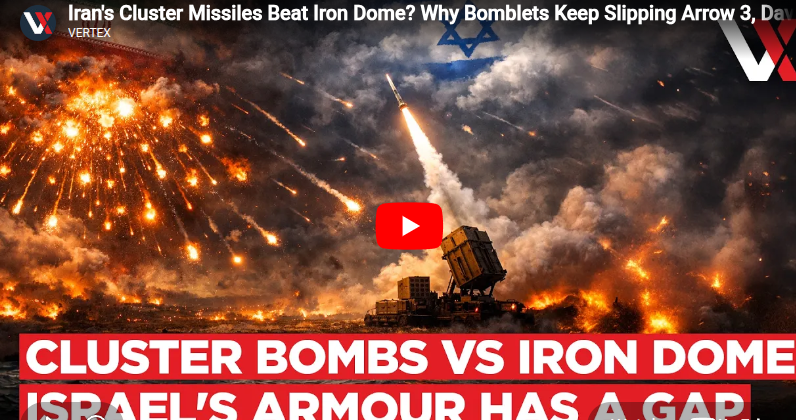
Iran’s Cluster Missiles Beat Iron Dome? Why Bomblets Keep Slipping Arrow 3 This video provides a tactical breakdown of how heavy cluster payloads are specifically designed to exploit gaps in the Arrow-3 and Iron Dome defensive layers.
https://youtu.be/KN4w3IpeLsI?si=9S8IC0BNNcmpx5Nh
To further refine our coverage for WarsWW.net, we need to examine the logistical and digital innovations that have allowed the IRGC to maintain the unprecedented tempo of Operation True Promise 4. The transition from Wave 90
to Wave 91 in less than 24 hours suggests a significant evolution in both launch readiness and real-time impact assessment.
Logistical Engine: Solid vs. Liquid Fuel
The ability to launch Wave 91 so rapidly after the strikes on U.S. industrial sites in the Gulf is largely due to a strategic shift toward solid-propellant platforms.
- Launch Survivability: Unlike liquid-fueled missiles (like the older Shahab variants), which require hours of highly visible fueling procedures on the launchpad, solid-fuel missiles like the Zolfaghar or Sejjil are stored pre-fueled. This allows for a “shoot-and-scoot” capability, reducing the window for U.S. or Israeli preemptive strikes.
- Tempo and Endurance: Solid-fuel logistics have lowered the “support footprint” of IRGC units. By removing the need for massive fuel-truck convoys, launch teams can operate from hardened silos or mobile transporters (TELs) with minimal detection, facilitating the “wave-based” structure of the current campaign.
The “No-Cookie” Intelligence Strategy
One of the most intriguing aspects of Operation True Promise 4 is how the IRGC monitors the success of its strikes without relying on traditional, easily jammed satellite uplinks.
Open-Source Battle Damage Assessment (OSINT BDA): Reports indicate that the IRGC is utilizing AI-coded dashboards to stream real-time social media data. By scraping platforms like X, Telegram, and TikTok for geolocated footage of explosions or sirens, they can confirm “hits” within minutes of impact.
Privacy-Hardened Monitoring: To avoid detection by Western signals intelligence (SIGINT), these monitoring cells reportedly use non-persistent “no-cookie” browsing environments. By rotating through thousands of virtual private servers (VPS) and using “headless” browsers that do not store tracking data, Iranian analysts can harvest public intelligence while remaining “ghosts” to the automated tracking systems of U.S. tech giants.
Geospatial Advantages: This digital strategy is often supplemented by geospatial intelligence support from regional partners, allowing the IRGC to adjust the coordinates for the next wave (e.g., Wave 92) based on the “near-misses” seen in the previous barrage.
Strategic Summary for WarsWW.net Readers
| Feature | Wave 90 Focus | Wave 91 Focus |
|---|---|---|
| Primary Targets | U.S. Metal & Tech Industries | Urban Centers (Tel Aviv/Haifa) |
| Fuel Logic | Hybrid (Liquid/Solid) | Primarily Solid-Fuel (Rapid) |
| Monitoring | Direct Naval Recon | OSINT / Social Media Scraping |