Lebanon Ground War Escalation: IDF Deploys Restricted Munitions for Ali al-Taher Encirclement
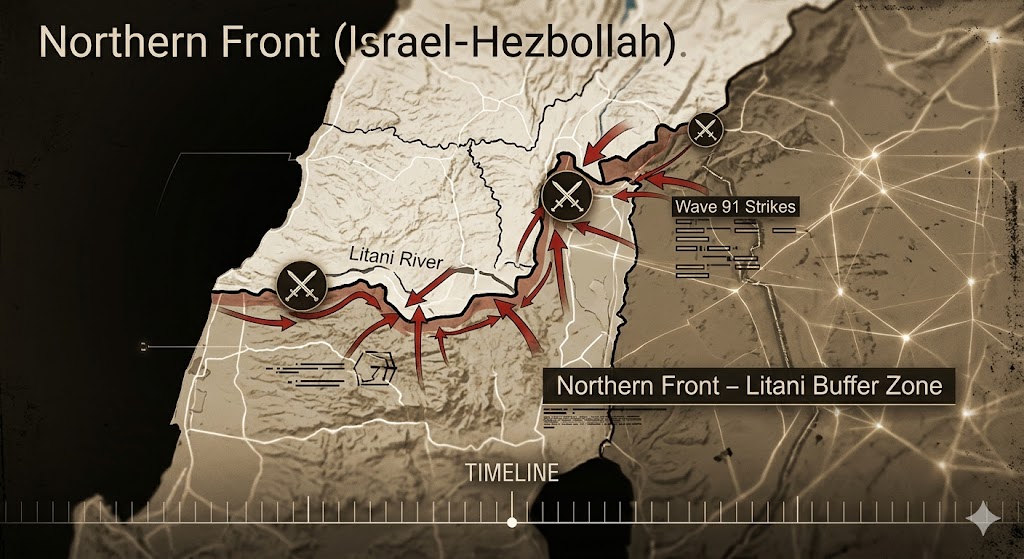
Operational Status: CONTESTED FRONTLINE PENETRATION / ASYMMETRIC FLANKING MANEUVERS / URBAN UTILITY INTERDICTION
Theater Focus: Ali al-Taher Ridge / Nabatieh al-Fawqa / Kfar Tibnit Corridor
Heavy conventional combat has surged across the southern Lebanese theater as the tentative regional truce faces systemic operational strain. Following intense tactical resistance along key defensive salients, the Israel Defense Forces (IDF) have significantly altered their offensive posture, introducing heavily restricted incendiary and submunition payloads to breach fortified positions guarding the gateway to Nabatieh. Open-source intelligence (OSINT) networks and frontline tracking vectors verify that after direct, frontal armored assaults suffered severe equipment attrition, Israeli ground forces pivoted to an aggressive multi-axis encirclement strategy to isolate critical high-ground networks.
The Southern Lebanon Border Engagement Matrix
| Tactical Target Vector | Kinetic Mechanism Deployed | Documented Operational Attrition | Strategic Theater Fallout |
| Ali al-Taher Heights & Ridge Line | 155mm White Phosphorus & Cluster Munitions | Fortified underground tunnel infrastructure targeted; widespread brushfires ignited | High-ground observation networks heavily compromised |
| Nabatieh al-Fawqa Environs | Heavy Artillery Saturation & Airframe Volleys | Primary logistics transit paths and rural staging hubs suppressed | Flanking bypass line established to isolate municipal defense lines |
| Kfar Tibnit Town & Access Roads | Anti-Armor Ambushes & Loitering Munitions | Four-person IDF tank crew eliminated; multiple armored excavators damaged | Direct northern mechanized advance stalled, forcing tactical realignment |
I. The Ali al-Taher Ridge Inundation: Deployment of Banned Munitions
Faced with a highly resilient subterranean defense system engineered beneath the strategic Ali al-Taher ridge line, IDF artillery units have significantly elevated the lethality of their indirect fire support. Frontline dispatches confirm that Israeli artillery batteries launched sustained barrages of white phosphorus shells and cluster munitions across the Ali al-Taher heights.
The utilization of these specific weapon systems has drawn intense international criticism; cluster submunitions are widely restricted under international law due to their inherently indiscriminate area-of-effect profiles, which fail to separate military assets from nearby civilian infrastructure. The incendiary white phosphorus payloads have sparked intense, unmanaged fires across the vegetation cover and defensive tree lines, illuminating the hillsides and creating dense smoke screens to mask incoming ground maneuvers while intentionally blinding local observation cells.
II. The Encirclement Pivot via Nabatieh al-Fawqa
The tactical shift to restricted munitions directly follows a series of operational setbacks for the IDF’s forward mechanized columns. Earlier direct armor thrusts targeting the well-defended Kfar Tibnit corridor resulted in significant losses, highlighted by a coordinated ambush that killed a four-person Israeli tank crew, including a prominent armored battalion commander.
Recognizing that frontal, direct assaults against the town’s urban core had proven untenable due to intensive anti-tank guided missile (ATGM) webs, Israeli command units executed a rapid operational pivot. OSINT flight and radar telemetry tracking systems verify that the IDF shifted its main advance vector toward Nabatieh al-Fawqa to conduct an encirclement maneuver. By bypassing the heavily mined main thoroughfares, the armored columns are attempting to envelope the heights from the flank, aiming to cut off the supply lines feeding the defensive networks entrenched along the ridge.
III. Counter-Escalation and Frontline Friction Indicators
The battlefield remains highly fluid as both factions attempt to establish a dominant tactical footprint prior to any formalized enforcement of international diplomatic agreements.
- The Projectile Volley Response: Defying the heavy air and artillery cover shielding the advancing armored columns, defensive units launched a high-volume counter-offensive. Intelligence briefs verify that Hezbollah fired over 50 rockets and loitering munitions overnight at moving IDF positions, attempting to disrupt the logistics assembly points sustaining the Nabatieh flanking maneuver.
- The Civilian Displacements: The expanding deployment of wide-area artillery systems and indiscriminate air raids has triggered panic across the greater Nabatieh region. Local administrative networks confirm that renewed Israeli evacuation mandates covering multiple southern villages have forced thousands of families to flee northward, severely overwhelming the remaining displacement centers situated beyond the Litani River.
IV. Indicators to Watch
- [TACTICAL AMUNITION STOCKPILES] Deployment Patterns of 155mm Submunitions: Monitor logistics tracking data originating from northern IDF supply hubs. Following the verified use of phosphorus and cluster shells on the Ali al-Taher ridge, track whether international human rights bodies initiate formal investigations into potential treaty violations, or if the high expenditure rate forces an accelerated requests for foreign logistical resupply.
- [GEOGRAPHIC BOUNDARY SHIFTS] The Nabatieh al-Fawqa Convergence: Track moving armor coordinates near the northern perimeter of the city. With the IDF pivoting to an encirclement strategy after frontal paths proved untenable, watch closely to see if Israeli mechanized forces succeed in linking up behind the Ali al-Taher ridge, completely isolating defensive units from their primary logistical hubs.
WarsWW Intelligence Note [REF: DAILY-2026-0620-LEBANON]
The battlefield reality unfolding around the Ali al-Taher heights exposes a significant transition from Proportional Frontline Engagement to High-Attrition Scorched-Earth Tactics. The IDF’s direct pivot toward a flanking encirclement via Nabatieh al-Fawqa—coupled with the intensive use of white phosphorus and cluster submunitions—proves that field commanders are prioritizing rapid tactical success over traditional diplomatic restrictions.
By utilizing area-denial weaponry to incinerate high-ground defensive systems, the military is attempting to force a decisive breakthrough before international diplomatic frameworks can limit operations. This operational acceleration introduces a severe risk to the region’s long-term stability; when prohibited munitions are deployed to bypass stubborn urban defenses, the resulting destruction ensures that even if a diplomatic settlement is achieved in the boardrooms, the physical borderlands will remain an unlivable, highly volatile zone for years to come.