Myanmar Civil War: PDF Progress Update Mar 20
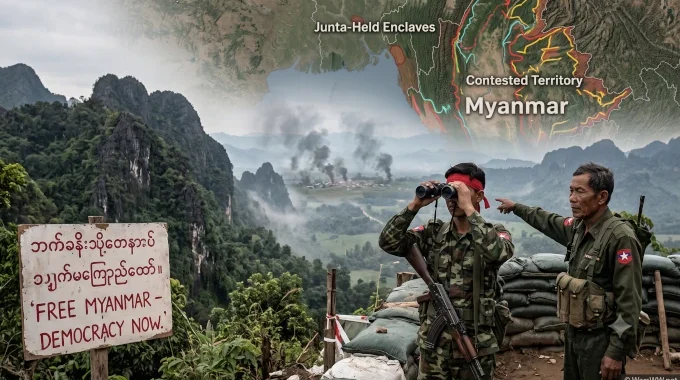
The Myanmar Civil War has entered a complex and increasingly fragmented phase as of March 2026, five years after the initial military coup. While resistance forces—including the People’s Defence Forces (PDF)—continue to hold significant territory, the conflict is currently defined by a “grinding impasse” and shifting geopolitical pressures. | Photo from EastAsiaForum.org
People’s Defence Forces (PDF) Progress
The PDF, acting as the armed wing of the shadow National Unity Government (NUG), has evolved from decentralized local militias into a more structured force of approximately 100,000 fighters PDF strength.
Current Territorial Standing
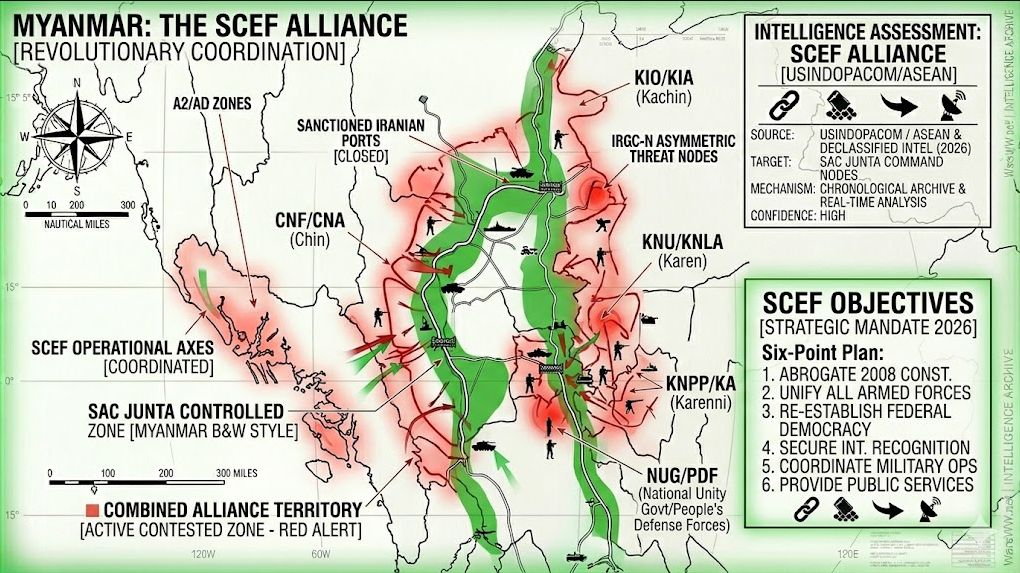
- Heartland Advances: The PDF and its allies have successfully pushed the military (Tatmadaw) onto the defensive in the Bamar heartland, making significant advances toward Mandalay Territorial status.
- Control vs. Governance: Rebel forces and ethnic armies now hold approximately 42% of the country’s territory, while the junta’s control has dwindled to roughly 21%, largely concentrated in urban centers Control statistics.
- Recent Setbacks: In early March 2026, the military recaptured the town of Tagaung in northern Mandalay, which was previously the last NUG-controlled town in that region Tagaung loss.
Tactical Evolution
- Drone Warfare: The PDF has increasingly relied on heavy drone strikes to bypass the military’s superior air power, targeting vital outposts and strategic hills Drone use.
- Urban Guerilla Tactics: While major cities like Yangon remain under junta control, PDF units have shifted to targeted attacks on military infrastructure and personnel within these hubs Guerrilla strategy.
Internal Fractures & Geopolitical Hurdles
The resistance faces new challenges in early 2026 that have complicated the “Spring Revolution’s” momentum:
- Brotherhood Alliance Shattering: Significant infighting has broken out between former allies. Recently, the MNDAA seized control of Kutkai from the TNLA, marking a critical fracture in the coalition that once spearheaded the most successful anti-junta offensives Alliance tensions.
- Chinese Pressure: China has exerted intense pressure on northern ethnic resistance organizations (EROs) to sign ceasefires and reopen trade routes, which has occasionally left PDF units “stranded” or without the support they relied on for large-scale operations Chinese influence.
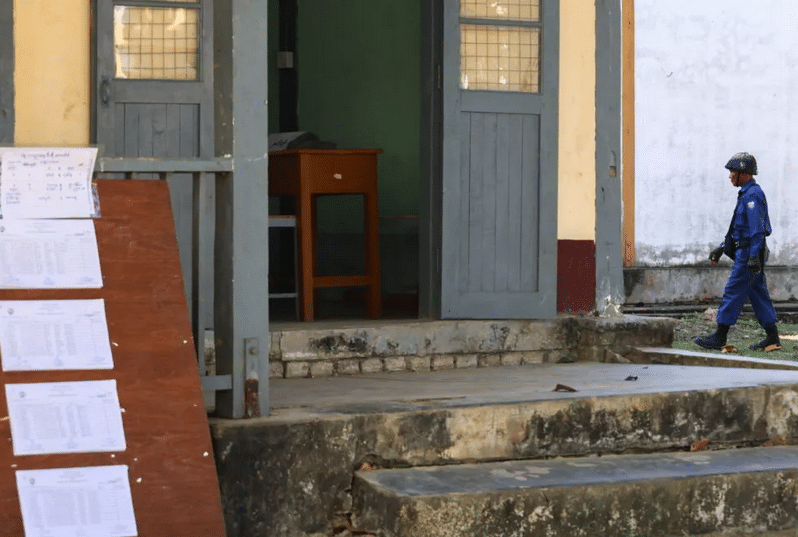
- The “Sham” Election: The junta concluded a three-phase election in January 2026, which the military-backed USDP claimed to win with 72% of the vote. While decried internationally as a sham, it has allowed the junta to install a proxy government to seek international legitimacy Election results.
Expectations Moving Forward
Military analysts and the NUG leadership are preparing for a long-term “war of attrition” rather than a swift victory.
| Objective | Status/Expectation |
| Unified Command | The NUG is attempting to centralize PDF command through a new Special Regional Military Command to coordinate more effectively with ethnic groups Command structure. |
| Decisive Offensive | In February 2026, PDF commanders met to review “war-winning strategies” for the year, aiming for a coordinated offensive to regain the upper hand 2026 strategy. |
| Resource Management | Analysts warn the NUG must focus on practical reforms and sustainable resource management rather than short-term political gains Analyst warnings. |
| International Pressure | The NUG expects continued humanitarian crises, with over 3.5 million displaced, and is pushing for more direct support from ASEAN as the junta’s “veneer of democracy” fails to bring stability Humanitarian outlook. |
The bottom line: While the PDF remains a formidable and growing threat to the junta, the path to a “Federal Democratic Union” is currently stalled by the military’s increased air strikes and the splintering of key resistance alliances in the north.