Omsk Oil Refinery Ukraine Drone Strike Strait Of Hormuz Tanker Attack Nato Summit 2026
WarsWW Daily Brief | July 7, 2026
Intelligence Status: REFINERY ULTRA-DEEP INTERDICTION / STRAIT PROJECTILE IMPACTION / ALLIED COALITION SUMMIT
Global Security Index: 9.98/10 (Severe Macro-Systemic Friction)
I. Eastern Europe: The 2,500km Omsk Megastrike and Russia’s 419-Payload NATO Eve Saturation
Ukraine’s strategic unmanned forces have executed the deepest air interdiction in modern warfare, permanently compromising the crown jewel of Russia’s domestic fuel processing grid while absorbing a massive metropolitan missile saturation.
The Russo-Ukrainian Strategic Attrition Nodes
| Target Node Location | Strategic Asset Category | Documented Operational Attrition | Strategic Theater Fallout |
| Omsk, Western Siberia (2,500km+ Behind Lines) | Gazprom Neft Omsk Oil Refinery | Four direct drone impacts confirmed; primary AVT distillation loops heavily compromised | Russia’s largest processing facility paralyzed; only one top-10 refinery remains untouched |
| Metropolitan Kyiv Grid | Civilian High-Rises & Cultural Sectors | 20 civilians killed; extensive structural ruins across capital neighborhoods | Massive emergency search operations; regional energy distribution halted |
| Yaroslavl Region | Slavneft-YANOS Petroleum Complex | Wave-based loitering munitions trigger multi-point industrial explosions | Logistics fuel lines supplying western military districts degraded |
- The Historical 2,500km Omsk Penetration: Exploiting massive, low-altitude gaps in Russia’s deep-interior air defense systems, upgraded Ukrainian long-range strike platforms bypassed thousands of kilometers of electronic defenses. Satellite imagery confirmed four distinct impact sites caused by Ukrainian upgraded FP-1 drones at the Omsk oil refinery. Local authorities attempted to play down the breach, but verified video analysis confirms that the strike severely damaged a critical primary oil processing unit at the Omsk facility, which stands as Russia’s absolute largest refinery by volume. Following this operation, only one of Russia’s top ten largest oil refineries remains completely untouched by Ukrainian drones as Kyiv’s 40-day compulsion campaign forces an unprecedented domestic fuel crisis that has disabled nearly 43% of Russia’s total refining capacity.
- The Pre-Summit Saturation Bombardment: Hours prior to the Omsk raid, the Kremlin unleashed its most complex air offensive of the summer. Russian forces launched 419 missiles and drones overnight targeting Kyiv and surrounding urban hubs. The saturation wave deployed high-velocity Zirkon anti-ship systems and Iskander-M ballistic missiles, killing at least 20 civilians on the eve of the highly anticipated NATO summit. Emergency services were forced to dig through the rubble of partially collapsed multi-story residential blocks as U.S. officials confirmed that diplomatic frameworks to resolve the war are moving closer behind the scenes.
II. Middle East: The Hormuz Funeral Blockade and the Trilateral Framework Disconnect
The Persian Gulf theater has re-entered a state of critical lock-down following an anonymous maritime kinetic strike, while the implementation of the historic Washington-brokered Lebanon buffer agreement faces severe political opposition.
The Post-Versailles Border and Maritime Dispute Matrix
| Operational Vector Node | Strategic Actor Framework | Immediate Theater Status |
| Strait of Hormuz Corridor | IRGC Air-Defense Batteries & Commercial Shipping | Commercial tanker struck by a projectile; all maritime evacuation lines frozen |
| Bürgenstock Diplomatic Track | U.S. State Department & Iranian Delegations | Diplomatic talks temporarily paused during a week-long state funeral in Tehran |
| Southern Lebanese Border | Lebanese Armed Forces & Entrenched IDF Columns | Phased pilot program handover stalled over demands for absolute Israeli withdrawal |
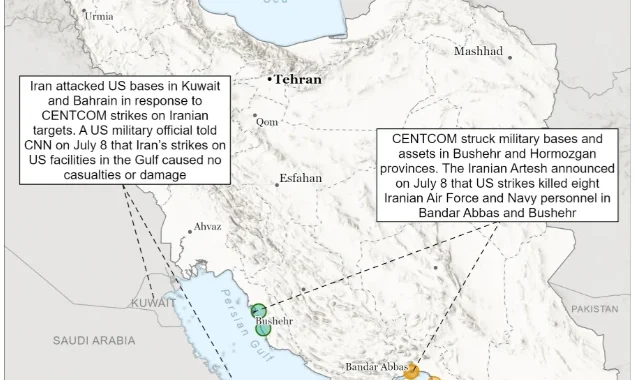
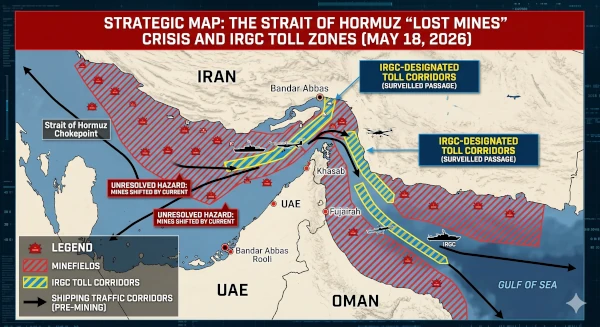
- The Tanker Strike During the Funeral Pause: Direct implementation negotiations in Switzerland have ground to a temporary halt while Iran holds a week-long state funeral for former Supreme Leader Ayatollah Ali Khamenei. Taking advantage of the political vacuum, a commercial tanker transiting the Strait of Hormuz early Tuesday was struck by an unguided projectile. While Tehran’s state media noted the vessel was hit after allegedly ignoring explicit naval warnings, the attack has reinstituted a hard freeze on global energy routes. The incident comes as new polling indices indicate that 52% of Americans now openly oppose the military action the U.S. has taken against Iran, citing severe domestic energy costs.
- The Trilateral Framework Sovereignty Row: On the northern front, the implementation of the landmark June 26 Trilateral Framework Agreement has run into stiff local resistance. The agreement explicitly seeks to empower the Beirut government by establishing a roadmap for Israeli forces to gradually withdraw from south Lebanon, shifting the responsibility of disarming Hezbollah to the Lebanese Armed Forces (LAF). However, Lebanon’s president warned that continued Israeli presence in south Lebanon completely undermines the legitimacy of the state, demanding a complete withdrawal before full LAF pilot-zone deployment can occur. Simultaneously, international legal watchdogs like Amnesty International warned that the agreement betrays victims of war crimes by failing to include accountability metrics for destroyed agricultural lands.
III. Indicators to Watch
- [LOGISTICS SHIFT] The Omsk-Siberian Supply Line Re-Routing: Monitor domestic Russian rail line telemetry. Following the severe destruction of the primary distillation loops at the Omsk refinery, watch whether military logistics divisions are forced to ration specialized aviation fuel and diesel across frontlines in the Donbas.
- [COALITION PRESSURE] The Ankara NATO Summit Mandates: Track executive statements originating from the two-day NATO summit starting Tuesday in Turkey. With President Trump scheduled to meet with Ukrainian leadership regarding end-of-war frameworks, look for whether allied European leaders push back against any immediate scaling down of Western defense guarantees.