
Russia’s Oreshnik System Remains Deployed in Belarus
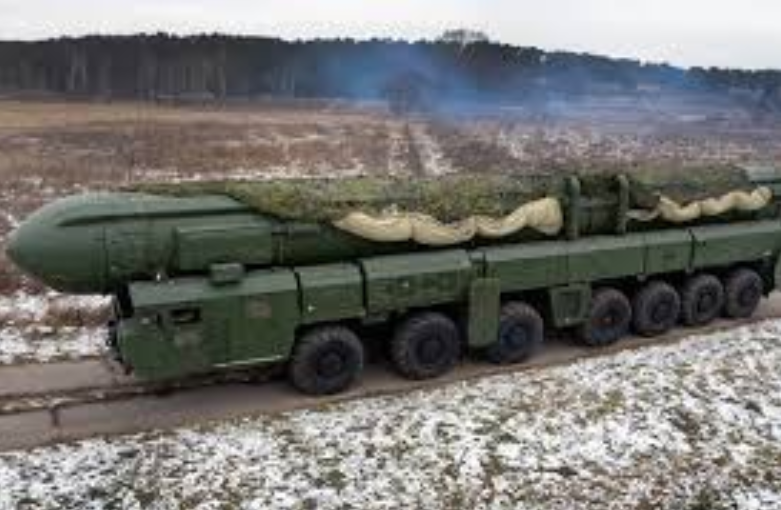
Yes, Russia’s Oreshnik intermediate-range hypersonic missile system is currently deployed and on active combat duty in Belarus. Official confirmation of its operational status came in late December 2025, with recent satellite imagery from February and March 2026 confirming the ongoing presence of the mobile launchers. [1, 2, 3, 4]
Current Deployment Details
- Location: Analysts and satellite imagery have identified the likely deployment site as the Krichev-6 (also spelled Krychau) former Soviet airbase in eastern Belarus, approximately 5 kilometers from the Russian border.
- Scale: Belarusian President Alexander Lukashenko has stated that up to 10 to 12 Oreshnik systems will be stationed in the country.
- Readiness: The system is officially on “combat duty,” which represents the highest readiness level for potential strikes. Footage released by the Russian and Belarusian defense ministries shows mobile launchers conducting drills in snowy conditions.
- Command and Control: While the missiles are on Belarusian soil, they remain fully subordinate to the Russian Strategic Missile Forces (RVSN). Minsk reportedly has no real influence over launch orders or target selection. [1, 5, 6, 7, 8, 9, 10]
Strategic Impact
- Reduced Strike Time: Moving these missiles to Belarus significantly reduces the flight time to European capitals and strategic NATO targets, compressing the decision-making window for Western defenses.
- Deterrence: The deployment is viewed by analysts as a form of “nuclear saber-rattling” intended to deter NATO from providing further long-range weaponry to Ukraine.
- Capability: The Oreshnik is an intermediate-range ballistic missile (IRBM) capable of carrying Multiple Independently Targetable Re-entry Vehicles (MIRVs). It can be equipped with either conventional or nuclear warheads. [2, 11, 12, 13, 14]
[10] https://www.theguardian.com
[11] https://www.atlanticcouncil.org
[12] https://moderndiplomacy.eu
[13] https://www.twz.com
[14] https://united24media.com
Satellite imagery confirms that Russia’s Oreshnik hypersonic missile system is deployed and operational in Belarus, specifically at a former Soviet airbase in Krichev near the Russian border
. Belarus’s Defense Ministry confirmed these systems are currently performing combat duty in designated areas.
Deployment Details
- Location: Imagery identifies the deployment site at the Krichev airbase in eastern Belarus, approximately 5 km from the Russian border.
- Infrastructure: The site features at least six vehicles, new hangars, and a rail spur for delivery and storage.
- Personnel: Russian servicemen have been retrained to operate the system, with accommodation prepared for them on-site.
Strategic Implications
- Reduced Warning Time: The deployment reduces the flight time for missiles reaching European capitals.
- Enhanced Capabilities: The Oreshnik is nuclear-capable, travels at speeds exceeding Mach 10, and utilizes Multiple Independently Targetable Re-entry Vehicles (MIRVs), making it difficult to intercept.
- Political Motivations: Western analysts suggest the deployment is largely political, aimed at boosting Moscow’s nuclear deterrence and bringing Russian capabilities closer to NATO borders.
What’s the range of the Oreshnik missile?
The Oreshnik is classified as an intermediate-range ballistic missile (IRBM), with an estimated operational range of 3,000 to 5,500 kilometers (approximately 1,860 to 3,417 miles). [1, 2, 3]
While its maximum potential range allows it to strike targets across most of Europe and even reach the U.S. West Coast from certain launch locations, its recorded combat use has been at much shorter distances. [1, 4]
Range Variations and Estimates
- Intermediate-Range Category: Most international analysts and the U.S. Missile Defense Agency classify it as an IRBM, a category typically defined by ranges between 3,000 and 5,500 km.
- Official Russian/Belarusian Claims: Russian sources and the Belarusian Ministry of Defense have specifically cited a range of 5,000 km (3,100 miles).
- Combat Use Distances:
- Dnipro (Nov 2024): Launched from the Kapustin Yar range, covering roughly 800–1,000 km.
- Lviv (Jan 2026): Also launched from Kapustin Yar, covering a distance of approximately 1,448 km.
- Relation to RS-26 Rubezh: Experts believe the Oreshnik is a modified version of the RS-26 Rubezh intercontinental ballistic missile (ICBM). By likely removing one of the booster stages, Russia reduced its range from the ICBM threshold (over 5,500 km) to the intermediate range seen today. [1, 5, 6, 7, 8, 9, 10, 11]
Strategic Capability at Range
At these distances, the missile can reach its target in a very short timeframe—approximately 15 minutes for a 1,000 km strike—while traveling at hypersonic speeds of roughly Mach 10. This capability, combined with its road-mobile launcher, allows Russia to threaten high-value targets across the European theater from deep within its own territory or from deployment sites in Belarus. [1, 2, 6]
[1] https://missilethreat.csis.org
[3] https://thedefensewatch.com
[4] https://militarywatchmagazine.com
[6] https://www.armyrecognition.com
[9] https://www.themoscowtimes.com