The Academic Fallout: Impact on EU and Asian Students
Surgical Strikes Target Iranian Scientific and Naval Infrastructure: A Comprehensive OSINT Breakdown
On March 27, 2026, at approximately 2:30 AM local time, a series of precision airstrikes targeted key academic and defense industrial sites across Iran. According to open-source intelligence (OSINT) reports and visual forensics, the operation—part of the broader “Operation Epic Fury”—specifically hit the Iran University of Science and Technology (IUST) in Tehran and major naval production facilities.
The Primary Targets: Why These Sites?
The strikes were not random; they targeted entities the U.S. Department of Defense has historically designated as “engaged in problematic activity” related to nuclear and ballistic missile research.
IUST (Tehran): OSINT accounts and geolocated footage confirm a direct hit on the Physics Department and a Scientific Research Center. IUST is the institution behind the Omid and Zafar 2 satellites, symbols of Iran’s indigenous aerospace capability.
Parchin Military Complex: Long a focal point for international inspectors, new imagery from Vantor satellite sensors shows damage to the Taleghan 2 facility, traditionally linked to explosive testing.
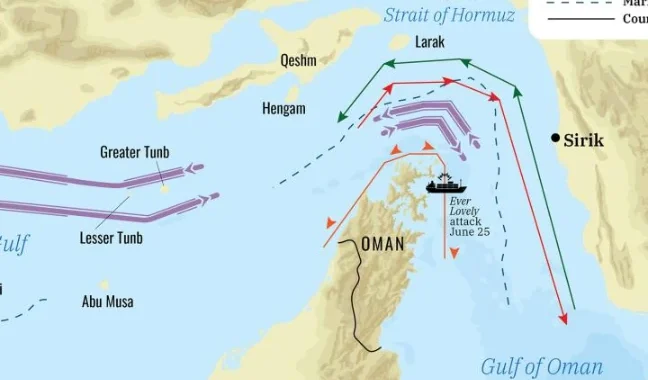
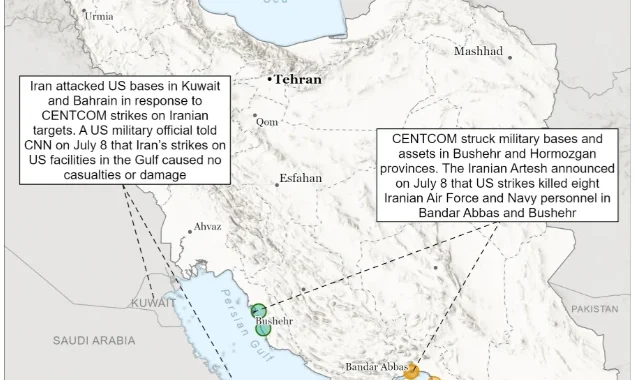
MIO & SADRA: In a move to degrade Iran’s maritime denial capabilities, strikes hit the Marine Industries Organization (MIO) in Tehran and the SADRA shipyard in Bushehr. These facilities oversee the production of naval vessels and fast attack craft used in the Persian Gulf.
The Academic Fallout: Impact on EU and Asian Students
The targeting of universities has created a massive legal and humanitarian ripple effect, particularly for the thousands of international students from the EU and Asia (notably China, India, and Russia) who utilize Iran’s specialized engineering and STEM programs.
Safety and Evacuation: Following the strikes, several EU nations—including Poland, Finland, and Sweden—issued immediate evacuation orders for their citizens. South Korea elevated its alert to a “Level 3 Red Alert,” ordering all nationals to depart.
Shift to Remote Learning: Much like the COVID-19 era, the security situation has forced a regional pivot to online-only instruction. This has stranded students who cannot secure flights home due to disrupted aviation in the Persian Gulf.
Legal Implications: Under International Humanitarian Law, universities are civilian institutions. The targeting of IUST has led to calls for an urgent UN Human Rights Council debate, as it raises questions about the distinction between military research and civilian education.
Strategic Retaliation Risks
The Islamic Revolutionary Guard Corps (IRGC) has issued a deadline of March 30, 2026, demanding the U.S. condemn the university bombings. Failing this, they have threatened retaliatory strikes against American-affiliated branch campuses in the Gulf, such as those in Qatar and the UAE, further endangering the global student body.
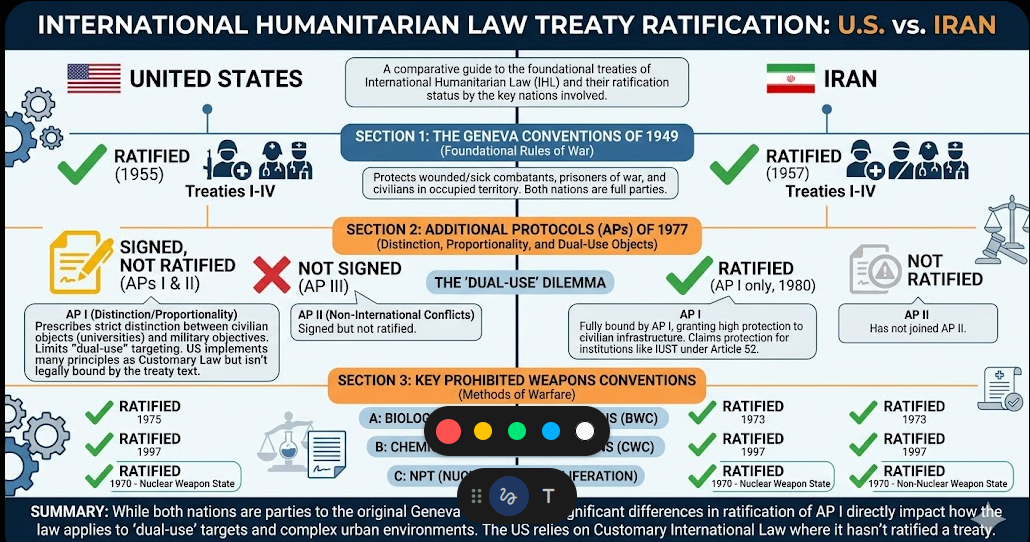
Sidebar: The Legal Calculus of “Dual-Use” Targets
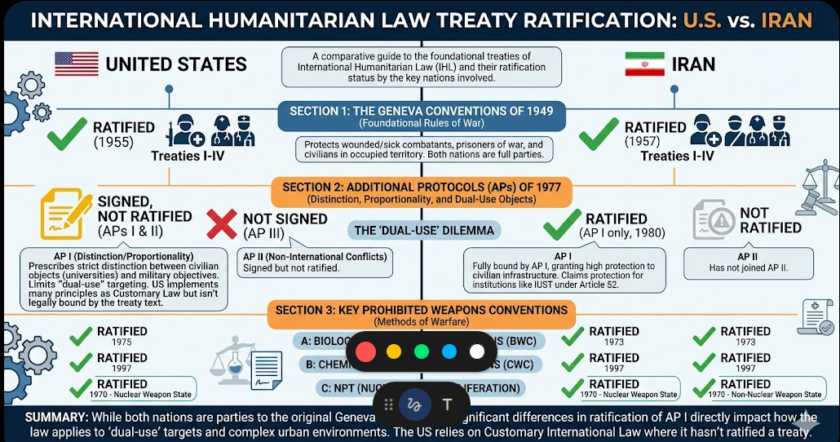
The strike on the Iran University of Science and Technology (IUST) sits at the most controversial intersection of the laws of war. Under the 1949 Geneva Conventions and Additional Protocol I (1977), the legality of targeting a university hinges on three core principles: Distinction, Military Necessity, and Proportionality.
1. The Principle of Distinction (Article 48 & 52)
The “Golden Rule” of IHL requires that parties to a conflict distinguish at all times between civilian objects and military objectives.
- The Rule: Educational institutions are presumed to be civilian objects.
- The “Dual-Use” Exception: A civilian object becomes a legitimate military objective only if it makes an effective contribution to military action by its nature, location, purpose, or use, and its destruction offers a definite military advantage.
- The IUST Case: The U.S. likely argues that IUST’s research into satellite and missile telemetry constitutes an “effective contribution.” However, Article 52(3) explicitly states that in cases of doubt, a school must be presumed civilian.
2. Military Necessity vs. Civilian Status
An object does not become a target simply because it is owned by the government or houses “dual-use” technology.
- The Threshold: The destruction must offer a concrete and direct military advantage. Targeting a physics lab because it might produce future weapons is often seen as a violation of the “purpose” criterion, which generally requires a more immediate military application (e.g., a lab currently refining guidance systems for active conflict).
3. The Proportionality Test (Article 51)
Even if a portion of a university is deemed a military objective, the strike may still be illegal if it fails the proportionality test.
- The Calculation: An attack is prohibited if the expected incidental loss of civilian life or damage to civilian objects is excessive in relation to the concrete and direct military advantage anticipated.
- Impact on Students: The presence of EU and Asian students—non-combatants—greatly raises the proportionality threshold. If the strike was conducted while classes were in session or students were in dormitories, it could be classified as an indiscriminate attack.
Expert Commentary: The “Bright Line” Problem
“International law does not recognize ‘dual-use’ as a distinct legal category. An object is either a military objective or it is not. By targeting IUST, the U.S. is asserting that the university’s research has crossed a bright line from academic inquiry into active combat support—a claim that will face intense scrutiny at the UN Security Council.” — Legal Analyst, WarsWW