Today’s Brief on conflicts, Apr 16 2026

BLUF
The US-Israel military campaign against Iran continues to dominate the global threat landscape, with Tehran showing early signals of potential diplomatic flexibility on Strait of Hormuz access while Pakistan actively mediates new peace negotiations. Russia’s strike on Kyiv killing a child underscores the unrelenting pace of the Ukraine conflict, while equity markets staged a significant rebound despite sentiment remaining at “Extreme Fear” — a disconnect suggesting fragile, technically-driven relief rather than genuine risk appetite recovery.
KEY DEVELOPMENTS
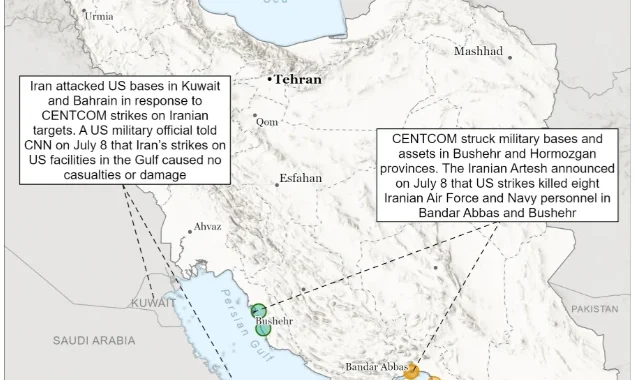
- ▸Iran War / Strait of Hormuz: Iran is reportedly floating a proposal to allow commercial shipping through the Omani side of the Strait of Hormuz, following a now-third day of US blockade operations. Satellite imagery confirms damage to oil storage infrastructure on Siri Island from strikes attributed (unconfirmed) to the UAE on April 8. Polymarket pricing shows near-certainty (>99%) that military action against Iran does not end by April 17. [CONFIDENCE: HIGH]
- ▸Pakistan-Mediated US-Iran Talks: Pakistan is actively pushing for a new round of US-Iran peace negotiations. Combined with Iran’s Hormuz signaling, this represents the clearest de-escalation indicator observed in this conflict cycle. [CONFIDENCE: MODERATE]
- ▸Russia Strikes Kyiv: A Russian attack on Kyiv killed a 12-year-old child and wounded 10 others. Up to 20 Kalibr cruise missiles were launched from the Black Sea, with at least one confirmed overflying Kryvyi Rih. Ukrainian drone-intercept crowdfunding active in Chernihiv corridor. [CONFIDENCE: HIGH]
- ▸USS Gerald R. Ford Deployment Record: CVN-78 has broken the post-Cold War carrier deployment record while operating in the Eastern Mediterranean, underscoring the sustained commitment to the Middle East theater. [CONFIDENCE: HIGH]
- ▸Senate Blocks Arms Sale Halt to Israel: The US Senate rejected two resolutions that would have stopped ~$450M in bombs and bulldozers to Israel. Senate Republicans unanimously backed the Trump administration’s position. [CONFIDENCE: HIGH]
- ▸Israel Expands Lebanon Operations: Netanyahu has directed IDF to continue widening the security zone in southern Lebanon, extending operations eastward toward Mount Hermon slopes. Israel also struck homes in southern Lebanon in the past 24 hours. [CONFIDENCE: HIGH]
- ▸Iran Financial War Escalation: Treasury Secretary Bessent signaled a deepening financial campaign against Iran, citing regional neighbors’ newfound willingness to assist in investigating and exposing Iranian funds — a direct consequence of Iran’s strikes on Gulf neighbors. [CONFIDENCE: MODERATE]
- ▸US Mine Clearance in Strait of Hormuz: CENTCOM forces are actively clearing mines in the Strait of Hormuz using two Navy destroyers, confirming the strait remains partially interdicted and operationally contested. [CONFIDENCE: HIGH]
- ▸CISA / Iranian Cyber Threat: A critical CISA advisory (April 7) flagged Iranian-affiliated cyber actors exploiting Programmable Logic Controllers across US critical infrastructure — a significant escalation in the cyber domain concurrent with the kinetic conflict. [CONFIDENCE: HIGH]
- ▸Equity Markets Rebound; Sentiment Remains “Extreme Fear”: S&P 500 +1.99%, Nasdaq +3.59%, VIX dropped to 18.17 — yet CNN Fear & Greed Index holds at 23 (“Extreme Fear”). Gold at $4,841/oz. This divergence warrants close monitoring. [CONFIDENCE: HIGH]
REGIONAL HIGHLIGHTS
 Americas
Peru’s presidential election ballot count continues amid public frustration and unresolved results. Brazil sees dual political turbulence: the fugitive ex-spy chief was released from US ICE detention, and police have opened a probe into presidential candidate Flávio Bolsonaro ahead of October gubernatorial elections. El Salvador published a law permitting life sentences for minors as young as 12. Severe tornado watches swept Oklahoma, Arkansas, Iowa, and Wisconsin on April 14-15, with flash flood warnings active across Illinois, Wisconsin, and Texas. Freeze watches are issued for the central plains (Kansas, Colorado, Nebraska, Oklahoma panhandle) for the April 18 weekend, threatening crops.
 Europe
Russia-Finland relations described as “practically non-existent” by Moscow’s ambassador; Finland accused of dropping an “iron curtain.” Russian Kalibr cruise missiles targeted Ukrainian cities from Black Sea platforms. German public dissatisfaction with the Merz government is rising, with AfD polling as the most popular party per YouGov — a trend worth monitoring ahead of September state elections in Berlin, Saxony-Anhalt, and Mecklenburg-Vorpommern. UK local elections and Scottish Parliament vote are 22 days out.
Middle East
The Iran conflict remains the dominant regional driver. Tehran’s economy shows class bifurcation — affluent districts of northern Tehran appear normal while other areas suffered heavy bombardment. The UAE’s alleged role in striking Iranian oil infrastructure on Siri Island (April 8) — if confirmed — marks a significant Gulf state escalation. UNSC warned Yemen must not be drawn further into regional escalation. Iran’s Hormuz flexibility signal, if genuine, could provide an off-ramp that protects global energy flows. Multiple fire hotspots detected via FIRMS satellite data across Iraq (Baghdad region).
 Asia-Pacific
Pope Leo drew massive crowds in Cameroon. Australia sees multiple wildfires (green-level) across the Northern Territory and Western Australia totaling ~46,000 hectares. The Royal Australian Navy formally named its Maritime Autonomous Systems Unit (MASU), signaling a strategic pivot toward unmanned naval warfare. Tamil Nadu and West Bengal legislative elections are imminent (April 23 and 29 respectively). FEMA emergency declarations remain active for Typhoon Sinlaku across Guam and the Northern Mariana Islands.
Africa
AFRICOM has commenced Exercise Flintlock 2026, with dual opening ceremonies in Libya and Côte d’Ivoire, focused on combined special operations. IODA reports persistent critical BGP internet outages in Mali and Chad over the past 24 hours — consistent with ongoing conflict and infrastructure degradation in the Sahel. UNSC session addressed DRC conflict, with Rwanda and DRC trading accusations; violence in eastern DRC described as continuing unabated despite diplomatic progress.
INDICATORS TO WATCH
- Iran Hormuz Proposal — Formalization: Watch for official Iranian or Omani confirmation of a shipping corridor arrangement. A formal announcement within 48 hours would be a significant de-escalation signal; silence or denial suggests the leak was tactical.
- Pakistan-Mediated US-Iran Talks — Logistics: Watch for scheduling of a next negotiation round. Any confirmed date/venue signals genuine progress toward ceasefire; absence suggests ongoing stalemate.
- Israeli Lebanon Expansion — Mount Hermon: Netanyahu’s directive to push the security zone eastward toward Mount Hermon slopes risks direct encounter with Syrian and Iranian-aligned forces. Watch for IDF movement northeast of the current zone boundary.
- Fed April 28-29 FOMC Meeting: Polymarket shows near-zero probability (0.3%) of a 50+ bps cut. Watch for any Fed signaling shifts driven by war cost uncertainty and tariff-driven inflation pressures.
- Mali/Chad Internet Outages + AFRICOM Flintlock: Persistent BGP outages in Mali and Chad concurrent with Exercise Flintlock launch merit monitoring for potential Sahel operational activity or ISP/state interference.