Ukraine Drones Strike Tatarstan Refineries Us Iran Deal Hormuz Israel Withdrawal
WarsWW Daily Brief | June 12, 2026
Intelligence Status: THEATER RUSSIA DAY PENETRATION / EXTREME DIPLOMATIC CONVERGENCE / GLOBAL CHOKEPOINT REALIGNMENT
Global Security Index: 9.98/10 (High Systemic Volatility)
I. Eastern Europe: The Russia Day Refinery Firestorm and the 1,200km Deep-Strike Vectors
The symmetric air war has shattered seasonal milestones. Operating under a highly coordinated, ultra-long-range strategic strike envelope, Ukrainian unmanned assets bypassed multiple echelons of Russian electronic defenses to hit core chemical and energy infrastructure during Moscow’s central national holiday.
| Operational Timeline | Staging Vector Node | Tactical Direct Consequence |
| 01:15 AM: Trans-Kama Inflow | Long-range drone swarm intercepts the Republic of Tatarstan industrial grid | Key AVT primary processing units ignited at Taneco and Taif-NK refineries |
| 02:00 AM: Samara Aerospace Surge | Precision fixed-wing flight wave hits Togliattikauchuk synthetic rubber complex | Solid rocket fuel precursor production disrupted; airspace closed |
| 03:45 AM: Regional Control Breaches | Secondary drone wave targets forward command and observation nodes | Tactical centers struck in Kursk, Kherson, and Zaporizhzhia training fields |
- The Russia Day Strategic Sabotage: Commemorating Russia Day on June 12 with maximum disruption, Ukraine launched a massive, deep-theater drone offensive striking the Taneco and Taif-NK refineries in Nizhnekamsk, Tatarstan, alongside the vital Togliattikauchuk chemical plant in the Samara region. The Ukrainian General Staff officially confirmed the successful strikes. Air monitoring indicators verified heavy damage to two primary AVT refining units and a critical tank farm. This operation directly forced Nizhnekamsk Mayor Radmir Belyaev to cancel all planned civic holiday celebrations.
- Choking the Missile Propellant Pipeline: The strike on the Togliattikauchuk plant struck a sensitive node in the Kremlin’s defense supply loop. The facility specializes in manufacturing synthetic rubber used by Russia to produce solid rocket fuel for tactical and ballistic missiles. Social media feeds across Tolyatti recorded loud explosions for 40 minutes and heavy black smoke plume cook-offs. This forced the immediate activation of a “Carpet” regime that closed regional airspace at all altitudes.
- The Collateral Urban Impact: Amid the high-volume saturation raid, a stray drone slammed into a 12-story residential building in Nizhnekamsk, injuring four people and triggering localized evacuations. To control public panic, the Russian Ministry of Defense claimed its air defenses intercepted and destroyed 231 Ukrainian drones overnight across 15 administrative regions, though regional imagery confirmed extensive terminal breaches.
II. Middle East: The Imminent Europe Signing and the Clashing Terms of the Draft Treaty
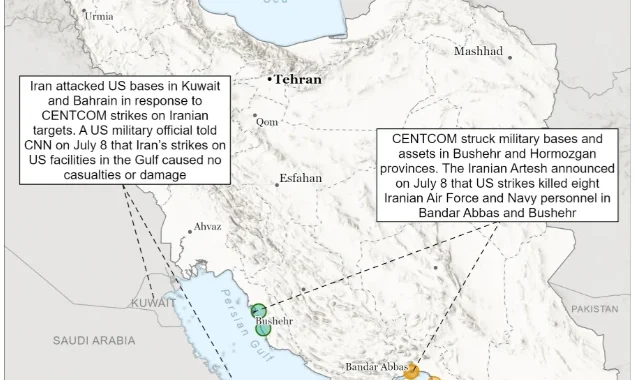
The 100-day war in the Levant has converged into a frenetic diplomatic endgame. Following months of intensive backchannel negotiations and severe naval blockade pressure, Washington and Tehran are on the verge of a historic, multi-theater settlement, even as active front-line commands conduct fierce final positioning maneuvers.
- The White House “Great Settlement” Disclosure: In a dramatic turn of events, U.S. President Donald Trump announced that a “great settlement” has been established with Iranian leadership to freeze regional hostilities. Trump confirmed that the final texts are in deep preparation for an imminent signing summit in Europe over the weekend, with Vice President J.D. Vance flying out to represent the administration. Under the performance-based deal, Iran has agreed to completely dismantle its nuclear program and instantly reopen the Strait of Hormuz. In exchange, Washington has frozen all planned military action against Kharg Island, though VP Vance emphasized that no frozen sovereign funds will be released until Tehran honors its baseline commitments.
- The Clashing Narratives of the Draft Text: Despite Trump’s assertions, Iranian state outlets published highly contradictory parameters of the draft MoU. Reports from the official IRNA and Mehr news agencies insisted that Tehran would preserve its fundamental right to enrich uranium during a mandatory 60-day nuclear negotiation window and would not yield administrative or sovereign control over the Strait of Hormuz.
- The Mandated Israeli Lebanon Pullback: Crucially, the draft deal contains an uncompromising regional clause leaked by the pro-Hezbollah Al-Akhbar newspaper, indicating that Israel would be legally required to completely halt its offensive and execute a rapid, total withdrawal of IDF troops from southern Lebanon. While Prime Minister Benjamin Netanyahu asserted he remains in “full agreement” with Trump to deny Iran nuclear capability, the Israeli Air Force launched eleventh-hour strikes, neutralizing five Hezbollah rocket launchers and hitting an operational command hub to maximize damage before the formal ceasefire takes effect.
III. Indicators to Watch
- [MARKET FORCES] Global Crude Inventory Corrections: Monitor global stock market indexes and shipping tickers. Following early reports that the U.S. has effectively forged an end to the Iran war, track the rapid drop in international crude futures. If the Strait of Hormuz formally reopens over the weekend, look for a sharp correction in transit insurance premiums that could spark a multi-thousand-point global market rally.
- [COALITION FRICTION] The Knesset Sovereignty Revolt: Watch internal political shifts within Tel Aviv. With leaks confirming that the U.S.-Iran deal forces a total Israeli evacuation of southern Lebanon, monitor whether right-wing elements of Netanyahu’s coalition trigger a vote of no confidence to derail the European signing ceremony, framing the American-brokered treaty as a betrayal of northern border security.
WarsWW Intelligence Note [REF: DAILY-2026-0612]
The international arena has arrived at a moment of Asymmetric Strategic Convergence. The immense scope of Ukraine’s Russia Day raids—extending deep into Tatarstan to sever rocket propellant chemical lines—proves that Kyiv is entirely capable of carrying out sustained, long-range economic warfare without relying on direct Western permission. This industrial leverage matches the geopolitical drama unfolding in Washington, where the Trump administration has used aggressive naval interdiction to force Tehran to the negotiating table.
However, the deep gaps between the American and Iranian interpretations of the draft deal reveal that this weekend’s European summit is a high-risk gamble. By forcing a rapid Israeli pullback from Lebanon to secure a signature, Washington may stabilize global oil transits, but it risks creating a massive security vacuum that local actors will look to exploit the moment the ink dries.