Ukrainian Drone Strikes Belgorod Oil Depot Russian Air Assault Iranian F14 Crash

WarsWW Daily Brief | June 1, 2026
Intelligence Status: BALLISTIC SHIELD EXHAUSTION / MULTI-THEATER AIRFRAME COLLAPSE / STRATEGIC PIPELINE INTERDICTION
Global Security Index: 9.99/10 (Maximum Systemic Friction)
I. Eastern Europe: The Belgorod Oil Rupture & The 331-Vector Air Defense Squeeze
The air war over Ukraine and the Russian borderlands has re-synchronized with devastating intensity. Following a brief operational pause over the weekend, both combatants have unleashed maximum-capacity strategic drone waves designed to collapse frontline fuel distribution networks and test structural early-warning radar arrays.
[JUNE 1 BORDERLAND VECTOR EXCHANGE]
 [Russian 219-Drone Wave]      ►     [Ukrainian Air Defense Loop]
(Shahed-136 / Decoy Swarms)          (212 Vectors Intercepted / Suppressed)
│                                   │
▼                                   ▼
[Belgorod Supply Depot]       ◄     [Ukrainian 112-UAV Counter-Raid]
(Rosneft Mainline Asset)            (Precision Detonation / Tanker Fire)
The Belgorod Tanker Firestorm: Executing a precise, low-altitude border penetration raid, Ukraine’s Unmanned Systems Forces launched a wave of long-range strike drones into the Russian interior. Belgorod Governor Vyacheslav Gladkov confirmed that a Ukrainian suicide drone successfully struck an industrial oil depot in the Belgorod district. The impact triggered an immediate explosion, setting a massive commercial storage tank ablaze and heavily disrupting local tactical fuel transfers bound for the Kharkiv operational front.
The Seven-Oblast Barrage: Demonstrating its sustained strategic launch capacity, Russia retaliated with a massive overnight assault utilizing one Iskander-M ballistic missile and 218 strike drones—deploying a dense mix of explosive Shahed-136 platforms alongside low-cost Parodiya and Gerbera decoy variants. Ukrainian Air Force command verified that mobile fire groups and electronic warfare systems successfully neutralized 212 of the incoming aerial targets across seven municipal oblasts.
The Mykolaiv Breakout: Despite high interception rates, multiple Russian strike drones successfully breached terminal defenses in southern Ukraine. Regional officials confirmed a rogue Shahed drone detonated inside a critical infrastructure asset in Mykolaiv, triggering a localized structural fire that cut grid connectivity to surrounding civilian transport hubs.
II. Middle East: The Iranian F-14 Fighter Crash and the Hormuz Transit Halt
The operational airspace over the Persian Gulf remains a highly volatile flashpoint following the collapse of the Islamabad-mediated maritime armistice framework.
- The Isfahan Airframe Loss: Iranian state media confirmed that an IRGC Air Force F-14 Tomcat fighter jet crashed during a combat training mission in the central Isfahan province. Defense analysts indicate the legacy airframe suffered a catastrophic technical malfunction while conducting intercept drills related to the ongoing Gulf defense posture. Both the pilot and co-pilot successfully ejected and were transferred to a localized military medical facility.
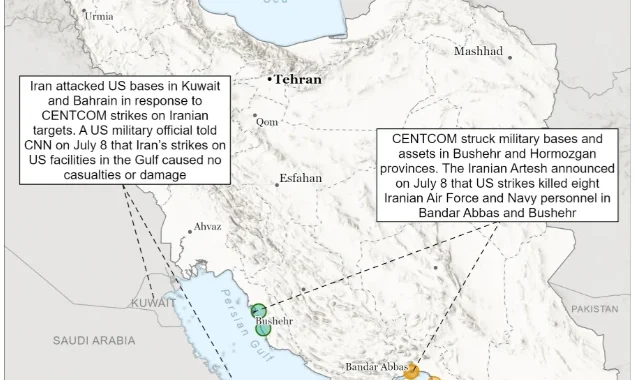
- The Maritime Insurance Squeeze: Following last week’s ballistic engagements over Kuwait and the subsequent U.S. Navy advisory warning commercial fleets to steer clear of the chokepoint, international shipping registries confirm that commercial traffic through the Strait of Hormuz has slowed to an absolute crawl. Marine firms report that war-risk insurance premiums have surged past sustainable thresholds, forcing major energy conglomerates to re-route cargo ships around the Cape of Good Hope.
| Theater Node | Primary Weapon Asset | Target / Infrastructure | Operational Attrition Status |
| Belgorod Region | Low-Alt Strike UAV | Rosneft Oil Depot Terminal | Storage tank heavily compromised; fuel fires active |
| Mykolaiv Oblast | Shahed-136 Loitering Munition | Regional Power Grid Hub | Grid infrastructure damaged; localized blackouts |
| Isfahan Province | F-14 Tomcat Interceptor | Combat Training Flight Loop | Airframe destroyed; dual pilot ejection verified |
| Strait of Hormuz | Active Sea Minefields | International Shipping Lanes | Commercial fleet exit sustained; transit halted |
Figure 1: High-resolution intelligence matrix mapping the vector paths of the Belgorod oil refinery strike relative to the internal technical attrition occurring within the IRGC’s legacy air defense airframes.
IV. Indicators to Watch
- [ENERGY SECURITY] The Belgorod Distribution Detour: Track regional rail and pipeline telemetry in Russia’s western military district. Following the precision strike on the Belgorod oil depot, monitor whether the Russian energy ministry can rapidly shift fuel logistics to alternative transit pipelines without causing a direct supply bottleneck for frontline armored maneuvers.
- [MILITARY LOGISTICS] IRGC Airframe Readiness: Watch for changes in Iranian defense deployment patterns surrounding Isfahan and Bandar Abbas. The loss of a premier F-14 interceptor highlights the severe maintenance strain and spare-parts deficits confronting the IRGC after months of high-intensity operational readiness loops.
WarsWW Intelligence Note [REF: DAILY-2026-0601]
The global strategic landscape is operating under a condition of Sustained Material Attrition. Ukraine’s successful penetration of the Belgorod infrastructure proves that despite Russia’s massive domestic drone manufacturing output, internal early-warning grids remain highly porous along critical logistical axes. Concurrently, the operational loss of an Iranian F-14 interceptor underscores the hidden cost of the multi-theater conflict; while attention is fixed on heavy ballistic missile salvos, the underlying conventional airframes and technical machinery of the regional actors are facing rapid, structural exhaustion.