Ukraine Drones Strike Saratov Refinery Israel Captures Beaufort Castle
WarsWW Daily Brief | May 31, 2026
Intelligence Status: RE-ENTRY INFRASTRUCTURE BLITZ / DEEP BUFFER EXPANSION / LOGISTICAL INTERDICTION RESYNC
Global Security Index: 9.99/10 (Maximum Structural Instability)
I. Eastern Europe: The 445-Vector Asymmetric Sky Clash and the Deep Refinery Rupture
The air war over Eastern Europe has experienced a massive dual-axis escalation over the last 24 hours, testing terminal intercept networks to their absolute breaking points on both sides of the sovereign border.
                        [THE MAY 31 DUAL-AXIS VECTOR EXCHANGE]
[Russian 229-Drone Incursion]         │      [Ukrainian 216-UAV Counter-Raid]
─────────────────────────────────        │   ─────────────────────────────────
• 7 Attack Corridors Identified         │    • 10 Russian Municipal Regions Targeted
• Mix of Shaheds & Decoy Units          │    • Saratov Oil Refinery Devastated
• 212 Vectors Downed by Kyiv            │    • Pipeline Node Hit 1,200km Inland
The Seven-Axis Incursion: The Ukrainian Air Force confirmed that Russian forces launched a massive overnight wave of 229 drones arriving from seven distinct flight directions. The strike package mixed jet-propelled Shahed platforms with specialized Gerbera, Italmas, and Parodiya decoy assets to blind terminal tracking networks. While Ukrainian air defense teams successfully shot down or suppressed 212 enemy drones, 14 strike platforms broke through, hitting an industrial enterprise in the Koriukivka district of the Chernihiv Oblast and killing a 58-year-old civilian man.
The Saratov Oil Refinery Fire: Executing a highly coordinated strategic counter-strike, Ukraine’s Unmanned Systems Forces, in tandem with military intelligence (HUR), launched 216 long-range drones over 10 Russian regions and occupied Crimea. Open-source satellite tracking data from NASA’s FIRMS thermal monitoring grid verified that multiple Ukrainian strike drones successfully detonated inside the Saratov Oil Refinery, a premier processing facility operated by Russian energy giant Rosneft. The impact ignited a massive, 400-square-meter inferno that compromised a 10,000-ton diesel fuel tank and tore through critical catalytic reforming units.
The 1,200km Pipeline Penetration: Concurrently, Ukrainian precision drones executed an ultra-deep interdiction raid, striking the Lazarevo Linear Production and Dispatch Station in the Kirov Oblast—located more than 1,200 kilometers (746 miles) from the Ukrainian border. The facility acts as a primary pumping link for the Surgut–Gorky–Polotsk mainline, a core hub of the Druzhba main pipeline system that the Kremlin relies upon to rapidly transfer crude oil reserves to support front-line military logistics.
II. Middle East: The Beaufort Fortress Seizure and the Ali Al Salem Post-Mortem
The strategic architecture of the Levant and the Persian Gulf has undergone a profound restructuring as parallel ground and ballistic actions completely outpace active diplomatic talk tracks.
- The Fall of Beaufort Castle: In their deepest push into sovereign territory in over a quarter-century, Israeli ground forces have officially captured the 900-year-old Beaufort Castle and its strategic ridge line in southern Lebanon. The IDF crossed the Litani River in force, using heavy tank and artillery grids to drive Hezbollah elements out of the medieval stronghold, which sits over 3,000 feet above sea level and provides commanding artillery overlook views across northern Israel and southern Lebanon. The historic advance significantly complicates emerging peace frameworks, as Tehran demands an absolute end to fighting in Lebanon as a baseline precondition for any regional U.S.-Iran maritime agreement.
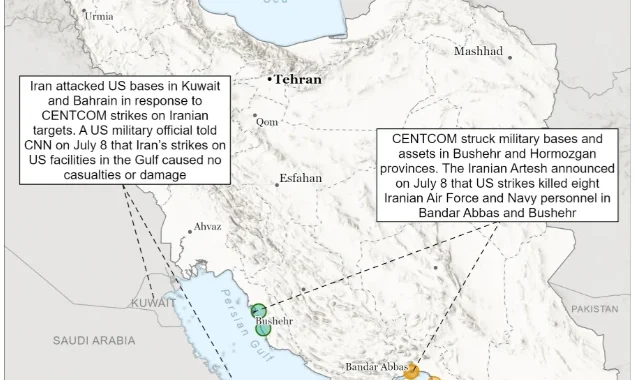
- The Kuwait Casualty Metrics: Fresh defense disclosures confirmed that American service members and civilian defense contractors were indeed injured during the recent Iranian ballistic missile attack on the Ali Al Salem Air Base in Kuwait. Military officials clarified that the casualties were caused by falling shrapnel and heavy debris generated during Patriot intercept engagements rather than direct missile impacts, with all recorded injuries classified as minor.
III. Featured Visual Intelligence Archive [REF: INTEL-MAP-2026-0531]
| Operational Zone | Primary Tactical Asset | Strike Target / Metric | Current Attrition Status |
| Saratov Oblast | Long-Range Li-Ion Drone | Rosneft Processing Facility | Catalytic reforming units compromised; 10k-ton tank ablaze |
| Kirov Oblast | Long-Range Standoff UAV | Lazarevo Pumping Hub | Druzhba mainline pipeline flow disrupted 1,200km inland |
| Southern Lebanon | Merkava IV / Golani Brigade | Beaufort Castle & Ridge | Symbolic medieval fortress secured past Litani River line |
| Kuwait Frontier | MIM-104 Patriot Battery | Ali Al Salem Airspace Buffer | Minor shrapnel injuries recorded among U.S. personnel |
Figure 1: Comprehensive Sunday intelligence grid mapping the simultaneous deployment loops of deep Ukrainian infrastructure interdiction drone salvos relative to the territorial buffer shifts taking place beyond the Litani River corridor.
IV. Indicators to Watch
- [ENERGY LOGISTICS] The Druzhba Bypass Loop: Monitor regional transit telemetry along the Surgut-Gorky conduit. Following the precision strike on the Lazarevo Linear Production Station, track whether the Russian energy ministry can successfully re-route crude allocations via southern transport links without causing an acute fuel supply bottleneck for frontline armored assets.
- [DIPLOMACY] The Lebanon Ceasefire Wedge: Watch the upcoming diplomatic briefings out of Beirut and Doha. If Lebanese Prime Minister Nawaf Salam secures emergency international intervention following his public accusations that Israel is pursuing a policy of total urban destruction, it could trigger a formal freeze of parallel maritime negotiations between the White House and Tehran.
WarsWW Intelligence Note [REF: DAILY-2026-0531]
The global strategic landscape is demonstrating an undeniable law of Asymmetric Resource Dispersal. Ukraine’s successful strike on the Lazarevo station—penetrating a massive 1,200 kilometers through Russia’s premier early-warning networks—proves that Moscow’s internal air defense loops are heavily thinned out. The Kremlin has been forced to push its primary intercept hardware toward its western borders to insulate its logistics lines against NATO expansion anxieties. Concurrently, Israel’s historic push past the Litani River to seize Beaufort Castle indicates that regional actors are moving with total autonomy; they recognize that the United States is logistically occupied managing the shrapnel fallout of Iranian ballistic salvos over its own bases in Kuwait.