War of Hormuz Trump Ultimatum Qeshm Island Lebanon Pilot Zone Ukraine Advance 2026
WarsWW Daily Brief | July 11, 2026
Intelligence Status: REFINERY CAMPAIGN ACCELERATION / HORMUZ DEADLINE BREAKDOWN / BEIRUT PILOT-ZONE DEPLOYMENT
Global Security Index: 9.99/10 (Critical Macro-Systemic Instability)
I. Middle East: The War of Hormuz Transition, Trump’s Seizure Ultimatum, and the Beirut Pilot-Zone Advance
The temporary West Asia diplomatic framework has collapsed into a major regional escalation. Following the targeted strikes on three merchant ships transiting the waterway earlier this week, the conflict has officially transformed into a direct struggle for structural control over global energy lanes.
The Persian Gulf & Levant Operational Friction Matrix
| Tactical Target Vector | Combat Unit / Executive Actor | Documented Strategic Impact |
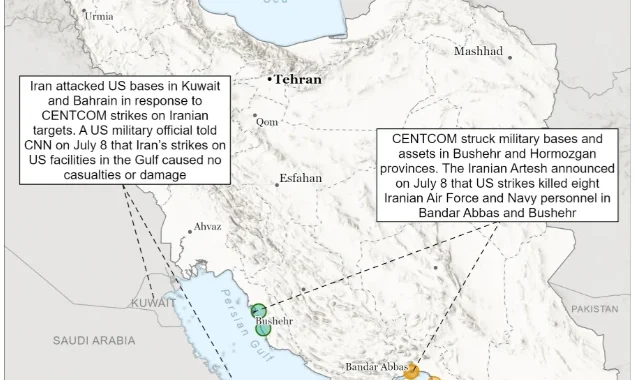
| Qeshm Island, Strait of Hormuz | U.S. Central Command / IRGC Navy 2nd Command | Heavy naval and air bombardment destroys Iranian surveillance radar sites and anti-ship missile batteries |
| Tehran Province (Eastern Sector) | Iranian State Logistics / Ordnance Disposal | Controlled detonation of unexploded ordnance rocks capital; triggers localized alert |
| Southern Lebanon Pilot Zones | U.S. CENTCOM Delegation / Lebanese Army Command | Bilateral mechanisms activated for immediate IDF withdrawal and LAF troop backfill |
- The Battle for Qeshm Island and Trump’s Ultimatum: Following a direct refusal by Tehran to yield navigational protocols, U.S. President Donald Trump issued an ultimatum to Iran to surrender control of the Strait of Hormuz by July 11, 2026. With the deadline expiring, U.S. Central Command launched a heavy bombardment campaign against Qeshm Island, successfully destroying critical Iranian surveillance radar sites and unmanned aerial vehicle launch bases. Defense analysts indicate that seizing the island could permanently block Iran’s ability to harass merchant vessels using fast boats or maritime sea mines.
- The Shipping Standstill and Sanctions Snapback: The renewed hostilities have brought commercial shipping to a near-standstill in the Strait of Hormuz, leaving roughly 6,000 seafarers stranded on hundreds of idle vessels. UN International Maritime Organization (IMO) Secretary-General Arsenio Dominguez confirmed that all civilian seafarer evacuation missions have been entirely frozen for security reasons. In tandem with the kinetic strikes, the United States has officially rescinded the temporary sanctions waiver that allowed Iran to sell its crude oil at market prices, completely freezing Tehran’s legal foreign energy revenue.
- The Beirut Pilot-Zone Deployment: On the western front, a U.S. military delegation arrived in Lebanon on Saturday to meet with the Lebanese Army Command to implement Israel’s withdrawal from the first designated “pilot zone”. Under the framework signed on June 26, the long-disempowered Lebanese military will take full control of these areas as Israeli ground forces progressively redeploy outward. The transition faces fierce domestic resistance, as Hezbollah and its political allies have blasted the deal as subservient to Israel due to clauses preventing Beirut from pursuing international war crime charges.
II. Eastern Europe: The Oleksandrivka Ground Advance and Putin’s Falling Approval Metrics
Ukrainian forces have combined high-tempo frontline tactical counter-offensives with sustained long-range air strikes on energy infrastructure to successfully degrade the Kremlin’s domestic stability.
- Frontline Advances Slow Russian Momentum: Delivering a major mid-year operational review, Ukrainian Commander-in-Chief Oleksandr Syrskyi confirmed that Ukraine’s active defense operations successfully reduced the pace of Russia’s territorial advances by more than half during the first six months of 2026. Frontline updates verify that Ukrainian forces have recently advanced in the Oleksandrivka direction, utilizing highly dense FPV drone screens to push back exposed Russian motorized detachments.
- Sustained Energy Attrition and Putin’s Rating Slump: Operating under the 40-day compulsion mandate, Ukrainian long-range drones conducted another series of overnight strikes against Russian energy infrastructure. While the Kremlin attempted to mask the industrial fallout by launching 137 Shahed drones against Ukrainian regional capitals, internal pressures are mounting inside Russia. Data from a state-owned polling institution indicates that Russian President Vladimir Putin’s domestic approval ratings continued to fall sharply through early July, reflecting public anxiety over infrastructure blackouts and fuel shortages.
III. Indicators to Watch
WarsWW Editorial Intelligence Note [REF: INTEL-DEBRIEF-2026-0711]
The international security landscape has shifted from Fragile Diplomacy to Attrition-Based Enforcement. The collapse of the U.S.-Iran memorandum and the expiration of President Trump’s July 11 ultimatum confirm that top-down treaties cannot hold when foundational chokepoints remain under contested military control. By explicitly targetting Qeshm Island’s radar and drone infrastructure, Washington is aiming to strip Tehran of its primary tool of naval coercion, effectively betting that a heavily degraded Iranian defense industry cannot sustain a prolonged campaign on the water.
This strategy of systematic industrial degradation is being mirrored with high efficiency in Eastern Europe. Ukraine’s ability to slow Russia’s ground momentum by over 50% while eroding Putin’s domestic approval numbers through targeted infrastructure strikes proves the efficacy of its asymmetric approach. As both the War of Hormuz and the defense of the Donbas converge into battles over critical infrastructure, the traditional diplomatic playbook has been completely replaced by an uncompromising reality: real stability will not be decided by signatures in Geneva, but by the physical destruction of an adversary’s capacity to wage war.