WarsWW Weekly Brief | September 24, 2026

Intelligence Status: TEHRAN DIPLOMATIC GAMBIT AT UNGA / UKRAINIAN COUNTER-REFINERY ATTACKS / SUDAN HUMANITARIAN PIPELINE FAILURE
Global Security Index: 9.99/10 (Critical Multi-Theater Escalation)
I. Middle East: Iranian President Addresses UNGA Amid Threats to Expand War into the Indian Ocean
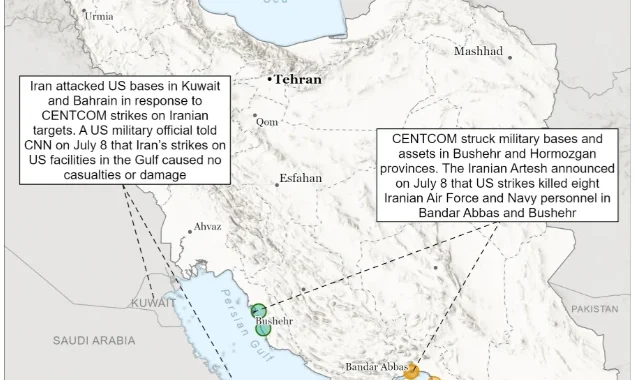
The confrontation in the Persian Gulf shifted onto the global diplomatic stage at the UN General Assembly in New York. Addressing world leaders, Iranian President Masoud Pezeshkian defended Tehran’s military posture, asserting that Iran was defending itself against U.S. and Israeli operations while expressing readiness for negotiations if naval blockades and economic sanctions are lifted.
Middle East Geopolitical & Maritime Risk Matrix
| Operational Vector Node | Strategic Action Mechanism | Documented Strategic Impact |
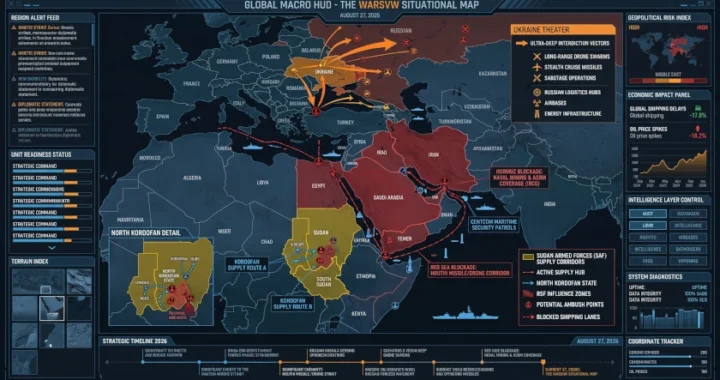
| Indian Ocean Expansion Threat | High-Level Strategic Warning | Supreme Leader advisor Yahya Rahim Safavi warned that continued U.S. strikes will force Tehran to extend combat operations beyond Hormuz into the Indian Ocean. |
| Persian Gulf & Hormuz | Naval Lockdown & Escort Battles | Commercial traffic through the Strait of Hormuz remains severely restricted as Tehran demands an end to the U.S. naval blockade before reopening transit lanes. |
| Red Sea & Bab al-Mandeb | Houthi Coastal Consolidation | Houthi forces strengthened control along the Red Sea coastline, enforcing a maritime blockade targeting commercial vessels. |
- Diego Garcia Put On Notice: Tehran’s explicit threat to expand the war zone into the Indian Ocean specifically targets the joint U.S.-British military base at Diego Garcia, located 4,000 kilometers from Iran.
- Diplomatic High-Stakes: While Secretary of State Marco Rubio affirmed that executive military power will be maintained, back-channel discussions in New York continue regarding conditional sanctions relief and Strait reopening terms.
II. Eastern Europe: Ukrainian Swarms Strike Rosneft Refinery in Samara and Rostov Infrastructure
In Eastern Europe, Ukrainian long-range strike units executed another high-volume wave of drone attacks against rear energy production assets inside the Russian Federation.
Eastern European Attrition Metrics
| Target Coordinate Node | Weapon System Profile | Documented Strategic Attrition |
| Samara Oblast (Russia) | Long-Range Jet-UAV Swarms | Ukrainian drones struck the Kuibyshev oil refinery, igniting major fires at Rosneft’s regional processing hub. |
| Krasnodar & Rostov | Low-Altitude Attack Drones | Drones damaged oil depot infrastructure in Rostov’s Kagalnitsky district and ignited facilities in Dinskaya. |
| Frontline Attrition Balance | Systematic Attrition Tracking | OSINT assessments show minimal territorial shift over the past 30 days amidst escalating civilian and material costs. |
- Targeting Propellant and Processing Hubs: Over 40 Ukrainian drones breached Russian air defense networks overnight, hitting Rosneft’s Kuibyshev refinery in Samara and causing heavy damage to fuel storage sites in the Krasnodar and Rostov regions.
III. Sub-Saharan Africa: UN Warns Sudan Displacement Tops 308,000 in Kordofan as Aid Pipeline Runs Dry
In Sudan, the humanitarian disaster caused by fighting between the Sudanese Armed Forces (SAF) and the Rapid Support Forces (RSF) reached critical thresholds.
- Kordofan Mass Displacement: The International Organization for Migration (IOM) reported that over 308,000 people have been displaced across North, West, and South Kordofan, with over 123,000 fleeing toward Khartoum state.
- Imminent Relief Collapse: The IOM warned that the Common Humanitarian Pipeline providing emergency shelter and relief items will run out of supplies by the end of September 2026 without urgent donor funding.
WarsWW Intelligence Note [REF: INTEL-DEBRIEF-2026-0924]
The threat issued by Tehran regarding the Indian Ocean represents a pivotal escalation into Global Maritime Interdiction. By referencing Diego Garcia, Iran aims to leverage international shipping anxieties to pressure Washington during active UN negotiations. Meanwhile, Ukraine’s relentless targeting of primary processing centers like Samara’s Kuibyshev refinery demonstrates that counter-energy attrition remains the central mechanism for degrading state military capacity.