Estonia Intelligence Russia Military Limits Ukraine Internet Crackdown Backlash 2026
WarsWW Intelligence Note: The “Cracked” Kremlin [REF: EST-INT-2026]
ESTONIA INTEL: NO RUSSIAN ATTACK ON NATO EXPECTED IN 2026; KREMLIN FACES BACKLASH OVER INTERNET BANS; RUSSIAN MILITARY COMMUNICATION DEGRADES AFTER STARLINK CUTOFF.
As the full-scale invasion of Ukraine enters its fifth year, a landmark assessment from Northern Europe suggests that the Kremlin’s expansionist reach has hit a physical and domestic limit. The Estonian Foreign Intelligence Service (EFIS) concludes that Russia currently has no intention of militarily attacking Estonia or any other NATO member in 2026, as its military remains fully occupied in its pursuit of Ukraine’s complete subjugation.
I. The Exhaustion of the “Soviet Inheritance”
The primary constraint on Russian aggression elsewhere is the sheer scale of its losses in the Ukrainian theater.
- Force Depletion: In roughly four years of fighting, Russia has exhausted most of the military stockpiles inherited from the Soviet Union.
- The Million-Man Toll: Intelligence estimates suggest Moscow has lost around one million soldiers killed or severely injured at the front since February 2022.
- Calculated Deterrence: Tallinn assesses that the Kremlin is compelled to calculate very carefully what it can risk attempting, as NATO’s reinforced presence on the Eastern Flank has made an attack on the Baltics a non-viable strategic move while the Ukrainian front remains active.
II. Internal Pressure: The Starlink Breakdown & Communications Collapse
The Kremlin is grappling with brewing internal military pressure following a series of battlefield failures in April and May 2026.
- The “Starlink Gap”: After SpaceX cut the Russian military’s illicit access to the Starlink satellite system earlier this year, Russian command and control has degraded significantly.
- Tactical Paralysis: Reports indicate that Russian commanders on the southern front were forced to rely on inaccurate maps and exaggerated gains, leading to clusters of troops being deployed to forward positions without adequate coordination. This communications denial has allowed Ukrainian forces to advance 10-12 kilometers in key sectors.
III. Domestic Friction: Crackdowns, Taxes, and Inflation
Beyond the battlefield, the Russian state is facing a “sovereignization” crisis that is alienating its own populace.
- The “Great Firewall” Backlash: Public dissatisfaction has surged following an unpopular internet crackdown that included the large-scale disruption of Telegram, WhatsApp, and YouTube. In March 2026 alone, VPN downloads increased 14-fold as citizens sought to bypass the “whitelists” imposed by the FSB.
- Fiscal Burden: As the war drags on, ordinary Russians are being hit by increased fiscal burdens and cuts in social spending. Support for continuing the invasion fell to a record-low of 25% in February 2026, according to independent sociologists.
- Macroeconomic Decay: Rising taxes and persistent inflation have fueled social frustration, with the EFIS warning that the risk of economic and social instability in Russia is expected to rise sharply throughout 2026.
WarsWW Intelligence Note [REF: RU-LIMITS-2026]
The Kremlin is trapped in a period of sustained confrontation that it can no longer afford to expand. While Russia remains a long-term threat to European security, the “omnipresent hand” of the Kremlin is being slowed by the weight of its own failures. For now, the “Special Path” has become a road of domestic and military attrition.
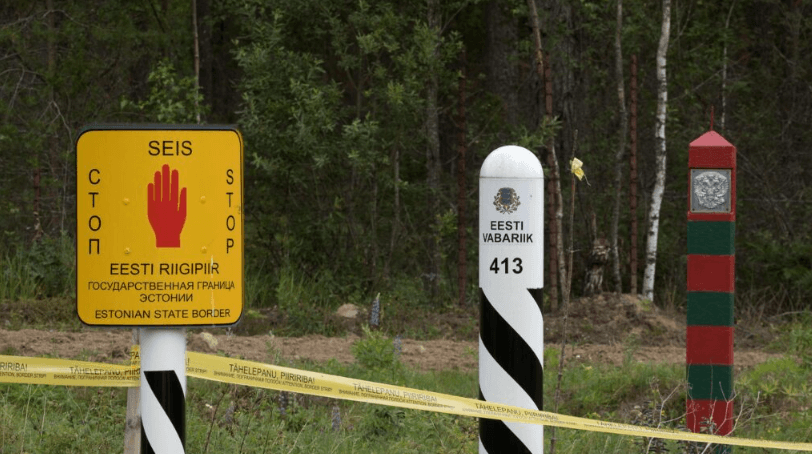
image from https://estonianworld.com/