Iran Lost Naval Mines Strait Of Hormuz IRGC Toll Crisis 2026
WarsWW Spotlight: The “Lost Mines” of the IRGC [REF: IRN-HORMUZ-2026]
IRAN ADMITS ‘TECHNICAL LIMITATIONS’ IN LOCATING HORMUZ MINES; IRGC PROPOSES $2M TOLL FOR SAFE PASSAGE; US NAVY MCM ASSETS REMAIN DISTANT.
A growing intelligence crisis in the Middle East has revealed that the Islamic Revolutionary Guard Corps (IRGC) has effectively lost control of its own primary deterrent. Recent reports from senior U.S. officials indicate that Iran is unable to fully reopen the Strait of Hormuz because its naval crews cannot locate the thousands of sea mines they chaoitically deployed during the March 2026 escalation.
I. Haphazard Mining and the “Command Gap”
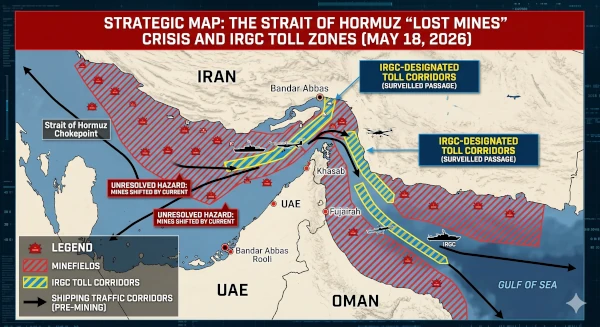
The crisis stems from the decentralized nature of the Iranian mining operation. Intelligence suggests the IRGC utilized small, fast attack boats to “haphazardly” seed the waterway with an estimated 2,000 to 6,000 mines.
- Lack of Coordinates: Sources note that crews frequently failed to record exact GPS coordinates during the rapid deployment phase, leaving Tehran without a master map of the minefields.
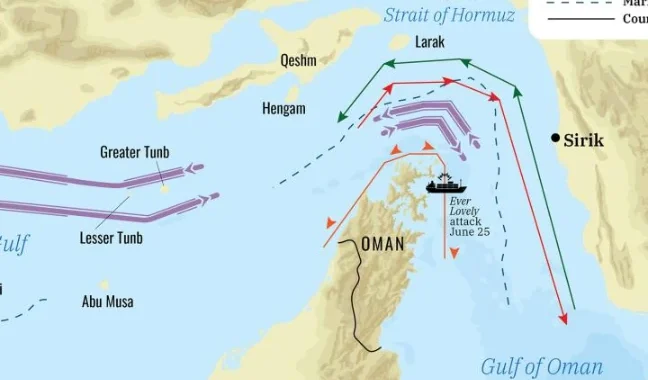
- Drifting Threats: The issue is compounded by strong ocean currents in the 21-mile-wide chokepoint, which have likely shifted mines far from their original drop points, turning designated “safe corridors” into potential death traps.
II. The “Extortion Corridor” and Technical Paralyzation
Struggling to manage the hazard, Iran has attempted to pivot the crisis into a revenue stream while acknowledging its “technical limitations.”
- Managed Corridors: The IRGC recently published navigational charts designating narrow routes through Iranian-controlled territorial waters. However, these corridors require ships to move under direct IRGC surveillance.
- The $2 Million Toll: As part of a 10-point negotiation demand, Iran has proposed charging a $2 million “toll” per vessel to transit these “cleared” lanes, a move President Trump has characterized as “short-term extortion of the world.”
- No Quick Fix: Even with known locations, Iran lacks modern specialized minesweepers to neutralize the threat. The U.S. Navy also faces challenges, as many of its Mine Countermeasures (MCM) assets were outside the region (in Singapore and Malaysia) when the conflict broke out.
III. Strategic Fallout: A Permanent Threat to UNCLOS
Maritime experts warn that the weaponization of uncertainty in Hormuz represents a frontal assault on the “transit passage” regime established by the UN Convention on the Law of the Sea.
- The Insurance Trap: Iran does not need to sink every tanker; it only needs to make passage feel unsafe. The resulting spike in insurance premiums has already caused traffic to collapse from an average of 138 vessels per day to a mere trickle.
- Geopolitical Stalemate: The “lost mines” have become a central sticking point in peace talks currently held in Pakistan. Washington is demanding the “complete, immediate, and safe” reopening of the strait, a condition Tehran technically cannot fulfill without international assistance.
WarsWW Intelligence Note [REF: HORMUZ-MINE-0518]
The IRGC has accidentally achieved a “perfect blockade.” By losing track of their assets, they have created a permanent, self-sustaining hazard that keeps global energy markets hostage regardless of diplomatic progress. The reopening of the Strait of Hormuz is no longer just a matter of political will; it is now an industrial-scale demining operation that could take months, if not years, to complete.