[FLASH] 100 Strikes in 10 Minutes: Israel Launches “Operation Roaring Lion” Across Lebanon
BEIRUT, LEBANON (April 8, 2026) — At approximately 14:00 local time, the Israeli Air Force (IAF) executed a unprecedented wave of simultaneous airstrikes targeting Beirut, the Bekaa Valley, and Southern Lebanon. The IDF confirmed that 100 high-value Hezbollah targets were struck within a 10-minute window, effectively bypassing regional air defenses.
1. Mortality Statistics: Preliminary Toll
The Lebanese Ministry of Public Health has declared a state of emergency, reporting that hospitals in the capital and the south are “overwhelmed.”
- Fatalities: Preliminary figures from Al Jazeera and local sources indicate at least 89 dead within the first four hours of the strikes, with some outlets reporting potential totals exceeding 300 as rescue teams reach hit sites.
- Injuries: Over 800 people have been wounded, many in critical condition due to the use of high-yield munitions in densely populated commercial districts.
- Civilian Impact: While Israel maintains it targeted Hezbollah intelligence headquarters and command centers, Amnesty International has raised urgent calls for civilian protection, noting that several strikes hit residential neighborhoods in central Beirut without warning.
2. Infrastructure Damage Assessment
The scale of the “simultaneous” strike has caused a significant collapse in Lebanese civil infrastructure:
- Communications: Major fiber optic nodes in the Bekaa Valley were destroyed, leading to widespread BGP instability and internet blackouts across eastern Lebanon.
- Energy & Water: Strikes in the South have reportedly damaged the Dallafa and Qasmiyeh bridges, critical for both civilian movement and the transport of water resources.
- Beirut Commercial District: Unlike previous strikes focused on the southern suburbs (Dahieh), these attacks hit central and coastal districts like Ain al-Mreisseh and Corniche al-Mazraa, causing structural failure in several high-rise office buildings.
3. Geopolitical Context: The Ceasefire Paradox
Crucially, this escalation occurred just hours after a reported ceasefire agreement was reached between the United States and Iran.
- Israel’s Stance: Prime Minister Netanyahu has clarified that the truce does not apply to Hezbollah.
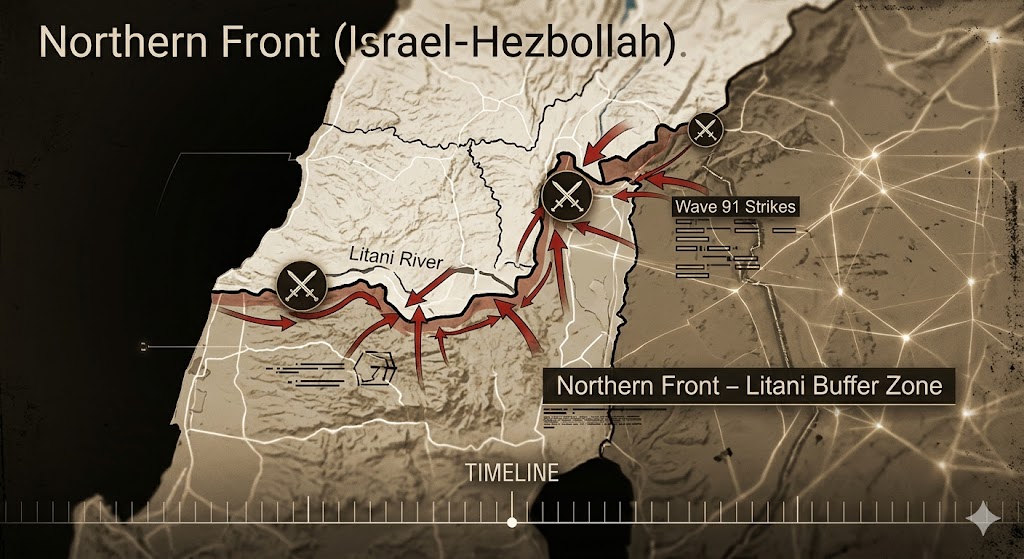
- The “Pager” Parallel: Defense Minister Israel Katz described the operation as the “largest concentrated blow” since the 2024 pager explosions, signaling a shift toward total kinetic dominance to force Hezbollah north of the Litani River.
Analysis for WarsWW.net Readers
The speed of this operation—100 targets in 600 seconds—suggests that Israel utilized pre-programmed autonomous flight paths and advanced AI-driven target selection. This marks a critical expansion of the conflict theater. If Iran views this as a violation of the spirit of the overnight ceasefire, we may see a resurgence in Houthi activity in the Bab el-Mandeb in retaliation.
Editorial Note: We are currently verifying BGP routing data for Lebanon to see if this strike involved a coordinated cyber-kinetic effort. Check our Technical Checklist for updates on how to track these outages.