The Litani Line: Siege of the South and the UNIFIL Crisis
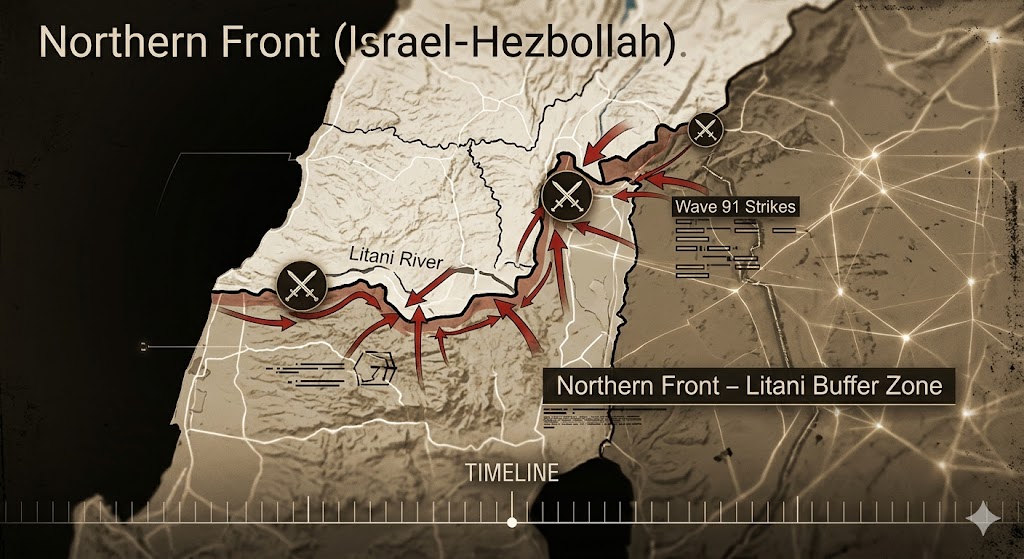
As the Operation Roaring Lion kinetic phase reaches its peak, the tactical focus has shifted to the Litani River, the strategic “red line” established by UN Security Council Resolution 1701.
Here is a breakdown of the current territorial status and the precarious position of UN peacekeepers for WarsWW.net.
SOUTH LEBANON (April 8, 2026) — Israeli ground forces have fundamentally altered the security architecture of Southern Lebanon. Following the 100-strike blitz in Beirut, the IDF has deployed its fifth division (the 98th) into a theater that is now a 30-kilometer-deep operational zone.
1. The Litani Buffer: Pushing Toward the Natural Line
The IDF’s stated objective is the total dismantling of Hezbollah’s “front defensive line.”
- Advanced Positioning: Israeli armored units have reached the strategic town of Khiam in the east and Bayada on the coast, pushing between 5 and 10 kilometers deep into Lebanese territory.
- The 30km Goal: Defense Minister Israel Katz confirmed that the goal is a permanent “security zone” extending to the Litani River. This would effectively push Hezbollah’s anti-tank guided missiles (ATGMs) and short-range rockets out of range of northern Israeli communities.
- Systematic Destruction: Operations are currently focused on destroying “military structures” within border villages, often involving massive demolition charges to deny Hezbollah a return to its fortified tunnels.
2. UNIFIL Status: Peacekeepers Under Fire
Despite the escalating violence, UNIFIL (United Nations Interim Force in Lebanon) remains deployed, though its operational capacity is severely degraded.
- Casualties in the Mission: UNIFIL Spokesman Dany Ghafary confirmed more than 25 direct attacks on peacekeepers since the March 2 escalation, resulting in 3 deaths and over 15 injuries.
- Trapped in Crossfire: Approximately 7,500 troops from 47 countries are currently in a “bunker-down” posture. Peacekeepers have reported Hezbollah operatives and IDF soldiers firing projectiles near their positions, creating a high risk of “unintended draw-fire.”
- Investigations Pending: UNIFIL is currently investigating two fatal incidents at the end of March to determine responsibility, while maintaining “open channels” with both the IDF and the Lebanese Armed Forces (LAF).
3. The “State within a State” Failure
Intelligence reports suggest that the Lebanese Armed Forces (LAF) have withdrawn from frontline positions to avoid direct confrontation with the IDF. This leaves Hezbollah to wage a “decentralized mobile defense” using small, mobile cells—a tactic that makes urban combat in these border villages incredibly lethal.
Analysis: The 2000 vs. 2026 Comparison
Unlike the 2000 withdrawal, the 2026 security doctrine focuses on “peace through strength.” Israel appears prepared for a long-term occupation of the Litani buffer if international guarantees—specifically a revamped Resolution 1701—cannot be enforced by a third party other than the weakened UNIFIL.
Israel is actively establishing a, or planning for, a long-term buffer zone extending to the Litani River in Southern Lebanon to ensure security in its north, effectively displacing residents and creating a “Gaza-like” reality in border villages if Resolution 1701 is not strictly enforced. Israel intends to hold this area until its northern safety is guaranteed, potentially by destroying homes near the border to prevent Hezbollah’s return.
Key elements of this development include:
- Targeting the Litani: The zone aims to create a 30-kilometer buffer, pushing Hezbollah forces north of the Litani River.
- Targeted Demolition: Reports indicate a strategy of demolishing villages and homes within this security zone.
- Regional Reordering: Israel is severely restricting movement, and over 600,000 residents face displacement with no immediate return option until safety is guaranteed.
- Resolution 1701 Failure: This move follows frustrations over the enforcement of UN Resolution 1701, which requires the area between the Blue Line and the Litani River to be free of armed personnel other than UNIFIL and Lebanese state forces.
- Long-Term Strategy: The actions resemble a strategy to keep the area as a permanent or long-term security belt, with parallels drawn to past security zones.
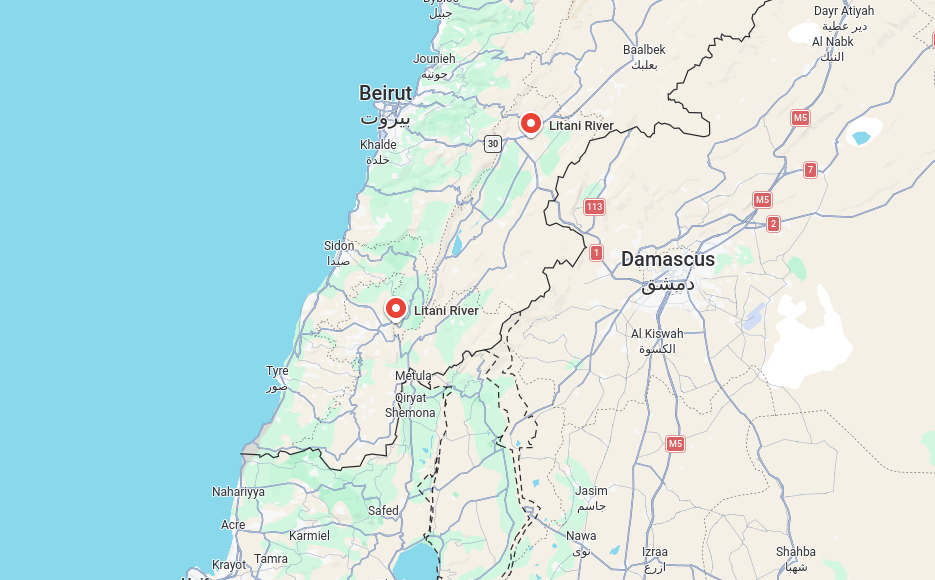
Sources: image from Google Maps.
Lebanon: Israeli Plan to Raze Border Towns & Block Residents’ Return Unlawful
https://www.google.com/url?sa=i&source=web&rct=j&url=https://www.npr.org/transcripts/g-s1-115929%23:~:text%3DIsrael%2520says%2520it%27s%2520creating%2520a%2520%2522security%2520zone%2522,until%2520people%2520in%2520northern%2520Israel%2520feel%2520safe.&ved=2ahUKEwjv882S9d6TAxX-EUQIHUNDAjwQqYcPegQIBhAK&opi=89978449&cd&psig=AOvVaw1ivpXS2WrbC6DlN5Re4EjC&ust=1775760405355000