Ukrainian Drones Strike St Petersburg Iran Missile Hits Kuwait Airport
WarsWW Daily Brief | June 3, 2026
Intelligence Status: METROPOLITAN SATURATION SURGE / CEASEFIRE FRAGMENTATION / PERSIAN GULF KINETIC SPIKE
Global Security Index: 9.98/10 (Critical Systemic Instability)
I. Eastern Europe: The SPIEF Black Smoke Veil and the 354-Vector Air Defense Squeeze
The long-range attrition campaign between Moscow and Kyiv has triggered a major optical and operational breach inside sovereign Russian territory. Strategic strike loops executed by Ukraine have deliberately targeted the primary diplomatic and economic showcase of the Kremlin.
- The St. Petersburg Forum Ignition: Ukrainian long-range strike drones successfully penetrated deep into northwestern Russian airspace, flying more than 1,000 kilometers (600 miles) to strike a premier oil terminal in St. Petersburg and set it ablaze. The successful interdiction occurred exactly as the city opened the annual St. Petersburg International Economic Forum (SPIEF), an event heavily promoted by President Vladimir Putin to signal economic normalcy. Large columns of thick black smoke were captured rising directly over the city’s port, forcing regional authorities to briefly suspend all inbound and outbound flights at the local airport and cut off mobile internet access across the municipal district to limit open-source intelligence collection.
- The Tambov and Kronstadt Coordinated Raids: Beyond the primary energy terminal hit, Ukrainian President Volodymyr Zelenskyy confirmed that separate overnight drone swarms targeted the Kronstadt naval base—a historic facility for Russia’s Baltic Fleet—and a weapon manufacturing plant in the Tambov region, located roughly 600 kilometers (370 miles) from the frontline. The Russian Ministry of Defense claimed its terminal air defense network downed 354 Ukrainian drones in total overnight across multiple border sectors.
- The Yenakiieve Coach Intercept: In the Russian-controlled sector of Ukraine’s Donetsk region, local administrators reported that a Ukrainian strike hit a long-distance commercial bus traveling from Moscow to Simferopol, Crimea. The impact, which occurred near the town of Yenakiieve, killed seven passengers and wounded 11 others.
- The 198-Vector Retaliatory Waves: In response to the deep infrastructure hits, Russia launched a massive wave of 198 long-range drones into sovereign Ukrainian territory. Ukrainian Air Force teams reported neutralizing 189 of the incoming vectors, though localized impacts in the northern Sumy region and southern Kherson killed two civilians and wounded 20 others, including three children.
II. Middle East: The Kuwait Airport Mass Casualty and the Fracturing Beirut Agreement
The high-stakes diplomatic track managed by Washington has suffered a severe breakdown, as localized combat loops completely outpace the fragile, U.S.-mediated maritime and regional truce frameworks.
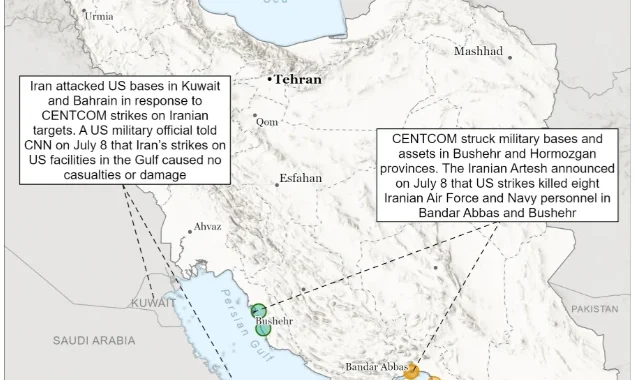
- The Kuwait International Airport Impact: The Persian Gulf theater experienced a severe kinetic escalation following an intensive Iranian ballistic missile and loitering drone strike targeting Kuwait International Airport. Local emergency services confirmed the blast killed at least one individual and wounded dozens more, leaving the facility’s commercial operations crippled and throwing the broader U.S.-Iran regional ceasefire framework into deep jeopardy.
- The Walkback on the Beirut Ultimatum: Following intense personal intervention by U.S. President Donald Trump, Israeli Prime Minister Benjamin Netanyahu partially walked back immediate threats to launch an unrestricted air campaign against Beirut. However, Netanyahu explicitly noted that Israel will continue to operate as planned in southern Lebanon to permanently neutralize Hezbollah’s offensive launch capabilities. Concurrently, Israeli Defense Minister Israel Katz affirmed that IDF armored units will maintain a permanent physical presence at the captured 12th-century Beaufort Castle, explicitly transforming the historic ridge into a formalized military “security zone” to prevent cross-border strikes into northern Israel.
- The Tehran Memorandum Freeze: In parallel, the broader diplomatic track has entered a period of total stagnation. Media channels close to the Islamic Revolutionary Guard Corps (IRGC) verified that Tehran has refused to submit a formal response to President Trump’s recent amendments regarding the draft U.S.-Iran memorandum of understanding. Iranian negotiators have increasingly tied all progress on core disputes—including limits on highly enriched uranium (HEU) and navigation rights through the Strait of Hormuz—to an immediate, total cessation of IDF ground maneuvers inside southern Lebanon.
III. Featured Visual Intelligence Archive [REF: INTEL-MAP-2026-0603]
Strategic Vector Attrition Grid
| Operational Zone | Primary Tactical Asset | Target Infrastructure / Node | Current Strategic Attrition Status |
| St. Petersburg | Ukrainian Custom Long-Range UAV | Rosneft Marine Oil Terminal | Storage units heavily damaged; port black smoke plume active |
| Kuwait Frontier | Iranian Ballistic Vector Variant | Kuwait International Airport Hub | 1 Civilian Dead; dozens wounded; terminal flight halt |
| Southern Lebanon | IDF Armored Division / Golani | Beaufort Castle Outpost Ridge | Permanent defensive “security zone” established past Litani |
| Donetsk Region | Tactical Precision Loitering Munition | Yenakiieve Commercial Transit Route | 7 Passengers Dead; 11 wounded on Moscow-Crimea bus |
Figure 1: Strategic tracking matrix mapping the 1,000-kilometer flight envelope utilized by Ukrainian long-range strike assets to hit the St. Petersburg terminal relative to the expanding perimeter lines of the IDF’s southern Lebanon security corridor.
V. Indicators to Watch
- [ENERGY TRANSIT] The Smart Control Strait Blockade: Monitor maritime transits exiting the Persian Gulf. Following statements from the IRGC Navy that they have implemented a restrictive “smart control” protocol over the Strait of Hormuz, watch whether commercial shipping container fleets permanently halt transit loops despite the passage of localized cargo hulls.
- [CYBER FINANCIALS] The Crypto Exchange Sanction Fallout: Track digital asset flows in Western Asia. Following the U.S. Treasury’s implementation of sweeping sanctions against Nobitex, Iran’s largest cryptocurrency exchange, look for immediate fluctuations in the black-market value of the Iranian rial as the IRGC attempts to forge alternative digital payment pathways to fund its regional proxies.
WarsWW Intelligence Note [REF: DAILY-2026-0603]
The global conflict environment has shifted into a phase of Asymmetric Leverage Maximization. Ukraine’s precision strike on the St. Petersburg oil terminal—timed perfectly to disrupt Russia’s premier economic showcase—demonstrates that Western early-warning loops cannot guarantee security over Russia’s core economic infrastructure. Concurrently, Iran’s lethal strike on Kuwait International Airport proves that Tehran is entirely willing to step up kinetic actions against international logistics lines to freeze Washington’s diplomatic flexibility. By transforming the U.S.-Iran memorandum negotiations into a referendum on Israel’s ground campaign in Lebanon, the Tehran-Moscow axis is successfully exploiting regional divisions to preserve its primary strategic sources of leverage.