US Treasury Sanctions Nobitex Iran Crypto Exchange Irgc Rial Collapse
WarsWW Strategic Spotlight: The Crypto Exchange Sanction Fallout—Tracking Western Asia’s Shadow Flows
Strategic Status: DIGITAL BLOCKADE / SHADOW PIPELINE INTERDICTION / FIAT CONVERSION COLLAPSE
Theater Focus: Iran / Persian Gulf Corridor
The Office of Foreign Assets Control (OFAC) has executed its most aggressive financial warfare maneuver yet within the digital asset ecosystem. Under the broader umbrella of the Trump administration’s ongoing “Economic Fury” maximum pressure campaign, the U.S. Department of the Treasury officially designated Nobitex—Iran’s absolute largest cryptocurrency exchange—along with secondary domestic platforms Wallex, Bitpin, and Ramzinex.
By blacklisting these domestic Virtual Asset Service Providers (VASPs), Washington aims to completely sever the shadow digital dollar pipelines that the Islamic Republic and its paramilitary arms have relied on to cushion an economy in freefall.
I. The On-Chain Pipeline: Severing the IRGC Digital Dollars
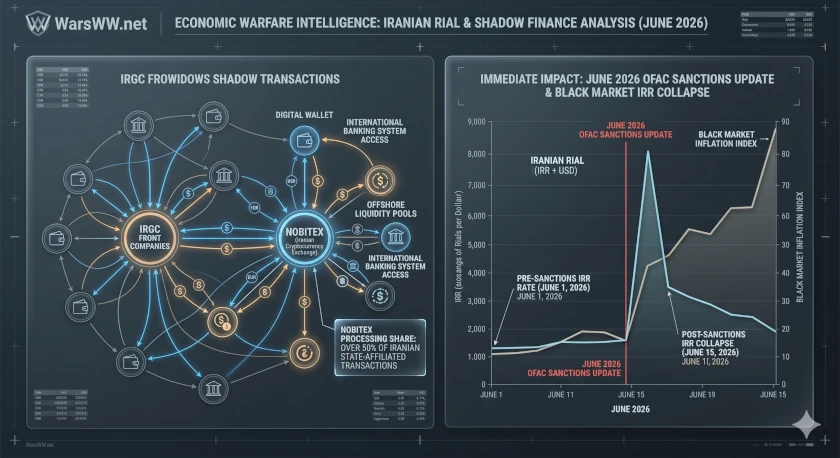
The structural scale of the targeted network highlights why Western intelligence apparatuses pivoted aggressively toward on-chain interdiction. Nobitex alone acted as a primary engine for regime survival, single-handedly processing more than 50 percent of all Iranian digital asset inflows in 2025.
The broader Iranian crypto shadow infrastructure, estimated to have reached an on-chain volume of over $7.78 billion in 2025, served as a crucial workaround for an economy completely isolated from global banking protocols like SWIFT.
Iranian VASP Market Share & Transaction Matrix
| Crypto Exchange Platform | 2025 Domestic Volume Share | Primary Intelligence Allegation | Targeted Executive Leadership |
| Nobitex | 50% + of All National Inflows | IRGC-Qods force conduits; wealth expatriation | Chairman Amir Hossein Rad; Kharrazi Family Blockchain Leads |
| Wallex | 12% of National Inflows | Processing IRGC transactions & proxy networks | Senior Corporate Directors & Treasury Proxies |
| Bitpin | 10% of National Inflows | Facilitating specialized regional sanctions evasion | Blocked Entities & Venture Capital Stakeholders |
| Ramzinex | $2.45 Billion+ Lifetime Volume | Handling Central Bank of Iran stablecoin clearing | Original 2018 Founding Cohort Entities |
According to forensic blockchain tracking metrics compiled by compliance investigators, addresses directly associated with the Islamic Revolutionary Guard Corps (IRGC) received over 50 percent of total Iranian crypto value during the final quarter of 2025.
Nobitex routinely handled hundreds of millions of dollars in major stablecoin transactions designed to bypass traditional maritime trade blockades. More critically, the exchange served as a crucial emergency backup; following the outbreak of regional combat operations, Nobitex successfully shielded and moved massive state assets out of Iran to protect regime wealth during localized, government-imposed internet blackouts.
II. The Rial Tailspin: Black-Market Fallout and Currency Devaluation
The immediate, real-world consequence of the U.S. Treasury’s enforcement action has manifested as acute panic across the informal currency exchange networks of Tehran, Mashhad, and Isfahan. For over two years, the Central Bank of Iran (CBI) actively utilized Nobitex to access massive pools of global stablecoins to artificially prop up the plummeting value of the Iranian rial.
With the sudden imposition of strict secondary sanctions, international exchanges and liquidity providers have moved swiftly to black-list all associated wallet clusters. This has effectively trapped massive pools of local capital inside the country.
As domestic savers realized their primary digital escape hatch into hard digital dollars had been compromised, a massive rush toward physical gold and black-market paper fiat alternative currencies ensued.
Consequently, the black-market exchange rate of the Iranian rial experienced an instantaneous, historic drop, fueling severe domestic inflation and signaling to regional analysts that the regime’s alternative liquidity reserves are being crushed.
IV. The Proxy Supply Chain: Forging Alternative Pipelines
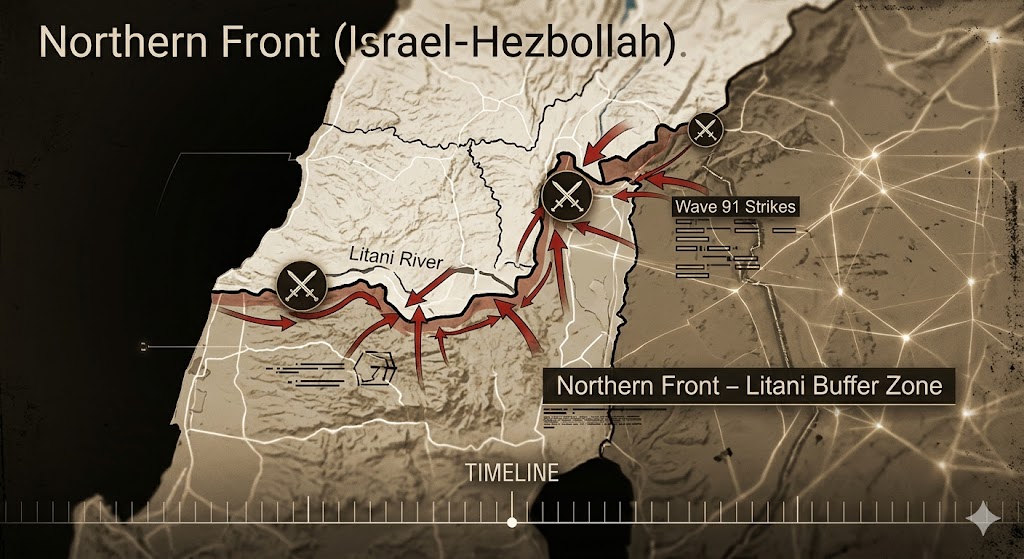
Confronted by an intensifying financial blockade, the IRGC and its regional proxy networks are already pivoting toward higher-risk, less efficient alternative channels to keep funding networks alive for Hezbollah, the Houthis, and specialized Iraqi paramilitary groups.
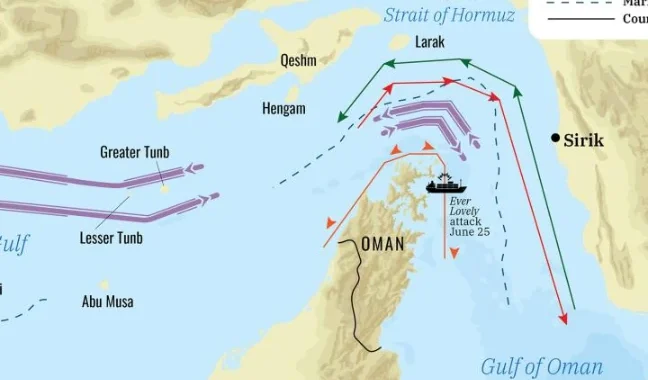
- The Hormuz Extortion Squeeze: Deprived of seamless stablecoin on-ramps, the IRGC is increasingly leaning into physical extraction models. This includes leveraging its newly designated Persian Gulf Strait Authority to demand illicit “passage tolls” from international shipping. The U.S. Treasury has warned that these extortion fees are being actively collected through informal commodities swaps, untraceable in-kind payments, and peer-to-peer digital tokens.
- The Personal Accountability Deterrent: What elevates this specific enforcement wave above previous sanctions rounds is the deliberate targeting of individual leadership nodes. OFAC explicitly designated Nobitex Chairman Amir Hossein Rad alongside key co-founders linked to the influential Kharrazi family. By threatening international executives with personal asset seizures and secondary sanctions exposure, Washington is attempting to deter third-party foreign financial entities from facilitating Iran’s alternative financial networks.
V. Indicators to Watch
- [BLOCKCHAIN LOGISTICS] Tether and Stablecoin Velocity: Monitor on-chain smart contract interactions emerging from Middle Eastern IP clusters. Following previous historic actions—such as when Tether froze $344.2 million held across documented Central Bank of Iran wallets—watch closely to see if stablecoin issuers implement automated, geographic smart-contract blocks to entirely prevent peer-to-peer circulation within localized Iranian sub-networks.
- [REGIONAL CAPITAL DRIFT] UAE and Chinese Secondary Compliance: Track transaction volumes flowing through alternative over-the-counter (OTC) desks in Dubai and Shanghai. Treasury Secretary Scott Bessent confirmed that the U.S. has successfully seized approximately $1 billion in Iranian cryptocurrency; watch for whether peripheral trade hubs enforce stricter compliance measures or risk being cut off from the U.S. dollar clearing system entirely.
WarsWW Intelligence Note [REF: SPOTLIGHT-NOBITEX-FALLOUT]
The financial offensive targeting Nobitex marks a critical pivot point in modern hybrid warfare. For nearly a decade, cryptocurrency operated as an ideal asymmetric buffer for mid-tier revisionist powers; it allowed them to absorb conventional sanctions packages without losing the ability to project power via proxy networks. However, the sheer transparency of public ledgers has ultimately transformed this digital haven into a massive intelligence liability.
By applying secondary sanctions directly to the executive leadership and domestic virtual asset infrastructure of Iran, the United States has successfully demonstrated that digital border walls can be closed just as effectively as maritime chokepoints. If the IRGC cannot maintain its stablecoin clearing pipeline, the actual operational readiness and supply networks of its frontline proxies will inevitably face deep, material exhaustion before the end of the summer campaign.