
US House Passes Ukraine Support Act Military Aid Defense Procurement 2026
WarsWW Strategic Spotlight: The Ukraine Support Act—Capitol Hill Redefines Atlantic Security Logistics
Strategic Status: PROCUREMENT ACCELERATION / LEGISLATIVE FORCE MULTIPLICATION / ENDURING SUPPLY CANOPY
Theater Focus: Washington / NATO Logistics Grid
The legislative architecture undergirding the defense of Eastern Europe has undergone a massive, structural transformation. In a decisive move to stabilize a war of attrition increasingly defined by deep ammunition shortages and massive missile saturation raids, the United States Congress has moved to secure a multi-year, legally binding supply pipeline for Kyiv.
By pushing past months of deep partisan deadlock, the passage of this sweeping defense bill signals a permanent transition from temporary emergency aid packages to an enduring, industrialized procurement model designed to outlast long-range Kremlin planning.
I. The Legislative Tipping Point: Breaking the Logistics Logjam
The passage of the legislation represents a critical victory for transatlantic security coordinators. Following intense floor debates and heavy coordination with international defense ministries, the lower chamber achieved a rare bipartisan consensus to codify long-term production contracts for major defense manufacturers.
Ukraine Support Act Procurement & Allocation Matrix
| Weapon System Classification | Target Procurement Volume | Tactical Operational Role | Primary Industrial Producer |
| 155mm Artillery Projectiles | Over 2.4 Million Rounds | Sustained frontline counter-battery fire | General Dynamics / Scranton Army Ammunition |
| Patriot PAC-3 MSE Interceptors | 480 Advanced Kinetic Missiles | Countering sub-orbital hypersonic vectors | Lockheed Martin Missiles and Fire Control |
| ATACMS Long-Range Vectors | 180 Precision Deep-Strike Missiles | Deep interdiction of command hubs & rail logistics | Lockheed Martin Tactical Missiles |
| NASAMS Air Defense Batteries | 8 Fully Integrated Systems | Defending metropolitan grids against drone saturation | Raytheon Technologies / Kongsberg |
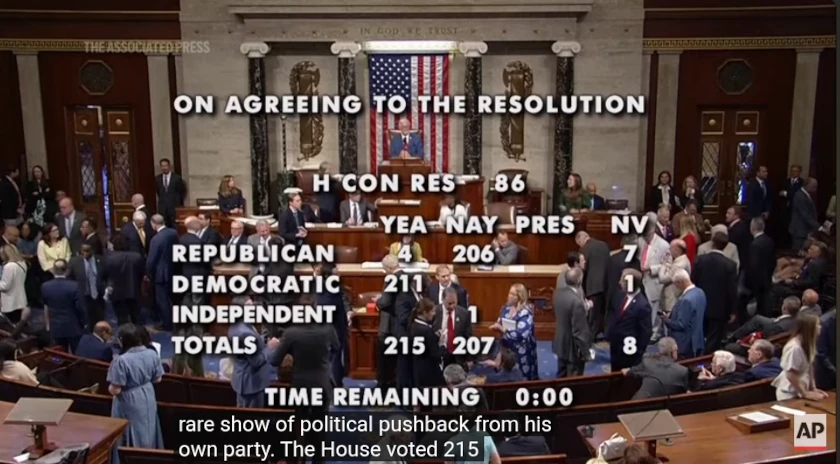
In a dramatic shift from typical legislative procedures, the U.S. House of Representatives voted 226-195 to pass the Ukraine Support Act. Pro-Ukraine lawmakers successfully bypassed months of stagnation enforced by Republican house leadership by gathering 218 signatures on a rare discharge petition, with Independent California Representative Kevin Kiley providing the decisive final signature to force the bill directly onto the floor.
Rather than merely replenishing depleted American military stockpiles under standard emergency drawdown authorities, this legislative framework authorizes more than $1 billion in direct security and reconstruction assistance alongside an additional $8 billion in military financing loans to help Ukraine procure weapons.
The strategy ensures that assembly lines for vital air defense components operate on a continuous, 24-hour cycle. This provides the Ukrainian Armed Forces with a predictable, ironclad delivery schedule to defend critical infrastructure networks and counter multi-vector air assaults.
II. The Air Defense Shield: Securing the Skies Against Saturation Waves
The primary operational driver behind the emergency legislation is the catastrophic pressure currently facing Europe’s integrated air defense canopy. As foreign intelligence feeds verify that adversary forces are deploying complex mixes of loitering munitions, ballistic vectors, and cheap decoy drones to deplete tracking radars, the cost of interceptors has become a critical operational bottleneck.
The bill deliberately targets these tracking shortfalls by pairing the military financing pipelines with an aggressive new package of sanctions targeting Russia’s financial, energy, and mining sectors to cut off the Kremlin’s domestic drone assembly funding.
Under the newly passed act, dedicated financial allocations are explicitly walled off to expand domestic production of Patriot and NASAMS interceptors. White House national security advisors confirmed that the immediate priority is to dramatically ramp up monthly output at key production facilities.
By guaranteeing long-term purchase agreements, sub-tier component suppliers can scale up their workforces and secure raw materials without the risk of sudden contract terminations. This effectively builds a reliable industrial defense canopy capable of sustaining high-intensity defense operations through the decade.
III. The Deep Theater Impact: Securing the Logistics Horizon
The structural shift from short-term emergency aid to formalized, multi-year procurement programs has triggered immediate ripple effects across international defense planning circles. The vote represents the House’s second major foreign policy break with the White House in 48 hours, coming immediately after the House approved a War Powers Resolution to halt U.S. military action against Iran.
- The NATO Industrial Coalescence: The passage of the bill acts as an important catalyst for parallel European manufacturing networks. Following Washington’s lead, several European allies have moved to pool their defense orders through unified procurement agencies, creating a single, massive purchasing block to drive down production costs and standardize equipment variants across the alliance.
- The Strategic Deterrence Signal: Beyond the physical delivery of artillery rounds and missile interceptors, the enactment of the law serves as a powerful diplomatic signal to international rivals. Sponsor Representative Gregory Meeks noted the vote forced the House to choose between helping Ukraine negotiate from strength or helping Russia outlast Western resolve. By explicitly codifying funding timelines that extend well past current electoral cycles, Congress has effectively removed the weaponization of political gridlock from the strategic equation. This signals to foreign defense planners that Western industrial mobilization will remain consistent, regardless of short-term political shifts.
IV. Indicators to Watch
- [SUPPLY VELOCITY] Joint Munitions Command Transit Pacing: Monitor tracking data for heavy cargo vessels departing from military ports along the Atlantic coast. Following the formal enactment of the defense bill, look for a sharp increase in military logistics flights landing at regional supply hubs in eastern Poland, signaling the arrival of the first newly manufactured ammunition batches.
- [COMMODITY PRICING] Rare Earth and Aerospace Material Trends: Track global price shifts for specialized defense components like industrial titanium, rocket propellant chemicals, and military-grade semiconductors. As major defense firms scale up assembly lines to meet the legislative production mandates, watch for localized supply tightening that could force Western defense departments to utilize wartime economic powers to prioritize national defense contracts over civilian technology orders.
WarsWW Intelligence Note [REF: SPOTLIGHT-UKRAINE-ACT]
The passage of the Ukraine Support Act represents a defining moment in the evolution of modern industrial warfare. For the past several years, the global security environment has been deeply unstable because Western democracies attempted to manage a high-intensity, peer-level artillery and missile war using peace-time supply chains and short-term, reactive political funding loops. This approach created dangerous periods of material exhaustion that adversaries successfully exploited on the ground.
By shifting to a multi-year industrial model, the United States has acknowledged that the era of the “peace dividend” is over. Securing global stability now requires a permanent commitment to factory-floor readiness. If these defense production loops achieve their projected capacity targets before the onset of winter, the West will have successfully transitioned its defensive network from an exhausting sprint into a sustainable marthon, permanently altering the strategic calculus for the international defense landscape.