Spotlight: Syria’s “Living Missing”—The Search Moves Inside
April 17, 2026: A Pivot from Forensics to Rescue
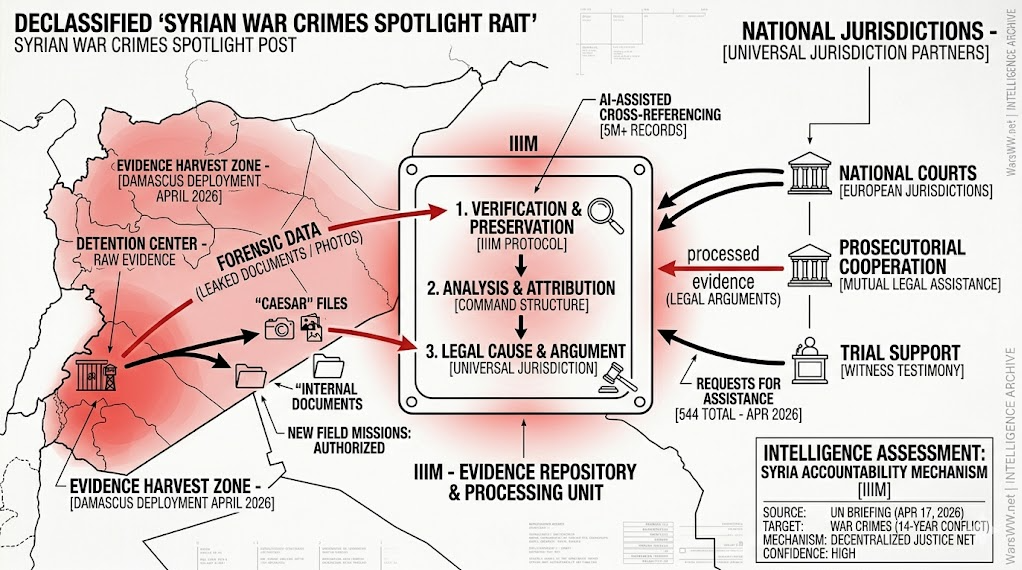
For 14 years, the story of Syria’s missing was one of satellite imagery and mass graves. However, the April 2026 UN General Assembly briefing (GA/12757) and recent operational updates from Damascus reveal a stunning shift: the search for the missing has successfully moved from the “external” (diaspora documentation) to the “internal” (on-the-ground recovery).
The Intelligence Core: Tangible Results in 2026
The newly authorized cooperation between the Independent Institution on Missing Persons (IIMP) and Syria’s National Commission for the Missing has yielded the first measurable successes since the conflict began:
- The 194 Reunions: The Syrian Ministry of Social Affairs and Labor confirmed that 194 children, previously held in state care after their parents were forcibly disappeared between 2011 and 2015, have been formally reunited with their families as of April 12, 2026.
- The “Still Alive” Mandate: IIMP head ASG Robert Petit emphasized that the mission is no longer purely forensic. Credible leads suggest significant numbers of the disappeared remain alive, held in “forgotten” transit sites or victimized by trafficking networks that flourished in the security vacuum (IIIM-Syria Briefing).
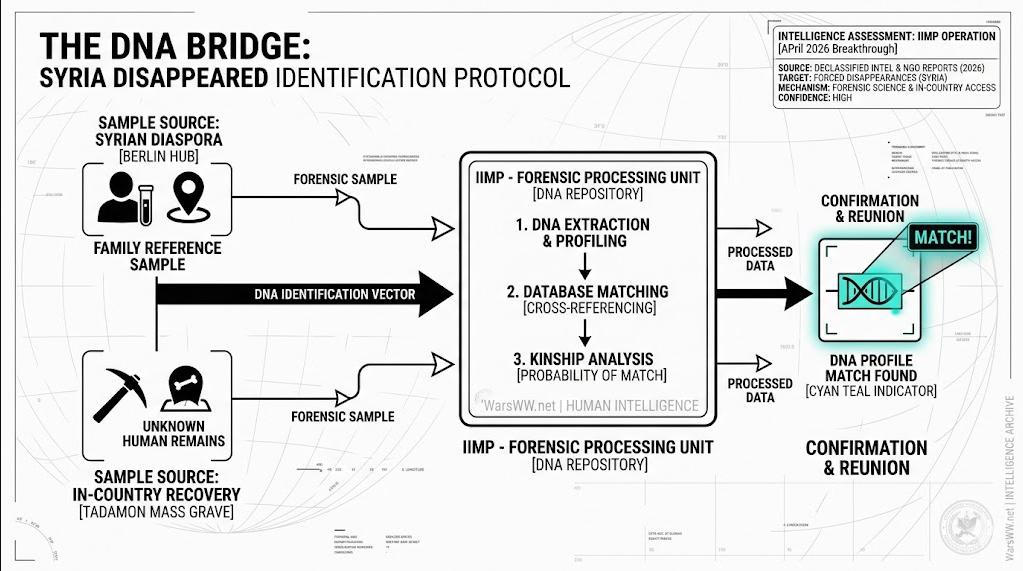
- The Tadamon Reconstruction Crisis: In South Damascus, reconstruction crews continue to uncover human remains beneath destroyed buildings in the Tadamon neighborhood. This has forced an emergency deployment of the DNA Bridge protocol to identify victims before site clearing continues.
Strategic Insight: The DNA Bridge
The biggest technical hurdle in 2026 is the “lottery of identification.” Families in the diaspora (Germany, Turkey, etc.) are being urged to submit genetic profiles to a secure international repository to match against the surfacing remains in sites like Tadamon and the recently opened Adra detention records.