UN General Assembly Adopts Key Resolution to Sever Link Between Diamond Trade and Armed Conflict
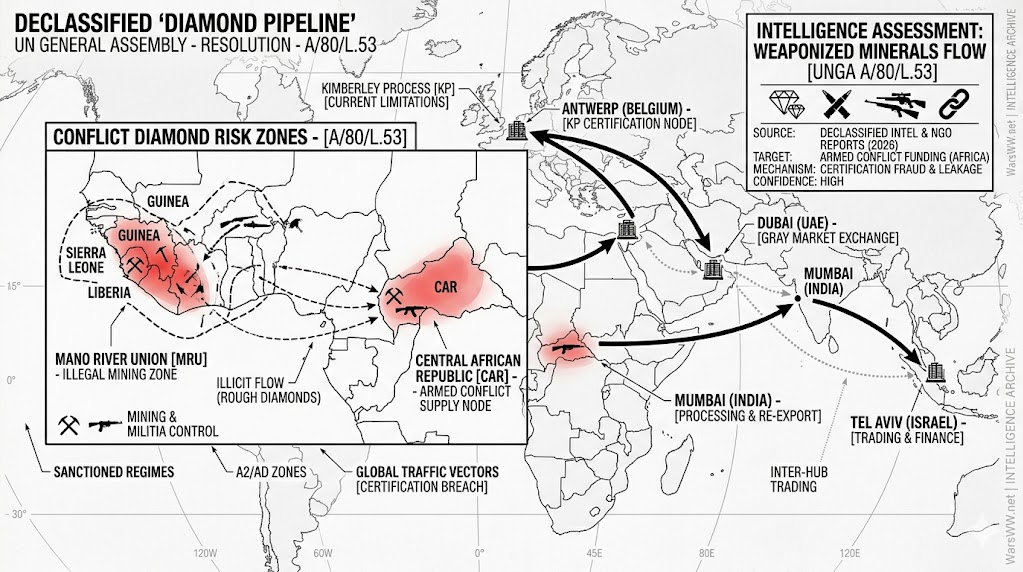
April 17, 2026: The “Illicit Flow” Breakdown
On Wednesday, April 15, the UN General Assembly (UNGA) adopted resolution A/80/L.53, formally titled “The role of diamonds in fuelling conflict: breaking the link between the illicit transaction of rough diamonds and armed conflict.” This move underscores a growing international frustration with the limitations of the current Kimberley Process (KP).
The Intelligence Core: Why This Resolution Matters Now
While the resolution was adopted without a vote, the debate revealed deep geopolitical fissures that will affect conflict zones in 2026:
- The Definition Deadlock: For over 20 years, “conflict diamonds” have been narrowly defined as those used by rebel movements to overthrow legitimate governments. The EU and the UK expressed regret that the KP has failed to expand this definition to include state-sponsored aggression—specifically pointing to Russia’s use of diamond revenues to fund the war in Ukraine.
- The African Perspective: Representatives from Zimbabwe, Angola, and Tanzania emphasized that for diamonds to be a “force for good,” the profits must benefit local mining communities rather than militias. They highlighted the correlation between illegal mining and the “vicious cycle of conflict” seen in fragile states across the continent.
- The Transition of Power: The UAE concluded its 2025 “Custodian Chairmanship,” handing over the lead to India for 2026. India’s chairmanship is expected to focus on digitizing the certification process to prevent “leakage” of illicit stones into the $100B+ global market.
The Intelligence Brief: On April 15, the UN General Assembly adopted resolution A/80/L.53, but the session was defined by a growing rift over the definition of “conflict diamonds.”
- The Conflict Definition Gap: The European Union (observer capacity) noted that because the Kimberley Process (KP) definition remains unchanged for 20 years, it failed to address the implications of the Russian Federation’s war in Ukraine on the rough diamond sector.
- India’s 2026 Mandate: As the new 2026 Chair, India announced a focus on “digitizing technical assistance” to ensure prosperity over instability.
- The African Stance: Representatives from Zimbabwe and Angola emphasized that while the KP implements sanctions, the definition must expand to ensure profits benefit local communities rather than fueling state or militia aggression.
This resolution (A/80/L.53) highlights that “Conflict Diamonds” are no longer just a rebel militia issue, but a primary funding vector for sanctioned states. For deeper context on how this impacts current theater funding, see our [Syria Spotlight].
Follow up to this article: